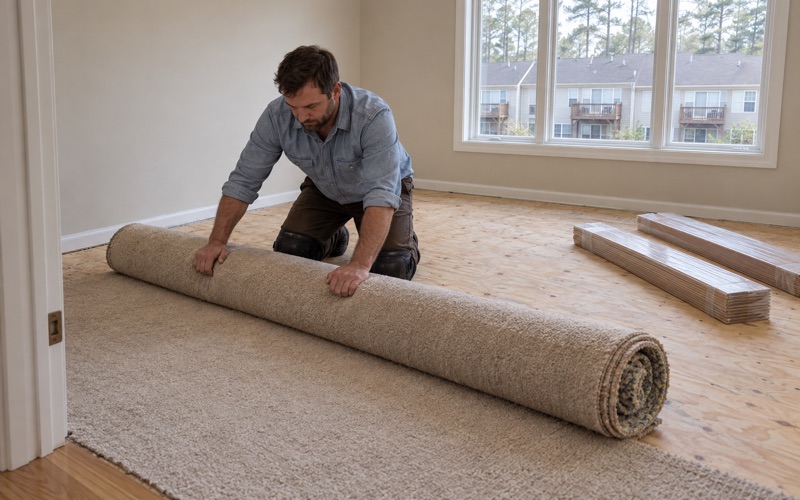
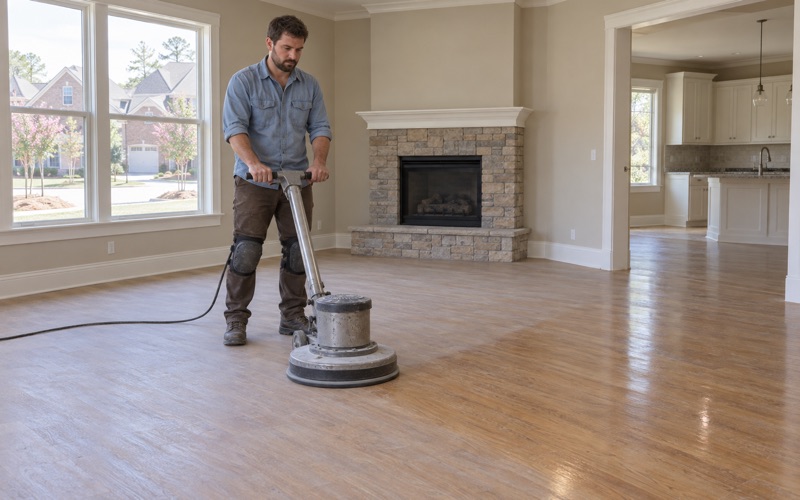
Smyrna Wood Flooring handles wood flooring in Sylvan Hills with more than 20 years of sanding, repairing and refinishing floors behind us. Most of what we see here is strip flooring in modest brick houses, worn down in the traffic lanes, stained near the back door, or hidden under carpet for decades. Our job is to read what is actually in the room before anyone quotes a price.
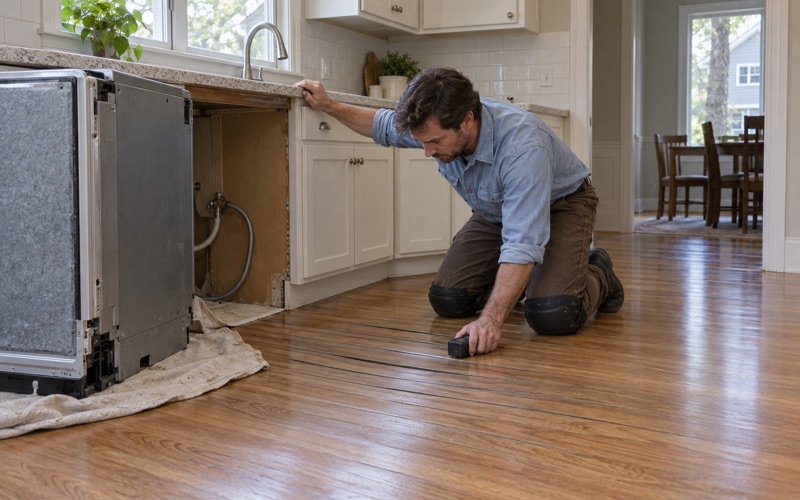
We start every visit the same way, with a moisture meter, a look at the board edges, and a check of how much wood still sits above the tongue. That tells us whether a floor can take a full sanding, needs a screen and recoat, or has boards that have to come out. A fair answer depends on those readings, not on a guess from the doorway.
This page covers what shapes floor work in this particular part of southwest Atlanta: the older houses themselves, the large housing redevelopment on the old apartment site, and the decisions owners face while the streets around them change. If you are weighing a refinish, a repair or new boards, the sections below walk through how we approach each one here.
From Sylvan Circle Apartments to Sylvan Hills II
What Stood on the Site Before
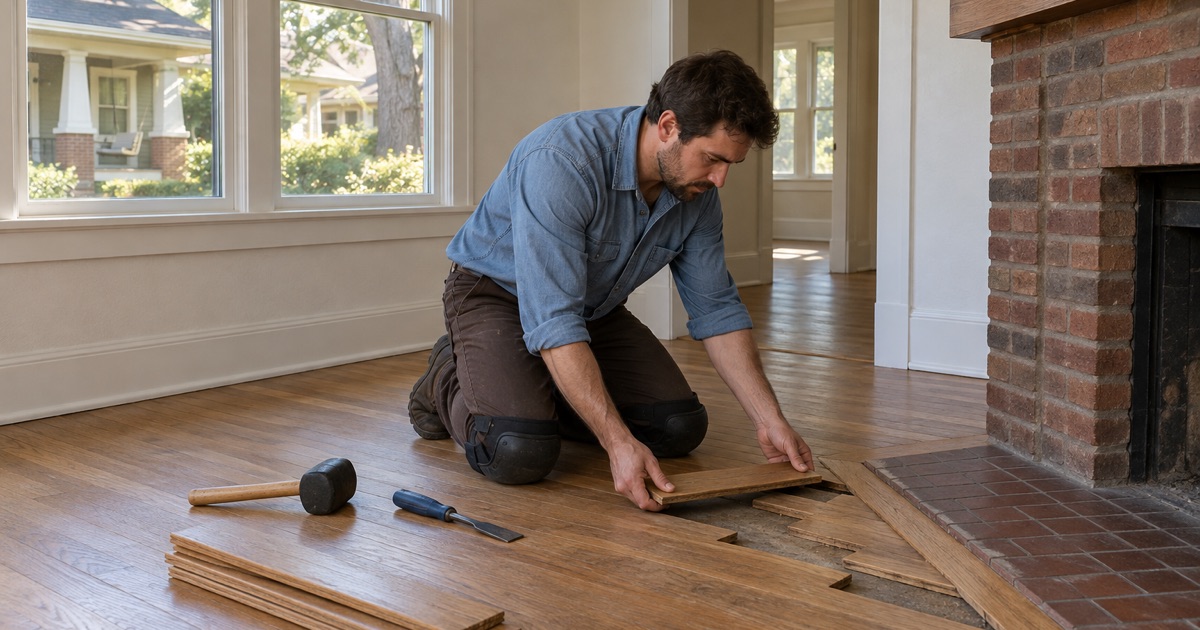
The neighborhood’s one large redevelopment site sits where the Sylvan Circle Apartments used to be. According to Atlanta Housing, that land once held nearly 300 modest World War II-era apartments, which were demolished in 2010. For years afterward, the property was an empty gap among blocks of occupied houses, and it shaped how the surrounding streets felt to the people living on them.
Those apartments came from the same era as many of the houses nearby, and their removal left the older single-family houses as the dominant building type for more than a decade. When we work on a floor near the site, we are usually working in a house that watched that whole stretch unfold, and the floor often shows a matching history of patches and covered wear.
The Land Bank Years
After demolition, the Metro Atlanta Land Bank stewarded the vacant property for more than 13 years, according to the Atlanta Housing release. A land bank holds a parcel so it can be put back to productive use, and in this case that meant waiting until a housing plan and its financing came together. The long pause is part of why the current construction feels so sudden to neighbors.
For homeowners, those years mattered in a practical way. Plenty of households delayed interior projects, including floors, while the future of the big lot down the street was unclear. We now see a fair number of floors that went through that period under rugs or old carpet, with finish worn through in the traffic lanes and gray water stains near sinks and exterior doors.
Sylvan Hills I Opens
The first phase to rise was Sylvan Hills I, which Atlanta Housing describes as a 184-unit affordable senior housing community, completed in 2022 and now fully leased. That phase put residents back on part of the land and gave the neighborhood a first look at what the rebuilt site would be. It also brought construction traffic and new foot traffic onto nearby streets.
A completed first phase tends to change how nearby owners think about their own houses. Some begin looking at what they would need to do before selling, and others decide to stay and finally fix what they have been living with. Both groups end up asking us the same opening question: can the existing wood be saved, or is it past that point?
Looking for wood-flooring closer to Chamblee? See Wood-Flooring Services in Chamblee.
What Atlanta Housing Is Building on the 10-Acre Site
Sylvan Hills II by the Numbers
The second phase, Sylvan Hills II, broke ground on July 15, 2025, on a 10.2-acre site that once housed the former Sylvan Circle Apartments. Atlanta Housing lists 233 total units, a mix of apartments and townhomes. Of those, 24 are set at or below 50 percent of area median income, 93 at or below 60 percent, and 116 at or below 80 percent.
That spread of income levels means the new buildings will house a range of households rather than a single group. For the blocks around the site, it adds a sizable number of new neighbors living in brand-new construction, right beside houses that are mostly several generations old. The contrast between those two kinds of housing is the backdrop for much of the floor work we do here.
How the Project Is Financed
Atlanta Housing says Sylvan Hills II is financed through eight layers of public-private funding rather than Low-Income Housing Tax Credits. Named partners include Invest Atlanta, the City of Atlanta, the Community Foundation for Greater Atlanta and several other funders. It is a large, layered commitment of money, which signals that the site is expected to stay housing for the long term.
We mention the financing only because it answers a question owners ask us: is this a short-lived project or a lasting change? A development backed by that many partners is built to last, and homeowners nearby are planning around it. That affects whether they want a quick screen and recoat now or a fuller refinish meant to carry the house for years.
New Construction Next Door
New multifamily buildings are usually finished with modern subfloors and factory-made flooring products, while the houses around them rest on framing and wood that date from the 1920s to 1950s. The two are built to different expectations. When an owner compares a friend’s new unit with their own older floor, they are comparing materials made generations apart, and the older floor often has more life left in it than they expect.
Heavy equipment and daily deliveries near the site also bring more grit onto nearby porches and into entryways. Fine sand tracked across a finished floor acts like sandpaper, dulling the sheen and scratching the top coat along the path from the front door. Mats at every entrance and regular dry cleaning go a long way while the construction continues.
Floors in Sylvan Hills’ 1920s to 1950s Bungalows
Two Building Waves
Sylvan Hills was built in two waves. Building began about 1920, paused during the Depression, and resumed after World War II, which is why homes here date primarily from the 1920s through the 1950s. An April 1922 advertisement offered a 100-acre subdivision with paved streets, sidewalks, water and sewer, and 135 lots had been sold by July 1925.
That two-wave history shows up underfoot. A prewar house and a postwar house on the same street can have strip flooring of different widths, different fastening, and very different layers of old finish. We treat each house as its own case, testing what is on the surface and checking board thickness instead of assuming the whole block was built the same way.
Brick Bungalows and Cottages
Creative Loafing described the neighborhood’s housing as brick bungalows and cottages, and that fits the streets between Deckner Avenue, Langford Parkway, Murphy Avenue and the interstate. These are compact houses where the living room, hall and bedrooms often share one continuous floor. That continuity is an asset, since one well-matched refinish can tie the whole house together.
Common findings in these houses include oak strip flooring under carpet, tack strip nailed around the room edges, and staple rows left from carpet pad. We fill those holes rather than hide them under a dark stain. We also see pet urine stains, sun fade near bright windows, and boards that have been face-nailed back down more than once over the decades.
Build Year and Old Finishes
Almost every house here was built well before 1978, so we check the build year and any painted surfaces before sanding. Painted floors, painted baseboards and old coatings can carry lead, and sanding them without the right controls spreads dust through the whole house. The EPA RRP Rule sets how that work has to be handled, and we plan the job around it.
Old finishes need testing too. Shellac and paste wax were common on floors of this era, and a modern polyurethane will not bond properly over either one. We test a small hidden area first, then choose a grit sequence that removes the old layer cleanly so the new finish adheres to bare wood rather than to wax residue.
Refinishing, Replacing and Planning as the Blocks Change
When Refinishing Makes Sense
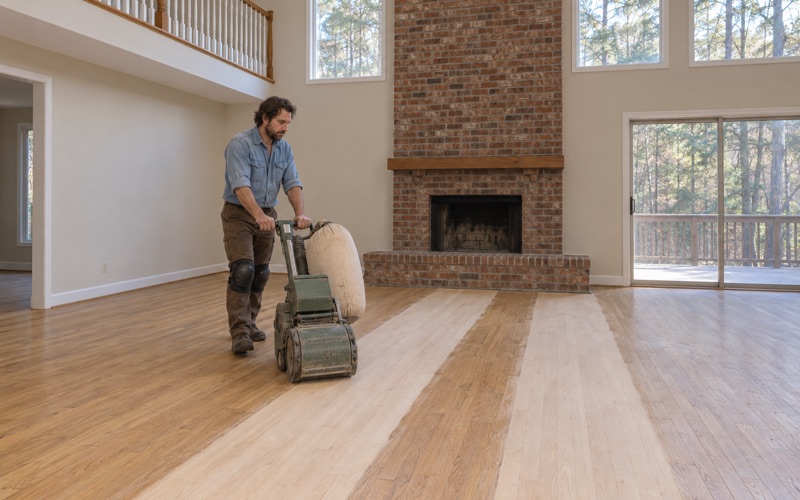
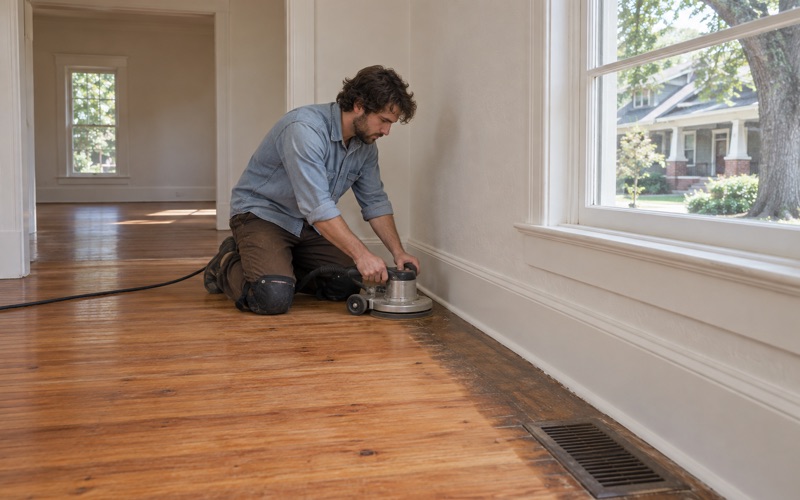
Most strip floors in these houses can be refinished if enough wood remains above the tongue. We measure that at a floor register or a threshold before recommending anything. If the wood is healthy, a full sanding with a drum sander followed by an orbital sander brings the surface back flat, and the floor keeps the character that comes with its age.
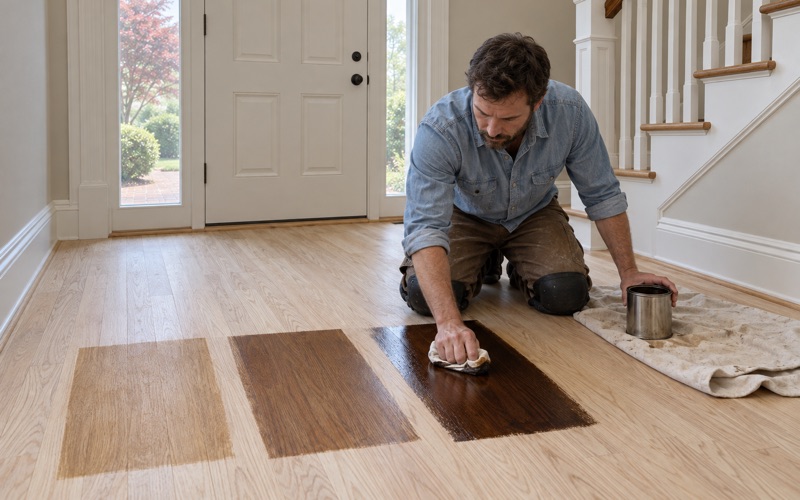
Stain color is where owners most often hesitate. We lay stain samples directly on your floor, in your own light, so you can judge them in the rooms where they will live. Old red oak can pull warmer than expected, and the orange oak look many owners want to get away from often comes from an aging oil-based finish rather than the wood itself.
When Boards Need Replacing
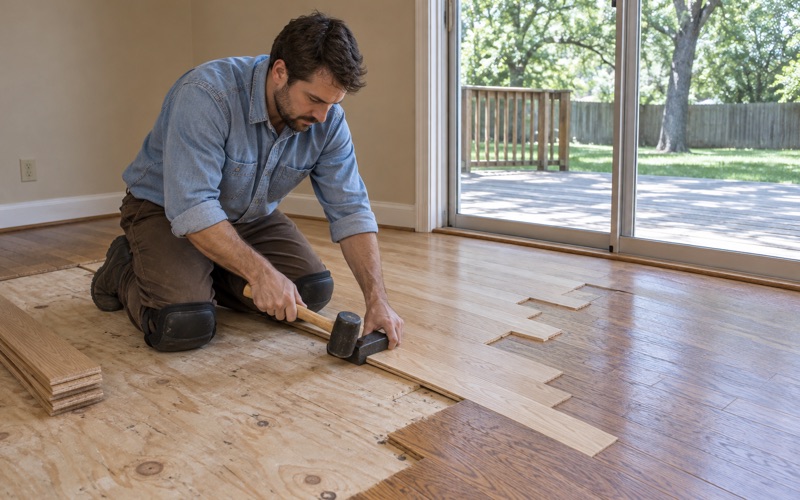
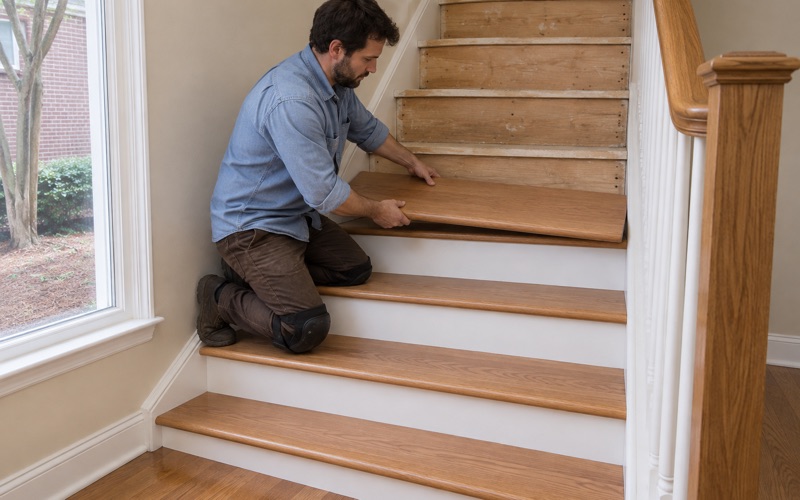
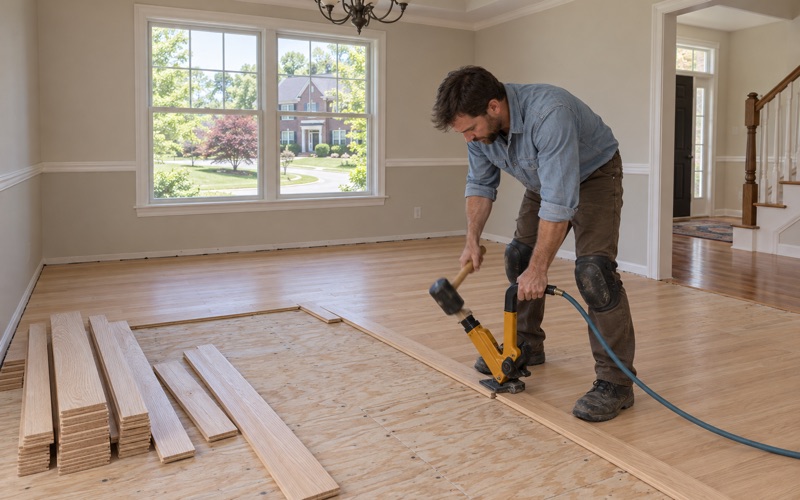
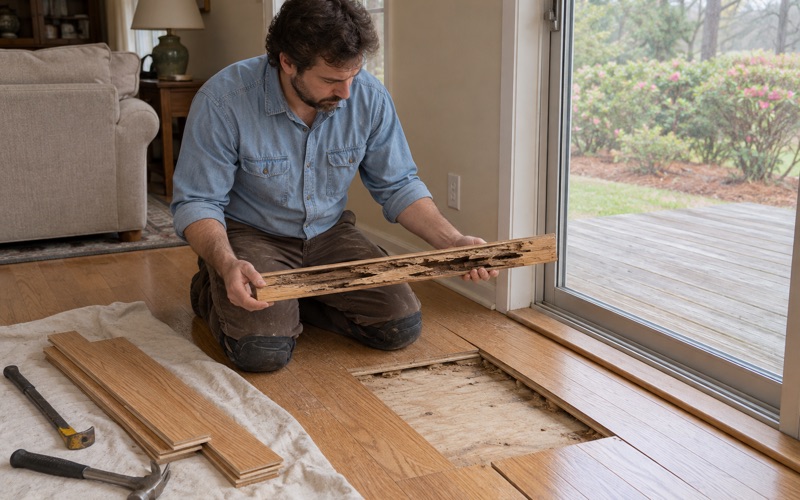
Some boards cannot be saved. Water stains that have turned black, soft spots near a leaking fixture, and termite damage all call for board replacement rather than sanding. When subterranean termites are involved, we wait until the pest control company has treated the house, then cut out the damaged boards and weave in new ones so the repair runs with the existing pattern.
Cupping and crowning need a different kind of attention. A cupped floor in a humid Georgia summer usually points to moisture from below or from a nearby leak, and sanding the edges flat before that source is fixed just creates crowning later. We take moisture meter readings across the room and find the cause first, then decide what the floor needs.
Timing Work Around a Changing Neighborhood
Owners near the Sylvan Hills II site weigh timing as much as method. Some want the floors finished before listing, while others want to wait until the heaviest construction winds down so a fresh finish is not greeted by months of tracked-in dust. We can talk through both paths, including a screen and recoat now and a full refinish later if that suits your plans.
Whatever the timing, the decision stays with you and the house in front of us. We explain what the floor can take, what it will cost to do properly, and where a cheaper shortcut would fail. In a neighborhood where so much is being built new, many owners find that a carefully refinished older floor is one of the strongest features their house has.
- 20+ Years on Wood Floors
- Moisture Readings Before Repairs
- Stain Samples on Your Floor