Smyrna Wood Flooring has spent more than 20 years on wood-flooring in Sandy Springs and across the metro, and a large share of that work happens in homes and rental units that have been lived in for half a century. We sand, repair and refinish hardwood that has carried decades of residents, and we replace boards that can no longer be saved. The goal is a floor that serves the people living on it now.
Older floors rarely fail in one dramatic way. They wear through in traffic lanes, gap at the seams, soften near a leaking dishwasher, or hide under carpet that went down decades ago. Each of those problems has its own fix, and we start by reading the floor before we price anything, so the quote matches the wood that is actually there.
This page is about a specific kind of property: the older rental and owner-occupied housing that makes up much of the northern end of the city. If you own, manage or live in one of those units, the sections below explain how we approach the floors while the neighborhood around them is being planned.
The North End and Its 1960s and 1970s Housing
A City Priority Since January 2018
In January 2018 the Sandy Springs City Council adopted redevelopment of the North End as a city priority. Among the reasons the city named was aging low-density rental housing from the 1960s and 1970s, alongside a declining retail environment and a perceived lack of reinvestment. That wording matters to anyone who owns or rents in the district, because it describes the buildings we are most often called into.
A priority is not a demolition schedule. It means the city has put the area on its agenda, and a plan for its future is being worked out in public. In the meantime, the units stay occupied, leases renew and floors keep taking daily wear. Our work sits inside that gap between a plan on paper and the homes people are living in today.
The Task Force and the Families Already There
In March 2018 the mayor and city council appointed a 14-member volunteer task force to shape a plan for the district. Its stated mission was to create a vision for revitalizing the North End that creates a place for the families presently living in the neighborhoods. About 270 residents came to the July 25, 2018 visioning meeting to weigh in.
That mission shapes how we think about floor work here. The people in these units are not placeholders waiting for something new, and their floors deserve real repairs rather than cosmetic cover-ups. A sound, refinished floor makes an older apartment or townhouse more comfortable to live in, whatever the longer plan for the corridor turns out to be.
Where the District Runs
The task force defined the project area roughly as running from Dalrymple Road north to the Chattahoochee River, and from the west side of Roswell Road east to Georgia 400. The city has also named four Roswell Road shopping centers as focus properties. Most of the housing we reach in this district sits along or just off that Roswell Road corridor.
Across the whole city, the Census count shows 13,040 homes built in the 1960s and 1970s. Not all of them are in the North End, but that figure shows how much of the local housing is now approaching or past its fiftieth year. Floors from that era have usually been sanded before, covered over at least once, or both.
Looking for wood-flooring closer to West End? See Wood-Flooring Services in West End.
Floor Repairs That Keep Older Units Livable
Water Stains, Soft Spots and Cupping
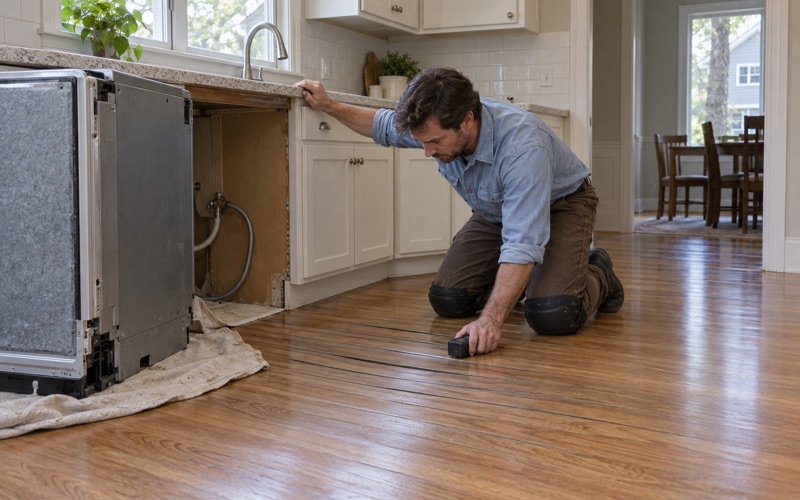
In units this age, water is the most common cause of floor damage we see. A washer hose, a dishwasher or a supply line leaks slowly, and the boards nearby darken, cup or turn soft underfoot. We trace the source, dry the area and take moisture meter readings before any board is replaced, and we document the damage room by room if an adjuster is involved.
Cupping in a humid Georgia summer is another frequent call. The edges of each board rise above the center, and the temptation is to sand the crown flat and move on. We read the moisture first and find where it is coming from, because sanding a cupped floor before it dries leaves it crowned later.
Board Replacement Instead of Patching Over
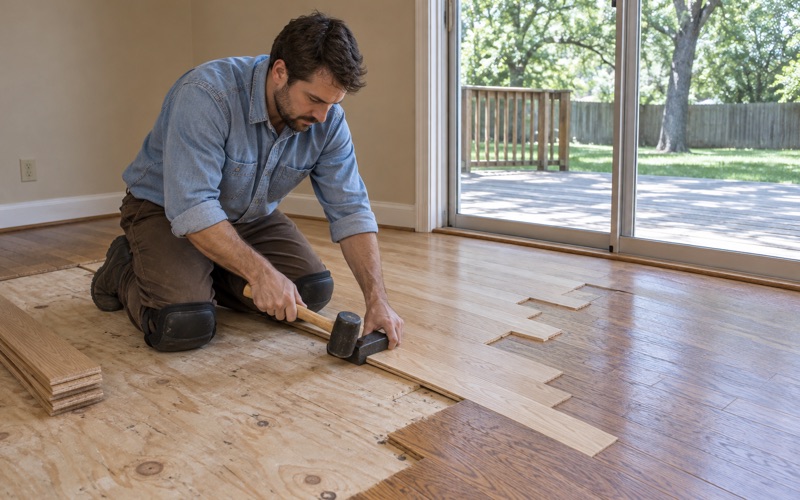
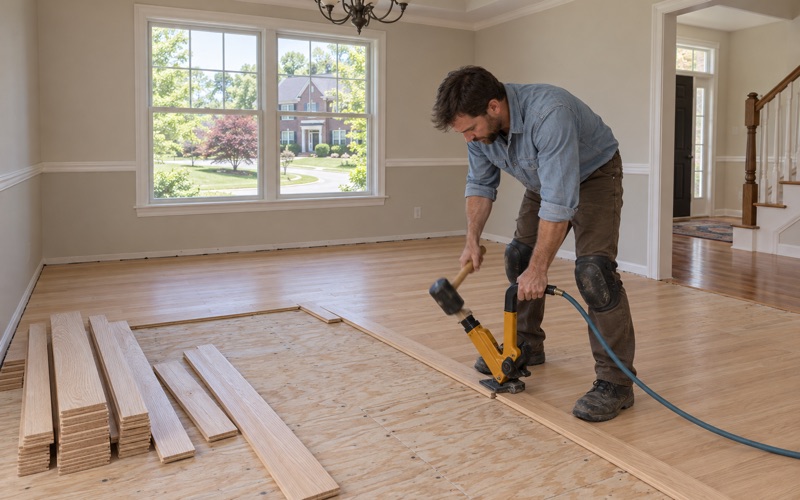
Tenant turnover leaves its mark: pet urine stains that have gone black, gouges from furniture, splintering at doorways and hollow spots where the fastening has let go. Where a board is past saving, we cut it out and weave in new tongue and groove stock so the repair runs with the floor rather than sitting on top of it.
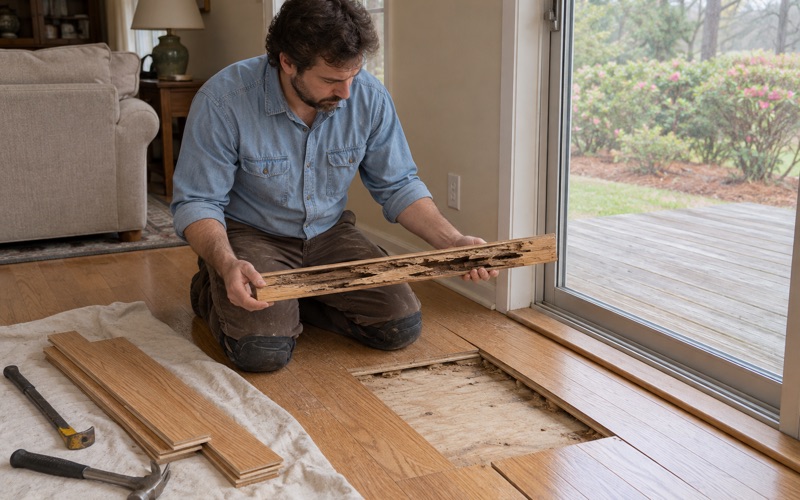
Subterranean termites are part of life in older Georgia housing, and their damage often surfaces during a floor repair. When we find it, we wait until the pest control company has treated, then cut out the damaged boards and weave in replacements. We never fill termite damage or cover it with a rug and call the floor fixed.
Stairs and Transitions in Multistory Units
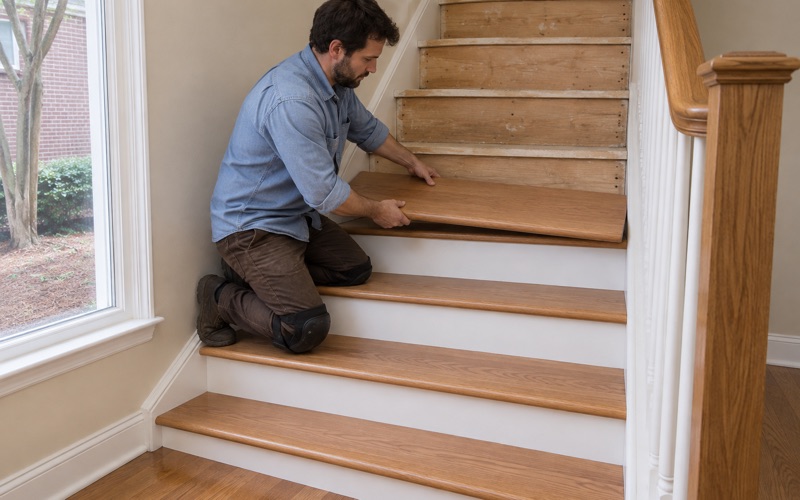
Many older townhouses and two-story apartments have wood stair treads that wear faster than any floor in the unit. We quote stairs tread by tread, and we price refinishing and new treads as the separate jobs they are. A worn stair nosing or a loose tread is worth addressing on its own, even when the rest of the floor can wait.
Transitions get the same attention. Where hardwood meets tile, luxury vinyl plank or carpet, a cracked reducer or a lifted strip of quarter round is a tripping point that tends to get worse with each move-in. Replacing those pieces is small work, but in a unit that sees regular turnover it makes a noticeable difference in how the floor wears.
Refinish or Replace in a 50-Year-Old Unit
What Is Under the Carpet
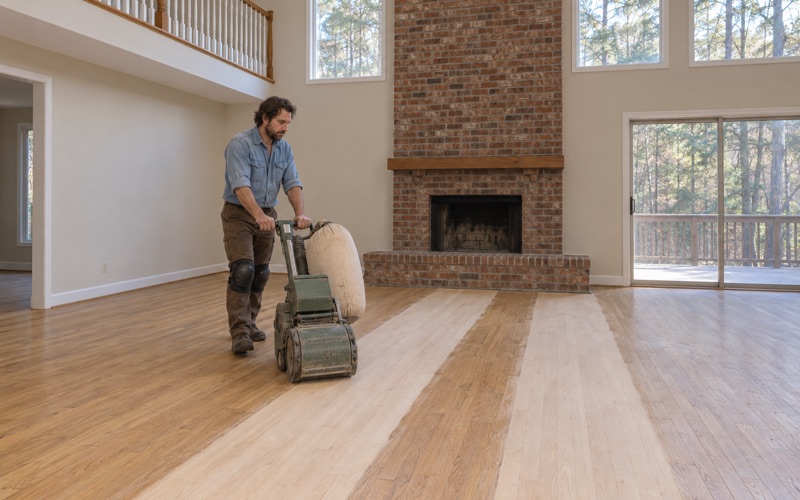
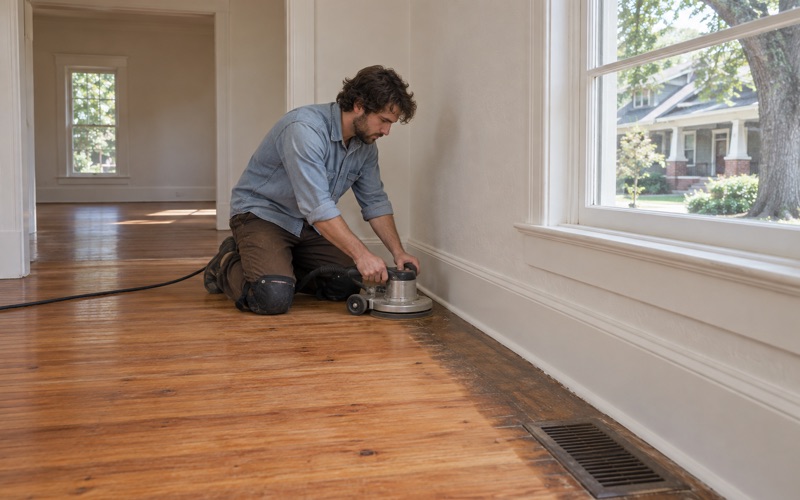
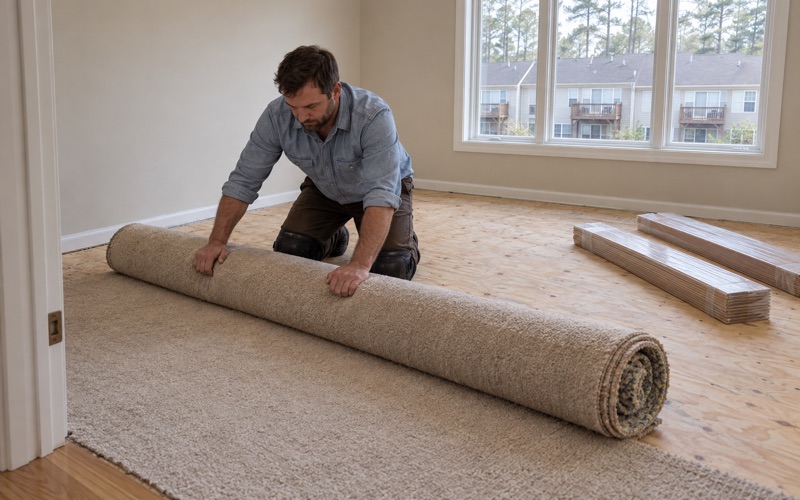
When carpet comes up in a unit from this era, what sits underneath varies, and we never assume. Sometimes it is oak strip flooring that is dull and stapled but still sound once the carpet pad is gone. In that case we sand and refinish it, filling the tack strip holes and staple rows rather than hiding them under a heavy stain.
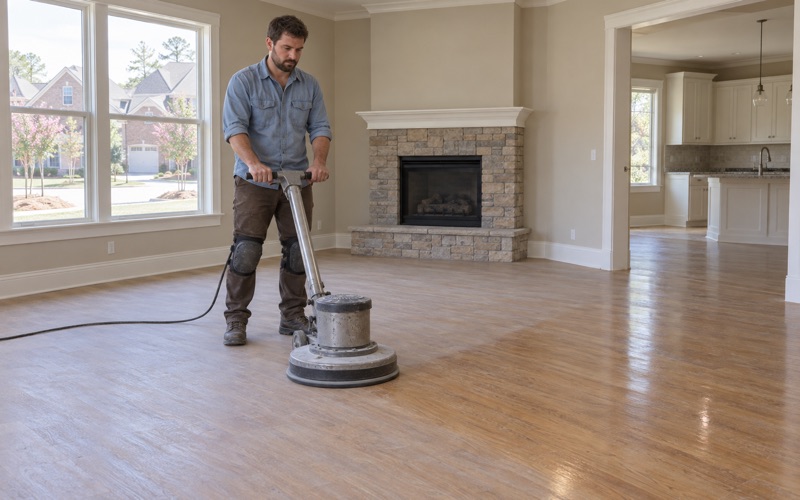
Before sanding, we check how much wood remains above the tongue. A floor that has been sanded several times over five decades may have enough left for one more pass, or it may not. That measurement, not the age of the building, is what decides whether refinishing is still on the table.
Old Finishes and Painted Surfaces
Floors this old often carry finishes nobody remembers applying. Shellac, paste wax and paint all show up in older units, and each one affects whether a new coat of polyurethane will bond. We test the existing finish before sanding, so the waterborne polyurethane or oil-modified polyurethane that goes down actually holds instead of peeling within its first year.
Every home in the 1960s and 1970s group was built before 1978, which brings lead-safe sanding practices into play when painted surfaces are involved. We check the build year and look at what is painted before any sanding starts, and we plan the work around what we find rather than treating an older unit like new construction.
When Replacement Makes More Sense
Sometimes the wood simply is not there anymore. Boards sanded too thin, widespread buckling after a long-running leak, or subfloor damage beneath the hardwood can all put replacement ahead of refinishing. We explain what we found and why, so an owner can weigh the cost of new flooring against how long they expect to keep the unit in service.
For owners of townhomes governed by an association, any change to the flooring starts with the association’s written approval. Interior flooring rules come from the community’s own declaration rather than state law, so we confirm that approval is in hand before we order material or schedule a crew. That step avoids a finished floor that has to come back up.
Planning Floor Work While the Corridor Changes
Keeping Units in Service
Owners in the North End face an unusual question: how much to put into a building while the district around it is being planned. For floors, the answer is usually to fix what affects safety and daily use, keep sound wood in good condition, and avoid work that assumes a timeline nobody can yet confirm. We price the options so that choice is clear.
Nearly half of Sandy Springs households rent, 49.8 percent by the latest Census estimate, and most renters live in buildings with three or more units. That means floor work often happens between tenants, on a schedule set by lease dates. We plan sanding and finish drying around a vacancy window so the unit can be turned over on time.
Scheduling Around Tenants and Neighbors
In an occupied building, dust and odor travel. We use dustless sanding where the floor allows it and plan the grit sequence so the job moves through each room without backtracking. Waterborne finishes cure with less odor, which helps when neighbors share a wall or a stairwell, and we tell residents in advance how long each room will be off limits.
Weather affects drying time too. Sandy Springs sits in the National Weather Service North Fulton forecast zone, and humid stretches slow the cure between coats. We check the forecast and the indoor moisture before committing to a finish schedule, and we run a dehumidifier when the air calls for it rather than rushing a coat that has not set.
Choosing Color and Finish for the Long Run
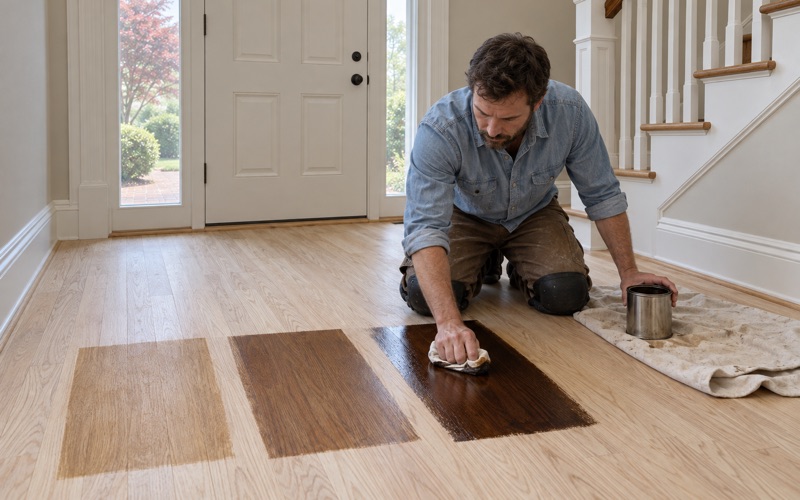
Color is easier to get right on the floor than on a sample card. We lay stain samples on your own boards, in the unit’s own light, before anything is chosen. Older oak often turns orange under a clear finish, and a sample shows whether a neutral stain or a natural look suits the space better.
Sheen level matters in a rental as much as color does. A satin or matte finish hides traffic lanes and small scratches better than gloss, which keeps a unit looking cared for between refinishes. Whatever the long-term plan for the corridor, a well-chosen finish helps an older floor serve its current residents for years to come.
- 20+ Years on Wood Floors
- Moisture Readings Before Repairs
- Stain Samples on Your Floor