Smyrna Wood Flooring handles wood-flooring in Riverdale for homeowners who have just bought a house and are working out what to fix first, and we bring more than 20 years of sanding, repairing and installing to that decision. Most calls from new owners start with one question: can the floors wait? The honest answer depends on what the rest of the house needs.
A newly bought house tends to arrive with a long list, and the floors are rarely at the top of it. Roofs, wiring, heat and plumbing decide whether a home is safe and dry, while floors decide how it looks and how it wears. We help buyers sort which floor problems belong on the urgent side of that line and which ones are a project for later.
That sorting matters because a public repair program in this city once drew the same line in writing. Below we walk through what it covered, why it left hardwood out, and how we plan floor work for a first-time owner who is also paying for everything else a house needs in its first year or two.
Riverdale’s R3 Program and Who It Served
A HUD-Funded Repair Grant for New Owners
In February 2020 the City of Riverdale, in Clayton County, announced its Repair, Rehabilitation and Reconstruction program, known as R3. It was funded through the HUD HOME Investment Partnerships Program and offered a one-time grant of up to $20,000 in home repair assistance to first-time Riverdale homebuyers. Applications ran from February 3 to March 31, 2020.
The round came with a firm finish line: all work had to be complete by November 1, 2020, and the homeowner agreed to keep the house to code for one year afterward. That announcement now sits in the city’s news archive, and we found no record of a later round. We mention it as a record of priorities, not as money anyone can claim today.
The Assessed-Value Sliding Scale
The grant amount was not the same for every house. It followed a sliding scale tied to assessed value, with the full $20,000 reserved for homes assessed under $99,999. The amount stepped down as values rose, reaching $2,000 for houses assessed at $160,000 and above, so the lowest-value homes stood to receive the most repair help.
For flooring decisions, that scale is a useful reminder of how tight the math can be on a modest house. A buyer near the top of the scale got a small fraction of the full amount, which left most of the repair bill in their own pocket. Floors compete with everything else for those dollars, so we price them to fit around the essentials rather than ahead of them.
First-Time Buyers, City Employees and Teachers
Eligibility centered on first-time homebuyers who met HUD income requirements. The announcement also named Riverdale city employees, teachers and low-income homeowners among the groups it was written to reach. It was a program aimed at people who had put their savings into a down payment and then found themselves facing a house that needed real work.
Owners who qualified still had to run the job carefully. The rules called for three bids and scope approval from the City Building Official before work began. That is a sensible habit for any first-time owner, grant or not, and it is how we suggest approaching floor quotes too: compare written scopes line by line, not just the totals at the bottom.
Looking for wood-flooring closer to Lilburn? See Wood-Flooring in Lilburn.
Why Hardwood Landed on the Luxury List
What the Program Paid For
The eligible work list reads like a home inspector’s priorities. It covered code violations, housing systems such as electrical, HVAC, roofing, plumbing and siding, plus windows, doors, accessibility changes and energy efficiency work. Every item on it keeps water out, keeps people safe, or keeps utility bills in check, which is exactly where a new owner’s first dollars belong.
Floors appear in the announcement only once, and on the other side of the ledger. The program listed as ineligible luxury items “Flooring such as tile, hardwood floors that exceed comparable costs of vinyl or carpet.” In other words, a floor covering could be part of a repair, but public money stopped at the cost of the basic option.
A Budget Line, Not a Verdict on Wood
It is worth reading that wording closely. The program did not say hardwood was a poor choice or a bad investment. It said a grant built to fix essentials would not pay the difference between wood and a cheaper covering, which is a budgeting rule rather than a judgment about what belongs underfoot in a family home.
We see it the same way. Solid hardwood and a well-made engineered floor can outlast several rounds of carpet, and oak strip flooring can be sanded and refinished more than once. None of that changes the fact that a leaking supply line or a failing electrical panel comes first, and the floor is a choice an owner makes after the house is sound.
What Stays the Owner’s Own Project
Under the program’s rules, refinishing or replacing wood floors was the owner’s own project, paid from the owner’s own budget. That is still the practical reality for most buyers here. Grant or no grant, the floors usually wait until the roof, the systems and any code items are handled and the house is dry and safe.
The upside is flexibility. An owner who controls the floor budget can choose a screen and recoat now and a full sanding later, or refinish one room and leave the rest for another season. We lay out those options room by room so the floor plan fits the money left over after the essential repairs are paid for.
Floor Choices for a Newly Bought Riverdale House
What Homes From the 1980s Through 2000s Tend to Hold
Census estimates show 62.9 percent of Riverdale’s homes were built between 1980 and 2009, so most first-time buyers here are moving into a house from that stretch. Depending on the builder, those houses may have site-finished oak in the foyer and main rooms, carpet and pad over a wood subfloor in the bedrooms, or a later layer of luxury vinyl plank.
Before we recommend anything, we lift a floor register or look at a threshold to see what is actually there. We check whether it is solid hardwood or an engineered wear layer, and how much wood remains above the tongue. That one measurement decides whether a floor can take another sanding or has reached the point where replacement is the better use of money.
Refinishing What You Already Own
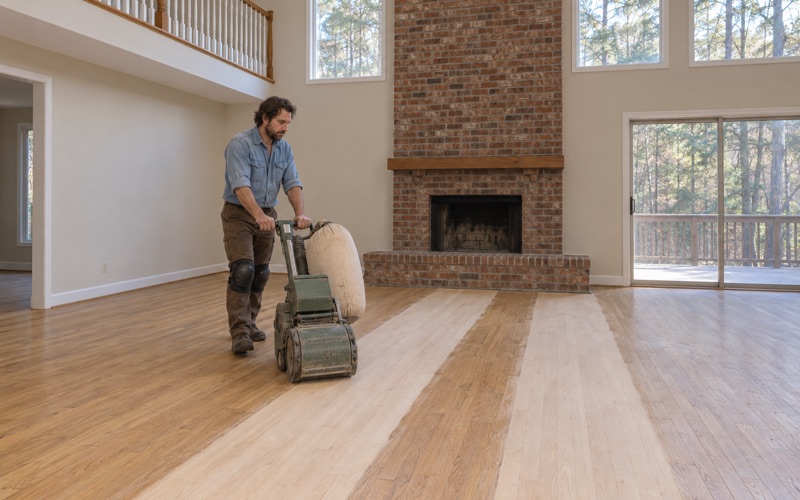
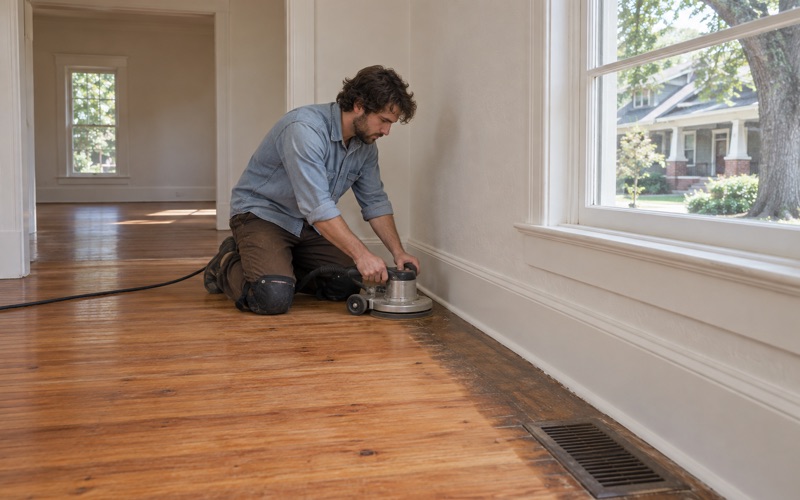
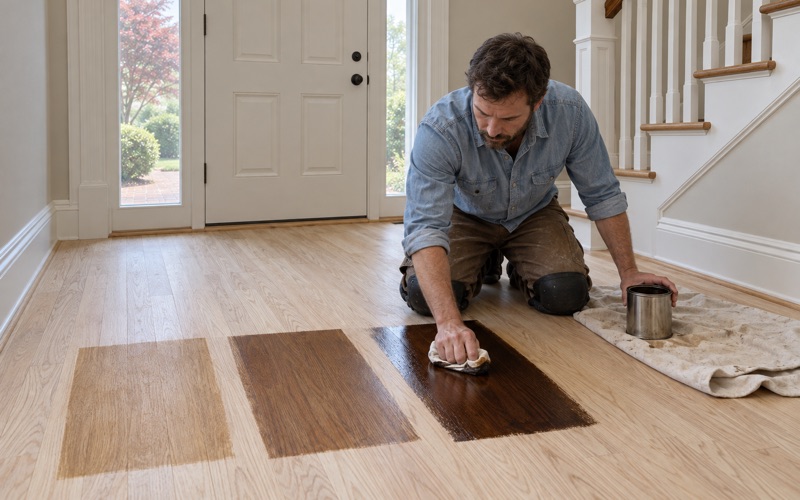
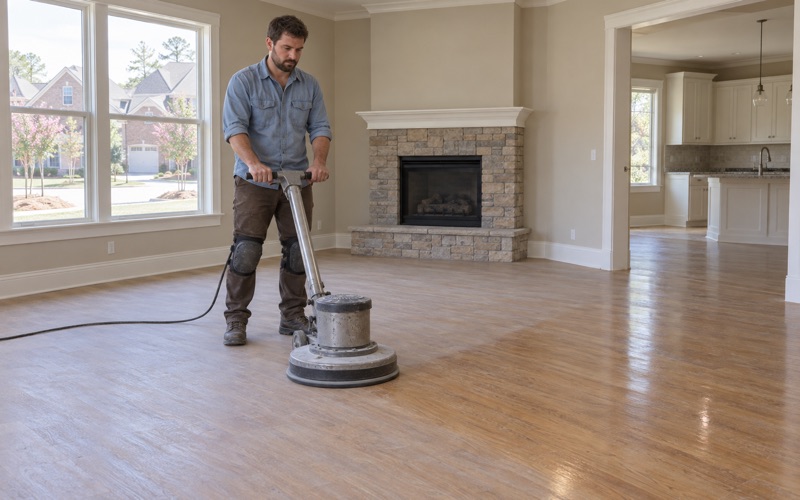
When the wood is sound, refinishing is almost always the lower-cost path. Traffic lanes, sun fade and the orange oak look that older finishes develop can usually be sanded out with a proper grit sequence. We lay stain samples on your own floor, in your own light, before a color is chosen, so the result matches the room you actually live in.
If the finish is only dull and lightly scratched, a screen and recoat may be enough for now. It restores sheen without taking wood off, which suits an owner who wants presentable floors while the budget goes to heat or plumbing. A full sanding can follow in a year or two, once the bigger bills are behind you.
When New Wood Makes Sense
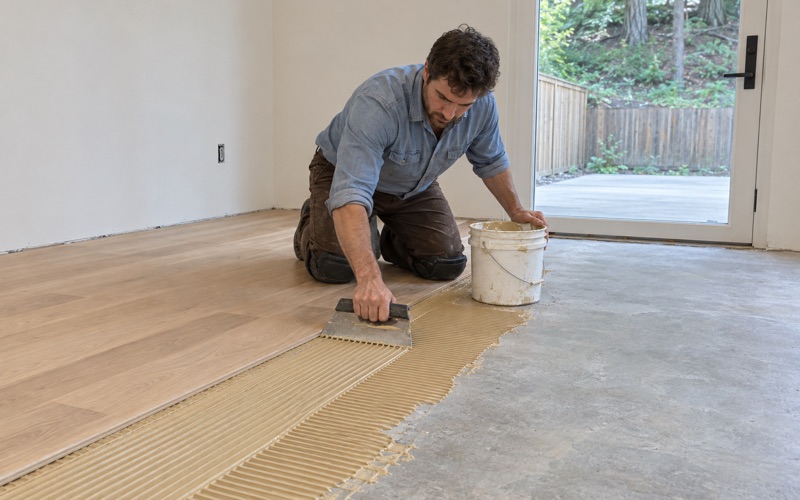
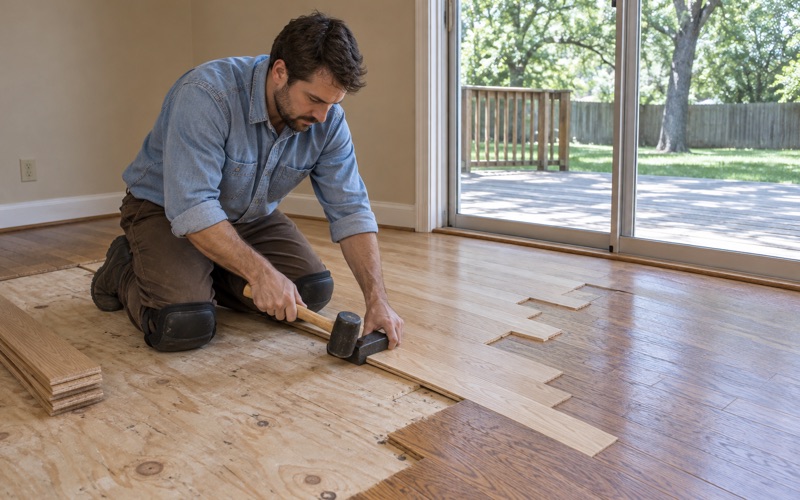
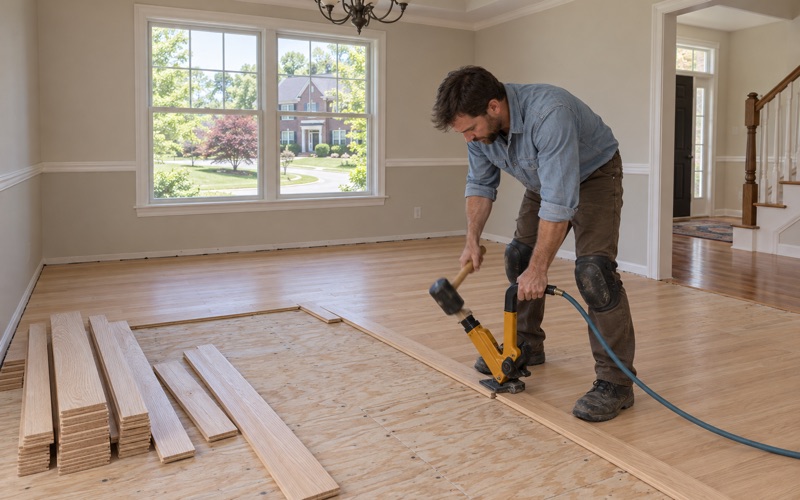
Some houses arrive with pet urine stains or water stains that run too deep to sand out, or with boards that have already been sanded too thin. In those rooms, new flooring is the honest answer, and the choice becomes solid hardwood, prefinished boards or a glue-down engineered product. Each carries a different price, install method and tolerance for moisture.
Our first step on any install is a moisture meter reading of the subfloor and the boards, followed by acclimation before a single board goes down. We also leave the expansion gap the wood needs to move through a humid Georgia summer. Skipping those steps is how a brand-new floor starts cupping or gapping within its first year.
Budgeting Floors Around Essential Repairs
Put Water and Structure First
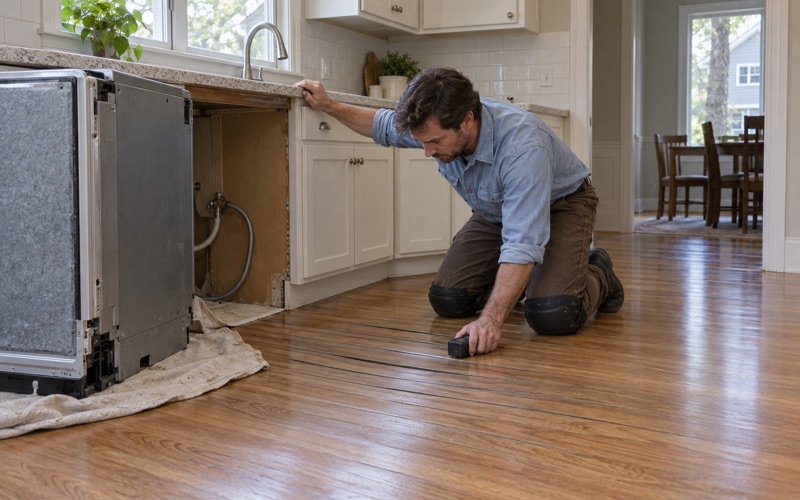
The R3 list was right about order. A floor laid over an unresolved plumbing leak or a soft subfloor is money spent twice, because the new boards will swell, cup or buckle as soon as the moisture returns. We will not replace boards until the source of the water has been traced, dried and measured, room by room.
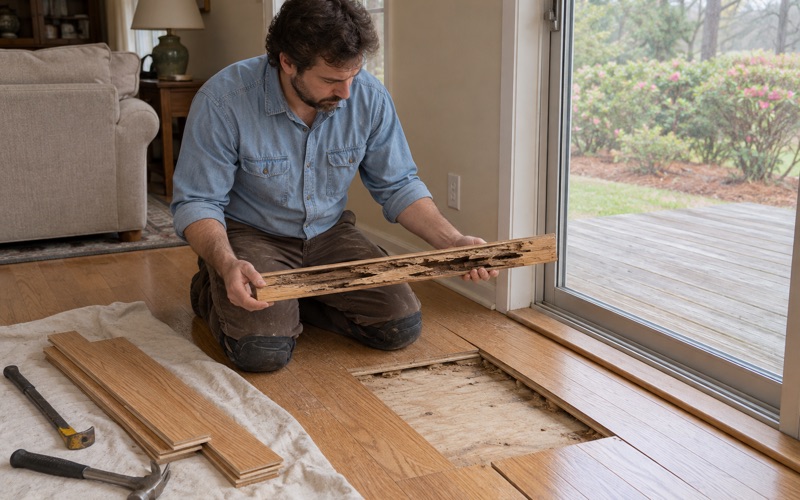
The same goes for soft spots, hollow spots and signs of termite damage. If we find mud tubes or chewed boards, the pest control company treats first, and then we cut out and weave in new boards rather than filling or covering the problem. Fixing the floor before the cause is fixed only hides the trouble until it returns.
Phasing Floor Work Over Time
Many first-time owners do floors in stages, and that works well when it is planned from the start. We often begin with the rooms people see and use most, such as the living area and main hallway, then move to bedrooms once the budget recovers. Matching stain and sheen across phases takes careful notes, which we keep on file.
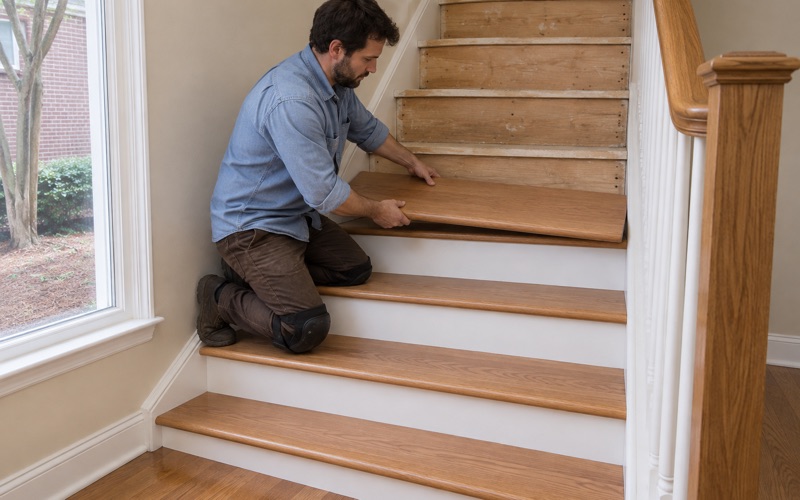
Stairs are a common place to split the work. We quote them tread by tread, with refinishing and new stair treads priced as the separate jobs they are. That lets an owner refinish sound treads now and replace worn stair nosing or risers later, without paying for the whole staircase at once.
Getting Quotes You Can Compare
The program’s three-bid rule is good advice for any floor project. Ask each contractor for a written scope that names the rooms, the square footage, any board replacement, the grit sequence and the finish, from waterborne polyurethane to oil-modified polyurethane or hardwax oil. Two quotes with different scopes cannot be compared on price alone.
Riverdale is split almost evenly between owners and renters, at 50.2 percent owner-occupied, so many buyers are stepping into houses that were rented for years. Those floors may carry more wear, more patching and older finishes than a listing photo shows. We walk the house with you, test the old finish before sanding, and write the scope around what the floors actually need.
- 20+ Years on Wood Floors
- Moisture Readings Before Repairs
- Stain Samples on Your Floor