
Smyrna Wood Flooring helps homeowners replace carpet with hardwood in Smyrna, GA, with more than 20 years of wood floor work behind us, serving surrounding cities including Vinings, Fair Oaks, Mableton, Marietta and Austell. We pull the carpet, carpet pad and tack strip, check and repair the subfloor underneath, and then either install new hardwood or refinish the oak that has been hiding under the carpet all along.
That second possibility surprises many people. A large share of homes from the 1950s and 1960s were built with oak strip flooring that later disappeared under wall-to-wall carpet, and in many of them the wood is still sound. Refinishing it usually costs far less than new flooring and gives you a floor with decades of character already built in.
Where there is no wood underneath, or the wood is too damaged to save, we install a new floor over a subfloor we have inspected and prepared. Either way, the job starts by finding out what is really under the carpet before anyone commits to a plan.
What Is Under Your Carpet
Oak Strip in Older Ranches
Many ranch homes from the 1950s and 1960s have oak strip flooring under the carpet, often in good condition because the carpet protected it from wear. Pulling back a corner in a closet is usually enough to find out, and we can do it for you during the visit.
When the carpet comes up, the oak is often pocked with tack-strip nail holes along the walls and staple rows from the carpet pad. We fill those holes and staple rows with a matched filler rather than hoping a dark stain will hide them, then sand and finish the floor to clean wood.
Plywood and Particleboard Subfloors
Homes built from the 1970s onward were often carpeted from the start, with plywood or particleboard subfloor underneath and no finished wood at all. These floors need new hardwood rather than refinishing.
Particleboard in particular needs care, because it swells when wet and does not hold flooring fasteners well. Where we find it, we may recommend adding a layer of plywood before installing hardwood, and we explain why before quoting.
Surprises Under Old Carpet
Pulling old carpet sometimes reveals water stains, pet urine stains, termite damage or old vinyl tile and black mastic. Each changes the plan, and each needs to be understood before any work starts.
We stop and show you what we find rather than working around it. Termite damage is repaired only after the pest control company has treated, and suspect old tile or mastic is tested before anything is sanded or scraped.
Preparing the Floor
Removing Carpet, Pad and Tack Strip
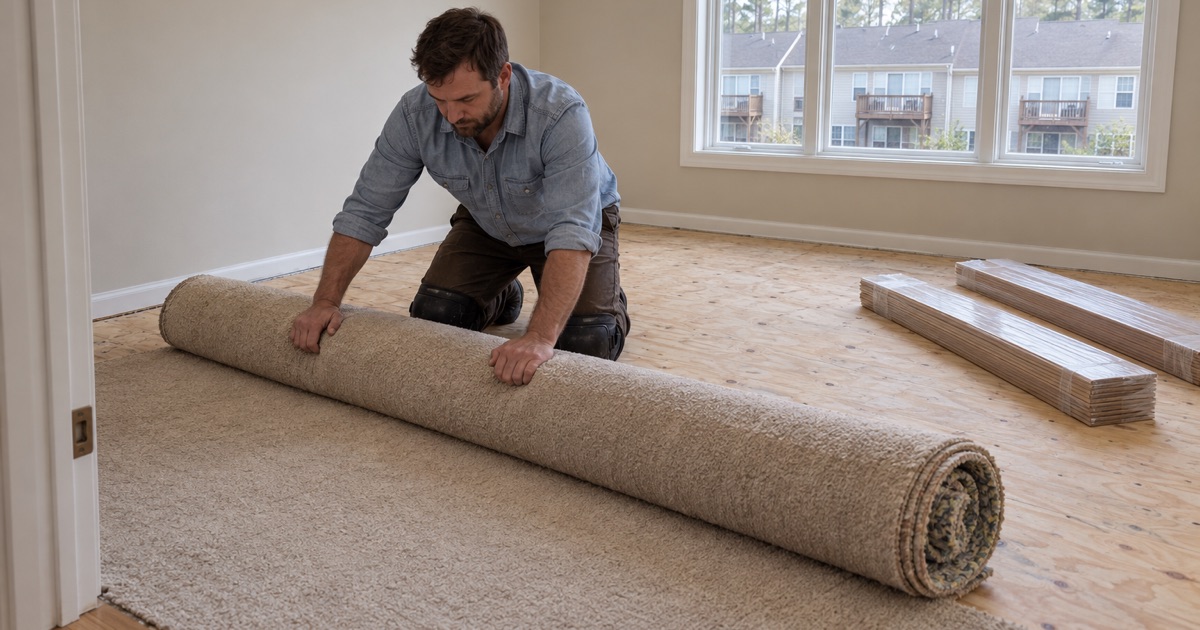
The carpet, pad and tack strip all come out, along with every staple and nail left behind. On a floor we plan to refinish, we remove them carefully so the wood beneath is not gouged. On a subfloor getting new hardwood, we clear it completely so the new boards sit flat.
We haul the old carpet and pad away. Most rooms are cleared in a few hours, and the real work of checking and preparing the floor can start the same day.
Checking and Leveling the Subfloor
Carpet hides a lot, including squeaks, dips and high seams in the subfloor that would show clearly under hardwood. We check the whole area for flatness, sand down high spots, fill low ones and secure loose panels to the joists.
Squeaks are fixed while the subfloor is exposed, because fixing them later means going through the new floor. A flat, solid subfloor is what makes a hardwood floor quiet and long-lasting.
Moisture and Acclimation
We take moisture meter readings on the subfloor and the new wood before installation. Boards installed too wet will shrink and gap, while boards installed too dry will swell and cup in a humid Georgia summer.
The new flooring acclimates in your home until the readings match. That waiting time is short compared to the life of the floor, and it prevents most of the problems people blame on the wood.
Choosing the New Floor
Solid Hardwood
Solid hardwood suits most upstairs rooms and main floors over a wood subfloor. It can be sanded and refinished many times, and it comes in species from red oak and white oak to hickory, in widths from classic strip to wide plank.
We help you choose a species and width that suit the room and match any existing wood nearby. Where the carpet replacement joins an existing hardwood hallway, we match the new boards so the two floors read as one.
Engineered Hardwood
Engineered hardwood has a real wood wear layer over a stable core, and it is the better choice over a concrete slab or in rooms with bigger humidity swings. It can be glued down, floated or nailed, depending on what is underneath.
For carpet replacement in a basement or on a slab-on-grade home, engineered wood is usually our recommendation. We test the slab for moisture first, since that test decides whether any wood floor will last there.
Prefinished or Site-Finished
Prefinished boards install quickly and can be walked on right away, which suits families living at home during the work. Site-finished boards are sanded and finished in place, giving a smooth surface that can be stained to match existing floors exactly.
We explain how each looks and wears, and which fits your schedule. For a room that has to blend into an existing site-finished floor, site-finished is usually the right answer.
Townhomes, Condos and Rentals
Association and Declaration Rules
In a townhome or condo, the declaration may set rules on hard flooring, underlayment and work hours. Any interior flooring rule comes from your own documents, not from state law, so we confirm the association’s written approval before we order material.
Where sound rules apply, we install the acoustic underlayment the building requires. Getting that right before installation is far easier than fixing a neighbor’s noise complaint afterward.
Carpet to Hardwood in Rental Homes
Many landlords replace carpet with hardwood to cut the cost of replacing stained or worn carpet between tenants. A durable finish in a satin sheen level holds up to move-ins and move-outs, and damaged boards can be repaired individually.
We schedule the work around vacancy dates so the unit is ready for the next tenant. A hardwood floor can be refinished many times, which makes it cheaper over the years than carpet that has to be replaced every few tenancies.
- 20+ Years on Wood Floors
- Moisture Readings Before Repairs
- Stain Samples on Your Floor