Smyrna Wood Flooring brings more than 20 years of wood-flooring in Norcross homes to one moment in particular, the stretch between a closing and a moving truck. An empty room shows a floor honestly. Traffic lanes, pet urine stains, water stains under an old rug and sun fade along a window wall all appear at once, and the new occupant has a short window to act.
That window matters because sanding, staining and finishing go fastest in a house with nothing in it. We can sand to bare wood, lay stain samples on your own floor in your own light, and let the finish cure before a single box comes through the door. Once the sofa and beds are in, the same job means moving everything twice.
This page covers the floor work that follows a change of hands here: refinishing before move-in, repairs for buyers of older houses, and floors in homes passing from renters to owners. We measure moisture, check build year and read the wood that remains before we quote anything, so the plan fits the floor you actually bought rather than the one in the listing photos.
Turnover in Norcross and What It Means for Floors

A City Where Many Residents Are New
Norcross describes itself plainly. The city’s own housing initiative page says Norcross is experiencing a lot of transiency, with many residents moving in only in the last five years while others move out as they are priced out of the market. That is the city speaking about its own housing, and it matches what floors in a turning-over market tend to look like.
Census figures point the same way. In the 2024 American Community Survey, 1,380 of 2,964 renter households in Norcross, or 46.6 percent, moved in during 2020 or later. Among owners the share is smaller, 784 households or 17.7 percent, while 636 owner households have been in place since before 2000. A lot of floors here are under new feet.
What the LiveNorcross Initiative Aims For
The city gathers its housing work under LiveNorcross, described as an effort to make Norcross a more livable and affordable community. A team of partners has worked on it since spring 2018, and Norcross has held alumni community status in the Georgia Initiative for Community Housing since 2021, renewed in 2023. We have no role in that program; we simply work in the houses it talks about.
Two of its stated goals bear directly on floors. One is expanding home ownership for people who are currently renting. Another is rehabilitating old houses by bringing new resources to neighborhoods where housing has fallen out of compliance. The initiative page names no program that pays for floors, so we never suggest one will, but it does describe a lot of houses changing roles.
What Churn Leaves Behind on a Floor
A floor that sees several households in a decade wears in a particular way. Each tenant sets furniture in a slightly different spot, so dents and scratches layer on top of each other. Pet urine stains darken into the grain, and traffic lanes run from the entry to the kitchen in a gray path that no amount of cleaning lifts.
Quick turnovers also invite quick fixes. We often find a screen and recoat laid over a floor that needed sanding, a patch of luxury vinyl plank floated over damaged boards, or a coat of paint on a wood floor. None of that is a disaster, but each one changes what the next refinish takes, and we sort it out before we name a price.
Looking for wood-flooring closer to Dallas? See Wood-Flooring in Dallas.
Floors When a Home Changes Hands
Refinishing Before the Move-In
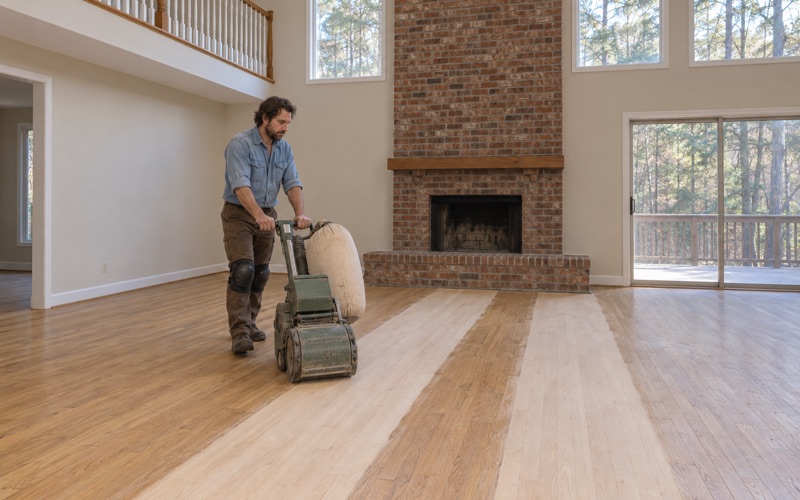
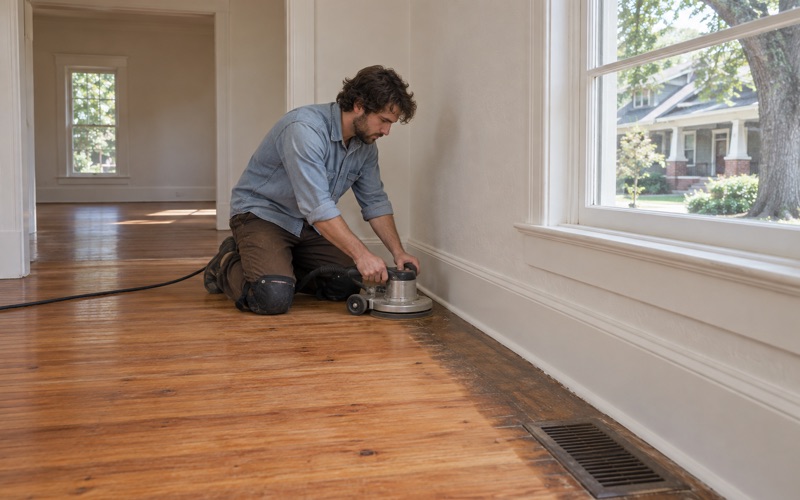
The cleanest refinish we do is the one in an empty house. With nothing in the rooms, a drum sander and edger reach every wall, the grit sequence runs without interruption, and stain samples go down where the light is honest. We finish with waterborne polyurethane or oil-modified polyurethane depending on the look and the cure time your schedule allows.
Timing is the part buyers underestimate. A waterborne finish lets light foot traffic back sooner, while an oil-modified finish needs more days before rugs and heavy furniture return. We build the schedule backward from your moving date, so the last coat has cured by the time the truck arrives rather than the day after it leaves.
Choosing a Color Before the Furniture Arrives
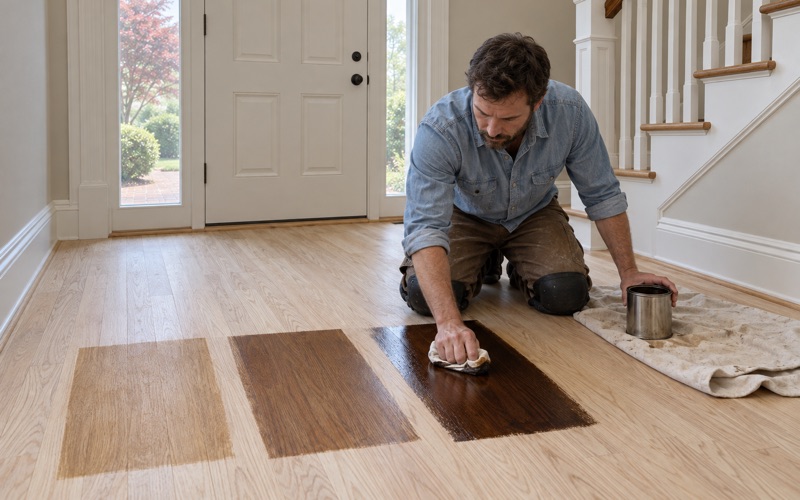
Color is easiest to settle on bare wood. We lay stain samples in two or three spots, usually near a window and in a darker hall, because red oak and white oak take the same stain differently. If the previous owner’s floor had gone orange oak under an aged finish, you get to see the wood without that amber cast.
We also talk about sheen level at this stage. A satin or matte finish hides the fine scratches a busy household adds in its first months, while gloss shows every footprint. For a family arriving with a dog, water popping ahead of a darker stain and a lower sheen is often a practical pairing, and you judge it on the samples.
Selling or Handing Back a Rental
Turnover runs in both directions. Owners preparing to sell and landlords between tenants call us for the same reason, which is a floor that photographs badly. A refinish on sound wood usually costs less than replacement, and where the finish is worn but the boards are healthy, a screen and recoat can carry a floor to the next occupant.
We tell sellers and landlords when a recoat will not bond, such as over paste wax or an unknown cleaner residue. In those cases a full sanding is the honest answer, because a new coat over wax flakes and the next tenant inherits the problem. Testing takes minutes and keeps the job from failing on someone else’s watch.
First-Time Owners and Older Houses
Renters Becoming Owners
People moving from renting to owning often inherit a floor they never chose and have not yet lived on. They also face decisions a renter never made, such as whether to sand, what finish to live with, and whether damaged boards should be replaced. We walk first-time owners through those choices in plain terms before any work starts.
Norcross has a large share of attached homes, with about one in five units a one-unit attached home in the Census count. For townhome buyers, flooring rules come from their own association declaration rather than state law, so we confirm the association’s written approval before replacing or refinishing anything. That step spares a new owner a dispute in the first year.
Reading What an Older House Holds
Norcross built more homes in the 1980s than in any other decade, about 32.2 percent of its housing units. Many of those subdivisions came with site-finished oak strip flooring that can be refinished rather than torn out. Before we promise that, we pull a vent cover or threshold and check how much wood sits above the tongue, because that margin decides how many sandings remain.
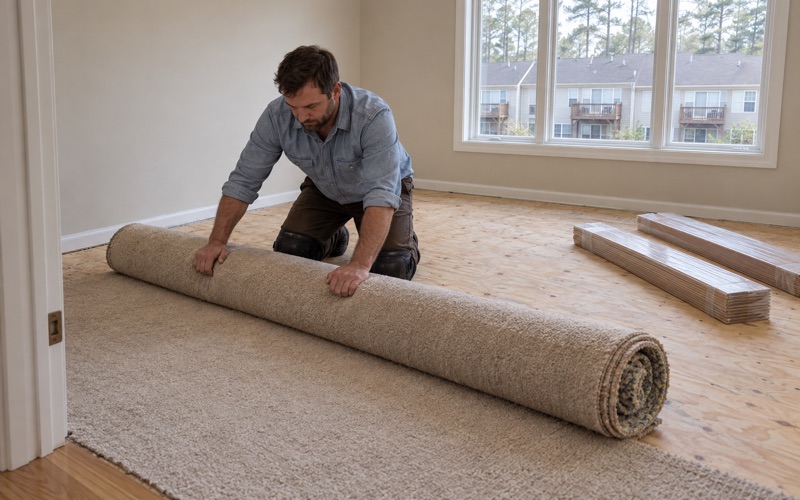
Older ranches can hide oak strip flooring under wall-to-wall carpet. When a new owner pulls up the carpet pad, the tack strip holes and staple rows along the edges are usually still there. We fill those rather than disguise them, then sand and refinish the whole room so the perimeter matches the center of the floor.
Checks Before Sanding an Older Home
About 18.3 percent of Norcross housing was built before 1980, and some of it predates 1978. For any home built before 1978, we check the build year and look for painted surfaces before a sander touches the floor, since old paint can contain lead and sanding it releases dust. The EPA RRP Rule sets the work practices we follow there.
Painted floors and old shellac need the same caution for a different reason. A finish that goes down over shellac or wax may never bond, so we test the existing coating in a corner first. If the test shows something unexpected, we change the plan before sanding the room, not after the new finish has already started to lift.
Bringing Worn Floors Back Into Good Shape
Damage a New Owner Finds Under the Rugs
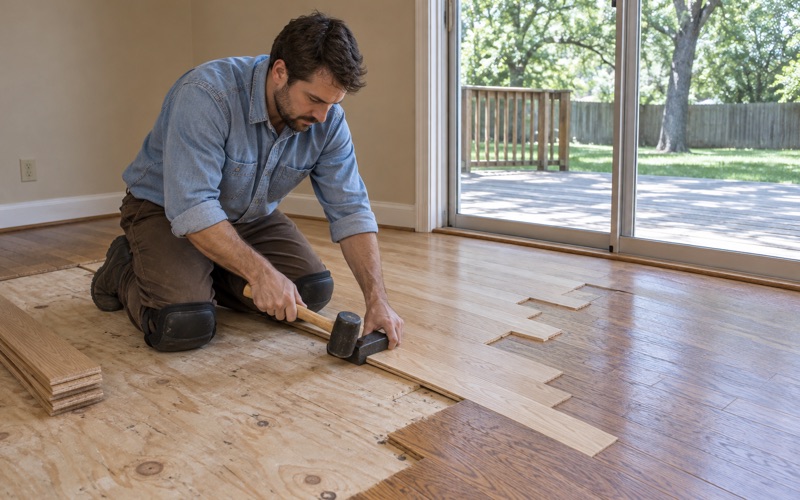
Removing the previous household’s rugs often uncovers water stains near a sink or dishwasher, black pet urine stains, soft spots and board gapping. Some of that sands out and some does not. Surface gray lifts with sanding, but deep black staining usually means board replacement, and we cut out and weave in new boards rather than filling the stain and hoping.
Where water is part of the story, we find the source first. A slow supply line leak or a dishwasher drip can keep feeding cupping long after the stain appears, so we take moisture meter readings across the room before replacing a board. When an insurance claim is involved, we document each room so the adjuster sees the readings and the damage.
Termite Damage and Hollow Spots
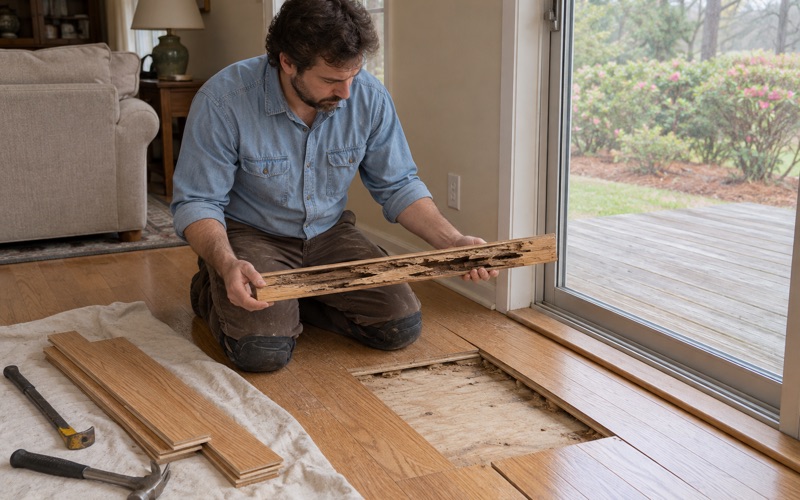
A home sale in Georgia often includes an Official Georgia Wood Infestation Inspection Report, and sometimes that report finds termite damage in the flooring. Subterranean termites leave hollow spots and mud tubes, and a board that sounds hollow underfoot may be eaten from below. We wait until the pest control company has treated, then cut out damaged boards and weave in sound ones.
We never fill or cover termite damage, because that hides a problem the next owner deserves to see. If the damage reaches a joist or the subfloor, we stop and show you what we found before going further. A new buyer is better served by a clear picture of the wood than by a smooth surface over an open question.
Humidity, Cupping and the First Summer
Norcross sits in the Gwinnett forecast zone, GAZ034, and a humid Georgia summer is often when new owners first notice cupping. Boards whose edges rise above their centers are reacting to moisture, and sanding the edges flat before the source is found turns cupping into crowning later. We read the floor with a moisture meter and look for the cause first.
Sometimes the cause is as simple as a house that sat closed with the air off between owners, and a dehumidifier and a few weeks bring the boards back down. Other times it is a leak or a gap in the vapor retarder. We tell you which it is before recommending sanding, so the money goes into a floor that will stay flat.
- 20+ Years on Wood Floors
- Moisture Readings Before Repairs
- Stain Samples on Your Floor