Smyrna Wood Flooring has spent more than 20 years on wood flooring, and in Midtown Atlanta much of that work lands in condos whose owners do not live in them. A unit leased to a student or a young professional wears differently than one its owner walks every day, and the floor usually gets attention in the short window after one tenant leaves and before the next one arrives.
That window shapes almost everything we do here. We repair scratched and stained boards, sand and refinish tired rooms, replace damaged sections, and install new hardwood or engineered flooring when an owner decides the old floor has given what it can. The goal is a floor that looks right at the next showing and survives the lease after it.
This page is written for owners who rent out a Midtown unit, or plan to. It covers who is actually living in the neighborhood now, why the housing being added is all rental, what a turnover repair involves, and which materials and finishes hold up best when a unit changes hands often.
A District Where One Resident in Three Is a Student
What Midtown Alliance Counts
Midtown Alliance, the nonprofit district organization founded in 1978, reported at the end of 2024 that college students account for roughly 8,500 of the 28,000 residents in its district. That is close to one resident in three. For an owner, it means the likeliest applicant for a leased unit is often a student or someone only a few years out of school.
Those numbers describe Midtown Alliance’s own boundary, which is not the same as any Census area, and we keep them that way. What they tell us in practical terms is simple enough. A large share of the floors we see here carry the wear of short tenancies, shared apartments and furniture moved in and out more often than in an owner-occupied home.
Every New Home in 2024 Was an Apartment
The same Midtown Alliance review found that nearly 2,200 residential units opened in the district during 2024, and every one of them was an apartment. None was offered for sale. The neighborhood is growing quickly, but it is growing as rental housing, and that changes who competes with a leased condo for tenants.
A condo owner leasing a unit is now up against brand-new apartment towers with fresh finishes throughout. Midtown Alliance put the average non-student apartment rent at $2,460 a month in December 2024. A renter comparing a condo against a new building at that price notices a worn traffic lane or a gray water stain by the kitchen, and the floor becomes part of the pitch.
Student Towers Rented by the Bed
Of the six residential projects that opened in 2024, 600 beds were dedicated to college students, and Midtown Alliance expected another 800 beds the following year. Among the projects it listed was the Rambler student housing tower rising at Peachtree and 4th Streets, planned at 798 beds. These buildings lease by the bed rather than by the unit.
We mention the by-the-bed towers because they set the tone for student housing in the area. Students who start in one of those buildings often move into a leased condo later, sometimes with roommates splitting the rent. An owner who understands that tenant pool can plan floors for heavier use instead of being surprised by it at every move-out.
Looking for wood-flooring closer to Powder Springs? See Wood-Flooring Services in Powder Springs.
Owning a Condo and Leasing It Out
Condo Supply Has Stopped Growing
According to Midtown Alliance, the last condominium project that offered residents a chance to own came online in 2021, with the 40 West 12th Condominiums. Since then, new construction in the district has been rental. The existing condo stock is what owners and buyers have to work with, and it is not being refreshed by new projects.
That makes each existing unit worth maintaining rather than running into the ground. An owner who holds a Midtown condo as a rental is holding something that is no longer being built here. Keeping its floors sound between tenants protects rent and resale value both, and a well-kept floor is usually cheaper to maintain than a neglected one is to replace.
Renters Who Move Often
For housing figures we use ZCTA 30308 as a labeled proxy, since no Census place matches Midtown and the ZIP area covers only part of it. In that proxy, 61.9 percent of renter households moved in during 2020 or later, and 61.3 percent of renter householders are under 35. Owners make up 35.2 percent of households there.
In plain terms, most renters in that area are young and fairly recent arrivals. Each move carries boxes, bed frames and dollies across the same path from the door to the bedroom. We see that pattern on the floor itself, as a dull lane through the finish where the traffic concentrates while the corners and closets still look almost new.
Checking the Declaration Before Work Starts
Midtown condos sit under their own recorded declarations and association rules, and any interior flooring requirement comes from those documents. Before we quote a replacement, we ask the owner to confirm what the association allows and to secure written approval where it is needed. Refinishing an existing floor is usually simpler than tearing it out, but we still check.
The City of Atlanta and Fulton County have jurisdiction over Midtown, while Midtown Alliance is a nonprofit and not a government. We do not guess at building rules or rental policies on an owner’s behalf. We read what the association provides, plan the job to fit it, and flag anything that needs the board’s sign-off before material is ordered.
Floor Repairs Between Leases
Reading the Wear a Lease Leaves
At move-out we walk the unit and sort the damage into what a recoat will handle and what needs more. Surface scuffs and a dull traffic lane usually stay in the finish. Pet urine stains, deep gouges from dragged furniture, and black water stains around a sink or dishwasher usually go into the wood itself and need sanding or board replacement.
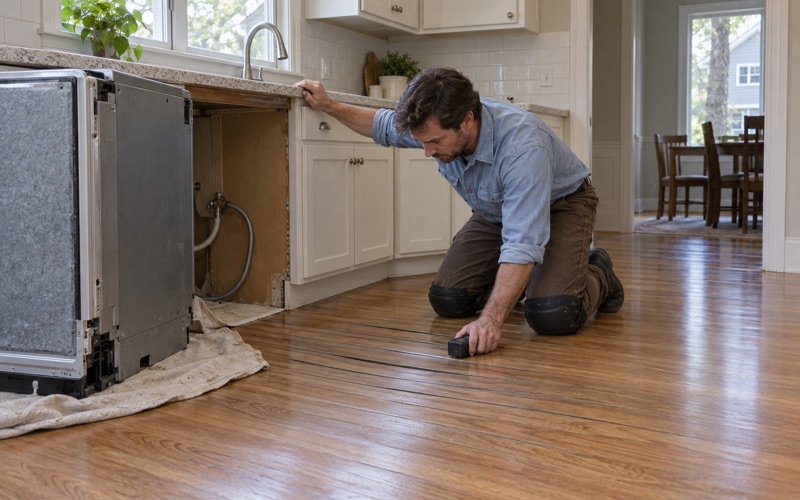
We also press for soft spots and listen for hollow spots near the kitchen and bath, since a slow leak under a tenant’s watch may never have been reported. Cupping along a wall can point to moisture from a supply line. We read it with a moisture meter and find the source before anyone sands the crowns flat and calls it fixed.
Screen and Recoat or Full Sanding
When the wear is only in the finish, a screen and recoat is the fastest and least expensive turnover repair. We abrade the existing coat and lay down a fresh one, which restores the sheen and protects the wood without taking it down to bare boards. On an occupied schedule, that is often the difference between a short gap and a long one.
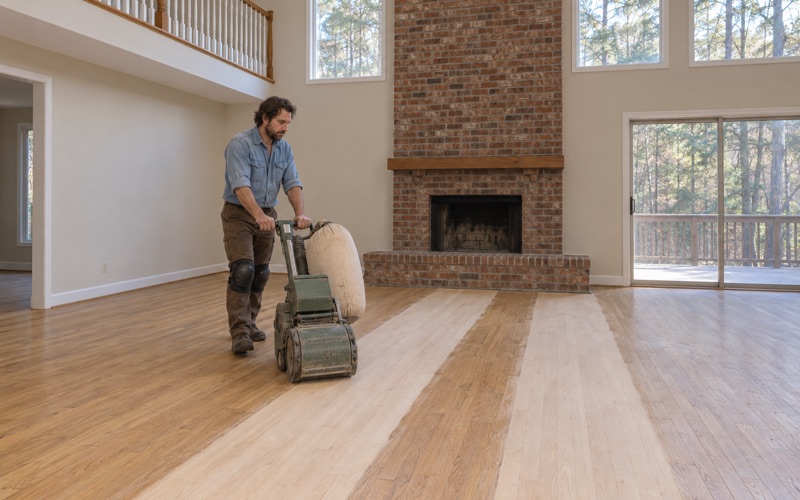
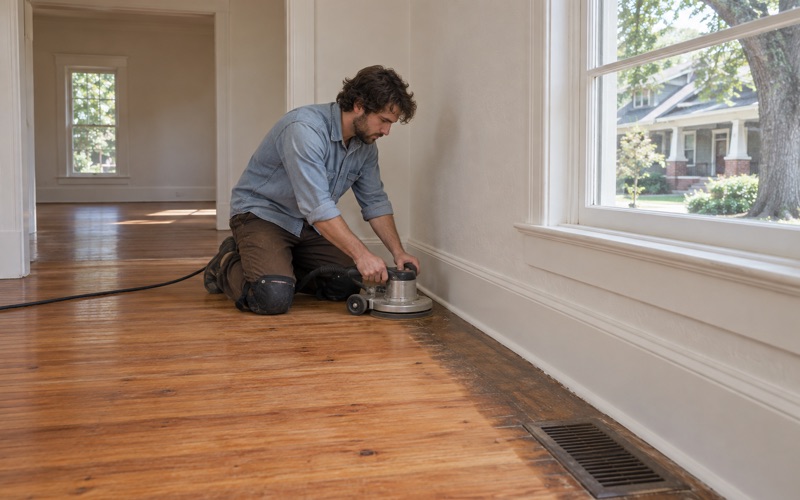
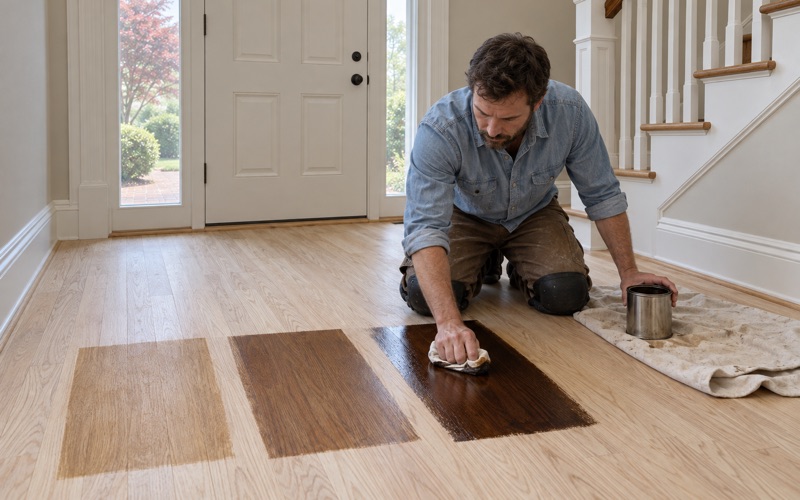
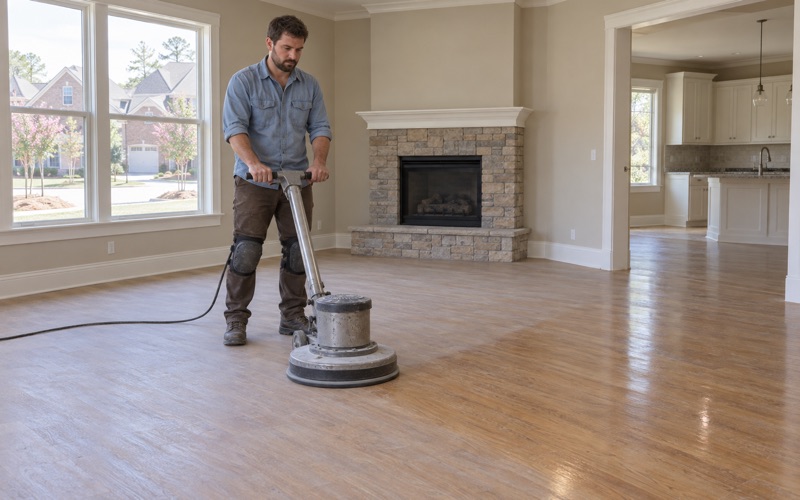
When stains, gray patches or deep scratches reach the wood, a full sanding is the honest fix. We work through a proper grit sequence with a drum sander and an orbital sander, and we use dustless sanding equipment where the unit allows it. Stain samples go down on the owner’s own floor, in the unit’s own light, before a color is chosen.
Board Replacement and Water Damage
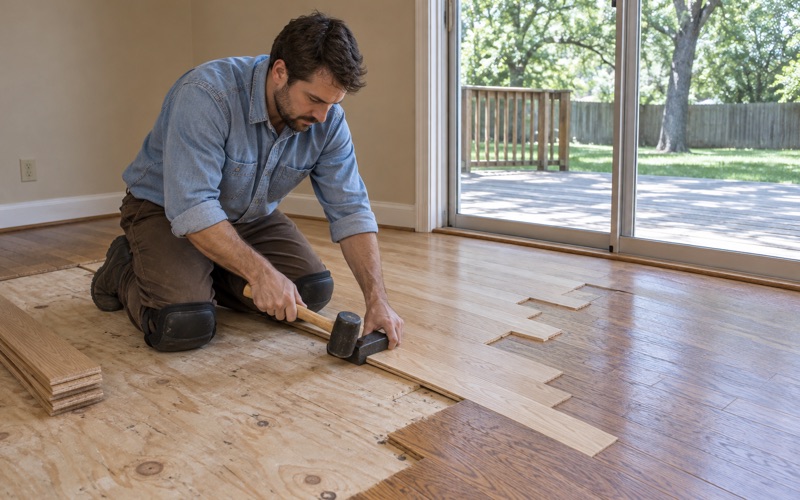
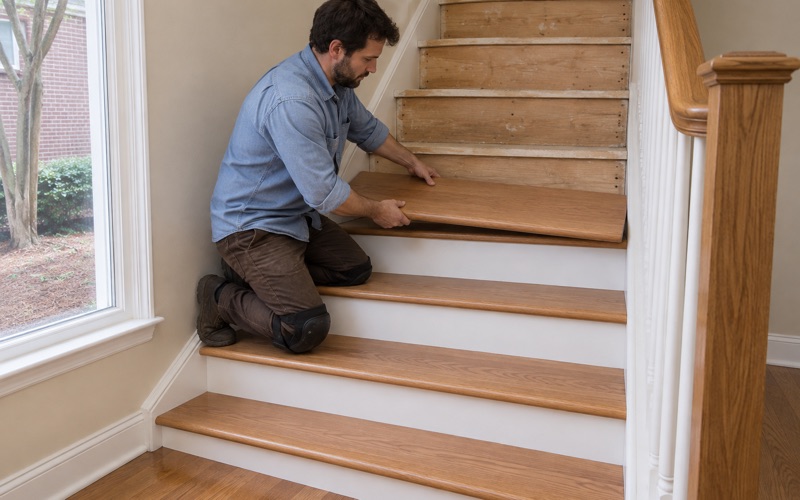
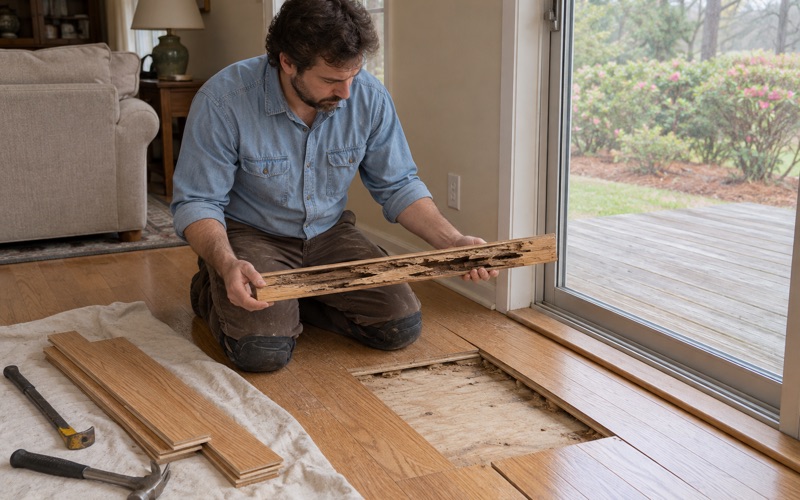
Some damage is too deep to sand out, and those boards get cut out and woven in with matching tongue and groove stock. Done carefully, a patch in a hallway or by the refrigerator disappears once the room is refinished. A few replaced boards cost far less than a whole new floor and keep a rental on schedule.
Water from a washer, a dishwasher or a supply line calls for more care. We trace where the water went, dry the area, and measure moisture before any board is replaced, because new wood laid over a wet subfloor will cup or buckle later. When an insurance claim is involved, we document the damage room by room for the adjuster.
Choosing Floors for High-Turnover Units
Hardness and Wear Layer
For a unit that changes tenants often, we steer owners toward species and products that tolerate abuse. White oak and red oak both carry solid Janka hardness ratings, and both refinish well over many cycles. A harder species will not make a floor scratch-proof, but it slows the dents that chairs, rolling luggage and dropped items leave behind.
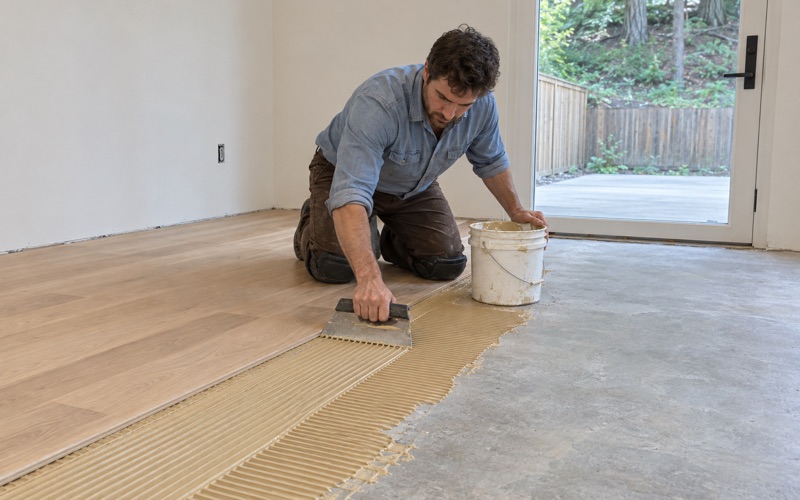
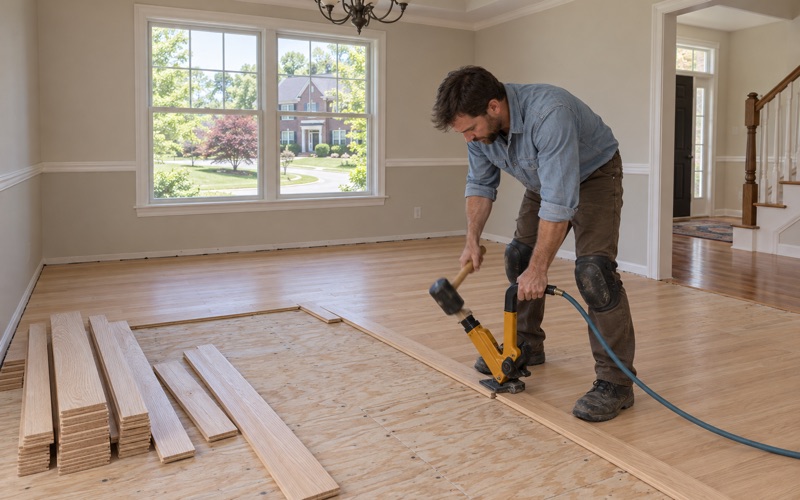
In many towers, glue-down engineered flooring or a floating floor is the practical choice over nailed solid hardwood. What matters most is the thickness of the engineered wear layer, since that decides how many times the floor can be sanded in future turnovers. A thin wear layer looks fine at install and leaves little room for the repairs a rental will need.
Finish Choices That Recoat Easily
The finish is where a rental floor earns its keep. Waterborne polyurethane dries quickly and stays clear, which helps when the unit needs to be ready for a new tenant within days. Oil-modified polyurethane builds a warmer tone and a tough film, while hardwax oil allows spot repairs in a single worn area without redoing the whole room.
We usually recommend a satin or matte sheen level for leased units, because it hides fine scratches and dust far better than gloss. A lower sheen also makes a screen and recoat blend more evenly at the next turnover. Owners who plan to recoat between most tenants generally spend less over time than those who wait for a full sanding.
Planning Around the Building
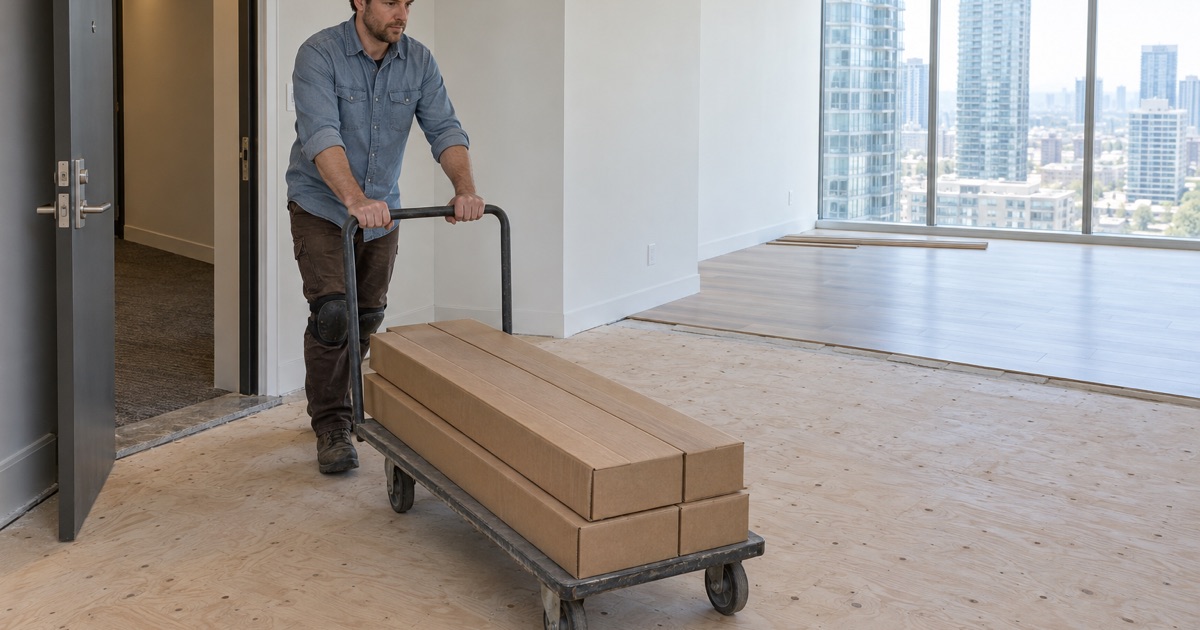
Most Midtown condo work happens inside larger buildings, and the proxy shows 64.6 percent of housing units there in buildings of fifty or more. That means freight elevator bookings, loading dock times and quiet hours all set the schedule. We coordinate those with the building’s management before the first box of flooring arrives.
We also check the declaration for any acoustic underlayment rule before ordering material, so an install is not stopped halfway. For owners leasing to students and young renters, we plan the job to finish inside the gap between tenants, leave the unit clean, and hand back a floor ready to photograph for the next listing.
- 20+ Years on Wood Floors
- Moisture Readings Before Repairs
- Stain Samples on Your Floor