Smyrna Wood Flooring has spent more than 20 years on wood-flooring in Mableton and the surrounding area, and a growing share of the calls we take there now come from rental owners. A tenant reports a musty smell, a soft spot by the kitchen or boards lifting along a wall, and the owner needs to know what is happening under that floor before anyone promises a date.
That question carries more weight than it used to. The city now has a written habitability standard for rentals, and a floor that hides water, mold or a failing subfloor is exactly the kind of condition it describes. Our part is the wood: finding where the moisture came from, taking out what cannot be saved and putting back a floor that holds up once the cause is fixed.
We do not treat mold, and we do not decide whether a unit meets the city’s standard. What we do is read the floor honestly, work in sequence with the plumber, roofer or remediation company handling the source, and record what we found in each room so the owner has a clear account of the repair.
What Mableton’s Housing Ordinance Means for Rental Floors
A 7-0 Vote on Habitability
Mableton has been a city only since May 11, 2023, and in September 2025 its council approved the Safe and Healthy Housing Ordinance by a unanimous 7-0 vote. According to the city’s announcement, the measure defines what it means for a rental property to be fit for human habitation and sets legally enforceable housing standards.
The mayor has said the state’s 2024 Safe at Home Act did not define what habitable meant, and reporting at the time tied the ordinance to tenant complaints along the Riverside Parkway corridor. The first enforcement targets the city named were Silver Creek Crossing, 575 Apartments and The Residence at Riverside, so larger complexes came first.
Mold, Infestation and Structural Hazards
Under the ordinance, rental units must be free from mold, infestation, structural hazards and unsafe utilities, and its mold remediation requirements are aligned with EPA and HUD guidelines. The city’s release does not single out floors, but floors are where several of those conditions show up first: a stain spreading from a cabinet base, boards that feel spongy underfoot, or a musty smell a tenant notices before anything is visible.
Reporting on the ordinance listed sub-standard conditions that include severe structural damage or roof leaks and mold or moisture not meeting EPA standards. A floor sitting over a slow leak can touch several of those at once, which is why we start with the source rather than the surface.
When the City Orders Corrective Action
The ordinance expands enforcement so the city can cite violations, order corrective action and, if necessary, conduct emergency remediation and place liens on noncompliant properties. Mableton’s Building Division describes flooring as cosmetic work, alongside painting and cabinets without plumbing changes, but a floor pulled up because of water damage often reveals repairs that are not cosmetic at all.
When an order arrives, owners usually have several trades to line up in the right order. We slot the flooring work where it belongs in that sequence, after the leak is repaired and the space is dry, and we tell you plainly if what we find under the boards calls for a structural or plumbing trade before we go further.
Looking for wood-flooring closer to Marietta? See Wood-Flooring in Marietta.
Moisture, Mold and What the Floor Is Telling You
Cupping, Crowning and Buckling
Wood reports moisture in its shape. Cupping, where board edges rise above the centers, means the underside is wetter than the top. Crowning is often the aftermath of someone sanding a cupped floor flat before it dried, and buckling, where boards lift off the subfloor entirely, points to a large or long-running water event.
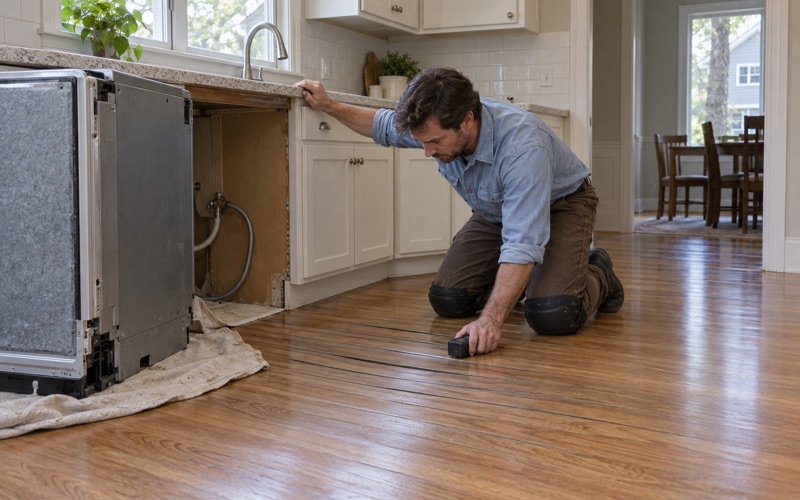
We read each pattern with a moisture meter, mapping readings across the room rather than trusting one sample. The shape of that map usually points toward the source: a ring spreading out from a dishwasher, a line following a supply pipe, or a wet band along an exterior wall below a window or a roof leak.
Tracing the Source Before a Board Comes Up
In rental units the usual suspects are washer hoses, dishwasher connections, toilet and sink supply lines, a leaking water heater and storm water getting in through a roof or window. A tenant may not see a slow drip under an appliance for weeks, so by the time a stain reaches the living area the subfloor around it has often been wet a long time.
We trace the water back before we remove anything, and we photograph and log readings room by room. That record matters for an owner dealing with a city order, a tenant and sometimes an insurance adjuster, because it shows where the water came from and how far it traveled.
Soft Spots, Subfloor and Joists
A soft spot or a hollow sound underfoot means the problem may have moved past the finish flooring. Plywood or plank subfloor that stays wet loses strength and can delaminate, and in a longer leak the joist below it can be affected as well. Those are structural hazards, and they are not something a new layer of flooring should cover.
When we open a floor and find a compromised subfloor or joist, we stop and say so. Framing repair belongs to the right trade, and the Building Division states that any work altering load-bearing components requires a permit. Once the structure is sound, we pick the flooring back up.
Removing Wet and Damaged Rental Floors
Deciding What Can Stay
Not every wet floor has to come out. Solid hardwood that cupped from a short event can often flatten on its own once the source is fixed and the room is dried, and we keep measuring until the readings say so. Boards that are black-stained, split or sitting over rotted subfloor are different, and leaving them in place only hides the problem.
Engineered flooring is less forgiving, because once water gets into the core the wear layer can separate. Floating floors and luxury vinyl plank laid over a wood subfloor can trap moisture underneath and hide a leak for months. Where we find either, we pull enough to see the subfloor and decide from what is actually there.
Working in Step With Mold Remediation
When there is visible mold under a floor, the remediation is a separate job for the company handling it under the guidance the city points to. We time our removal around that work rather than ahead of it, so wet material comes out in the order the remediation plan calls for and nothing is carried through the unit that should have been contained.
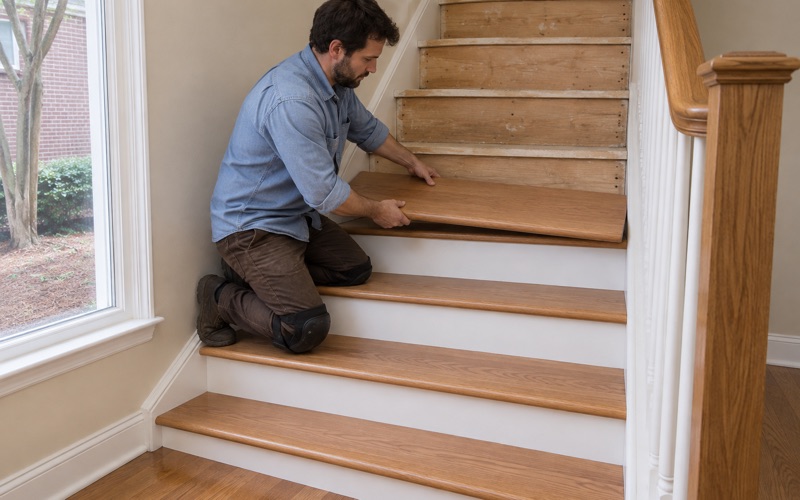
Our role is the flooring on either side of that job: opening the floor so the extent can be seen, removing the boards, carpet pad and tack strip that need to go, and coming back to install once the space has been cleared and dried. We never describe our floor work as mold treatment, and we leave that sign-off to the people doing it.
Termite and Pest Damage in the Same Floor
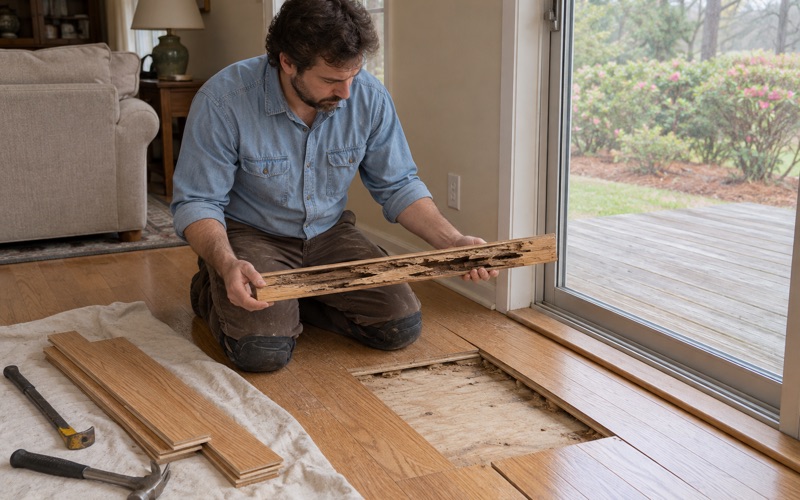
Infestation is also on the ordinance’s list, and in Georgia that sometimes means subterranean termites working in the same damp wood a leak created. Mud tubes on a joist, termite swarmers near a window or boards that crush under a screwdriver all mean the pest control company treats first.
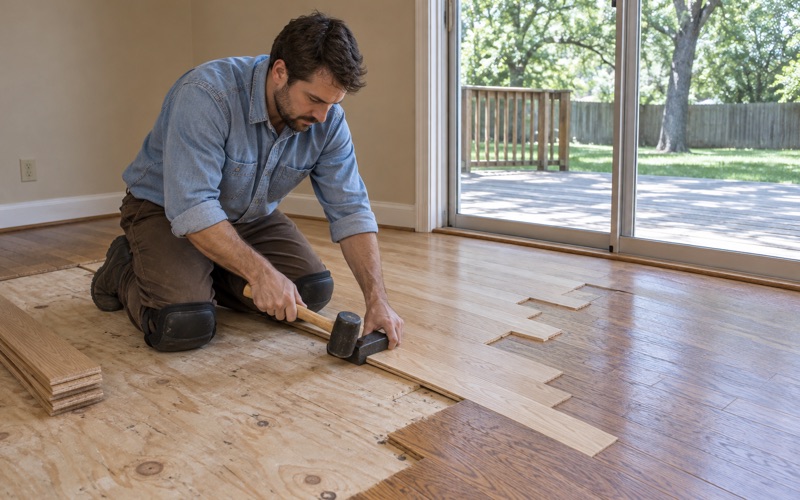
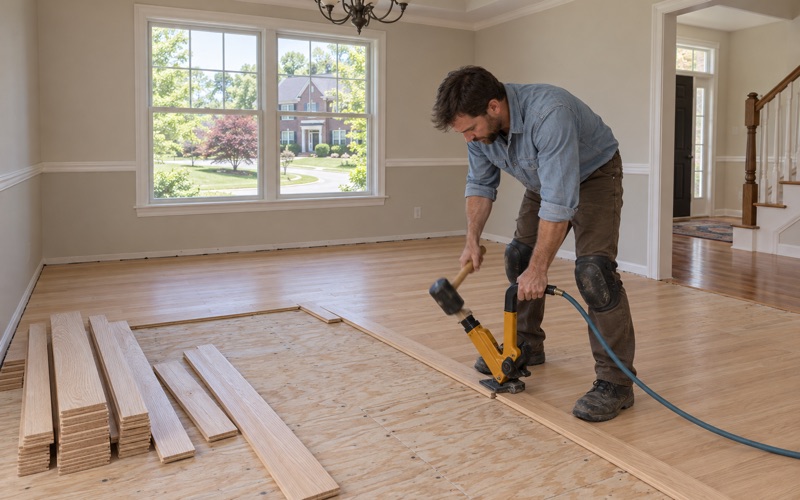
After treatment, we cut out damaged boards and weave new ones into the surrounding floor rather than filling or covering the channels. Powderpost beetle damage, with its small round exit holes, gets the same approach once its cause has been dealt with.
Restoring the Floor Once the Cause Is Fixed
Drying, Measuring and Acclimation
Replacement only starts when the subfloor and surrounding boards read dry and stay that way. We run dehumidifiers where needed, recheck with the moisture meter over several days, and let replacement wood acclimate in the unit so it goes down at conditions close to what it will live in.
Humid Georgia summers make this step easy to rush. A floor installed over a subfloor that is still wet can cup within weeks, which leaves the owner with a second failure and the tenant with the same complaint. We would rather hold a date than lay boards over a reading we do not trust.
Matching and Weaving in New Boards
Much of Mableton’s housing has some age on it: about 34.7 percent of its homes were built before 1980. Where a unit has site-finished red oak or white oak and only part of a room was damaged, we weave replacement boards into the tongue and groove so there is no straight seam, then match species and width to the existing floor.
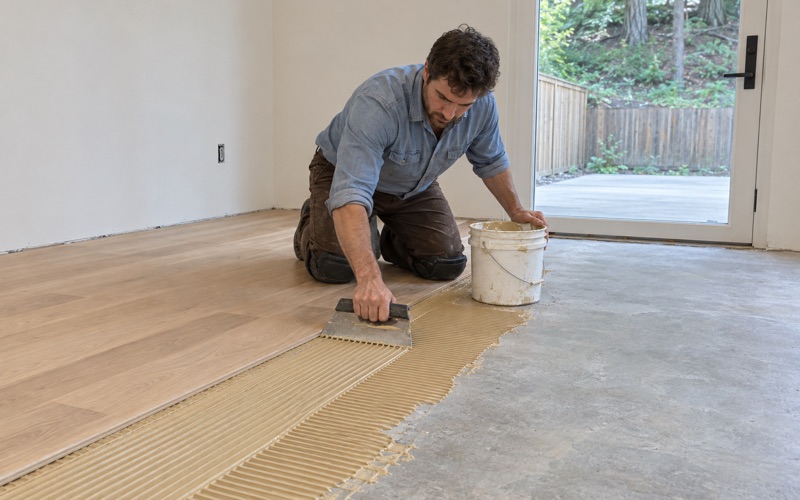
In a newer unit with prefinished or glue-down engineered flooring, we look for matching stock first and tell you when a match is no longer made. Sometimes the honest answer is to replace a full room so the floor reads as one surface, and we price both options so you can choose.
Refinishing Between Tenants
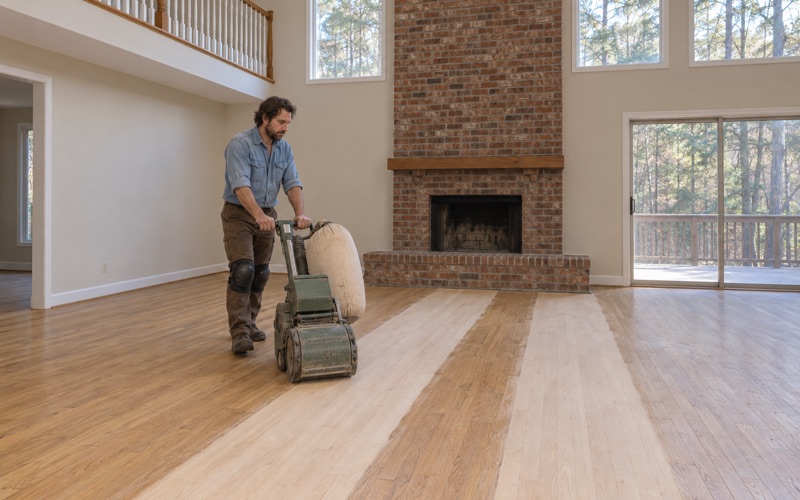
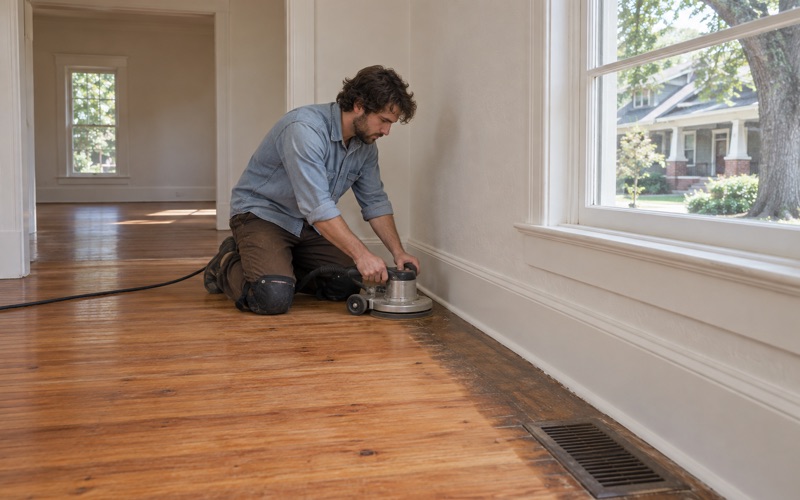
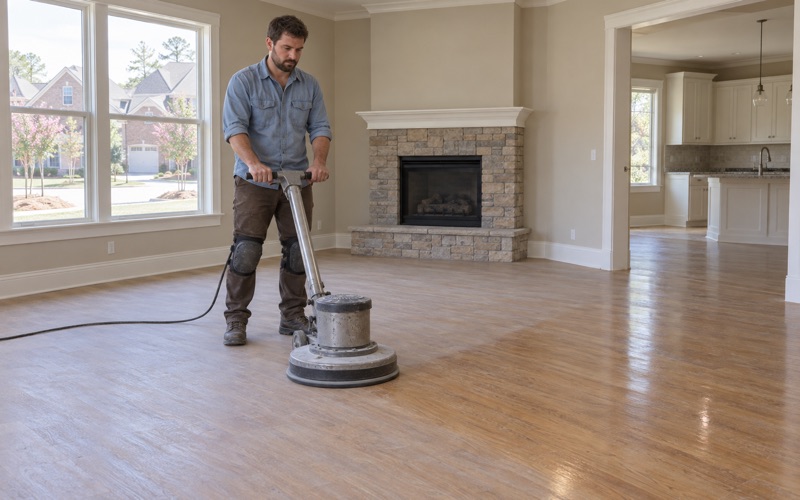
Once the repairs are in, a sand and refinish ties the patched area into the rest of the floor. With about 35.4 percent of Mableton’s occupied homes rented, many floors here turn over between tenants, so we lean toward durable finishes such as oil-modified or waterborne polyurethane at a sheen level that hides wear in traffic lanes.
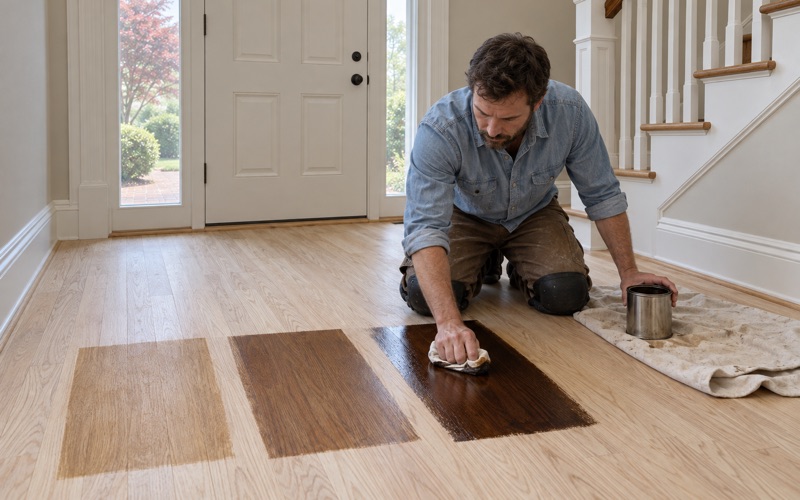
Before sanding any home built before 1978, we check the build year and look for painted surfaces, since older paint may contain lead and that work falls under the EPA RRP Rule. We also lay stain samples on the actual floor, in the unit’s own light, so the finished color matches what the owner expects.
- 20+ Years on Wood Floors
- Moisture Readings Before Repairs
- Stain Samples on Your Floor