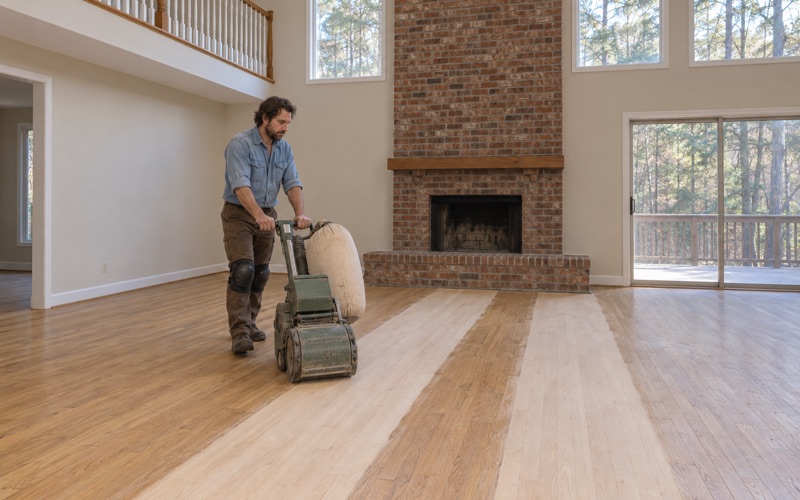
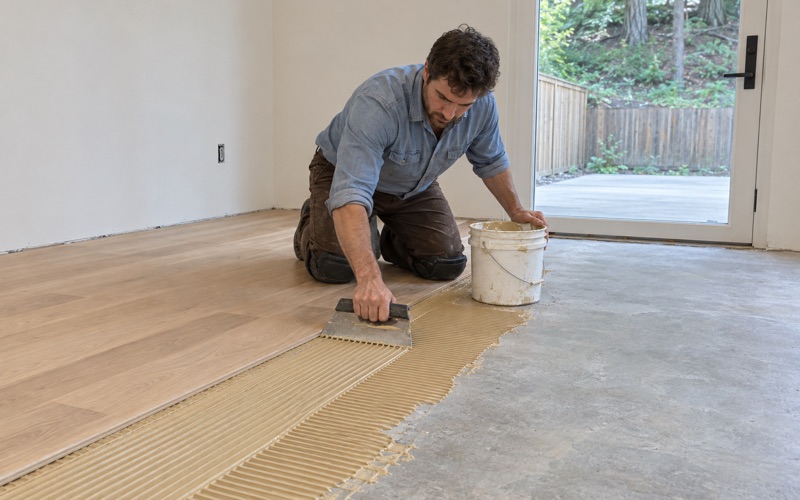
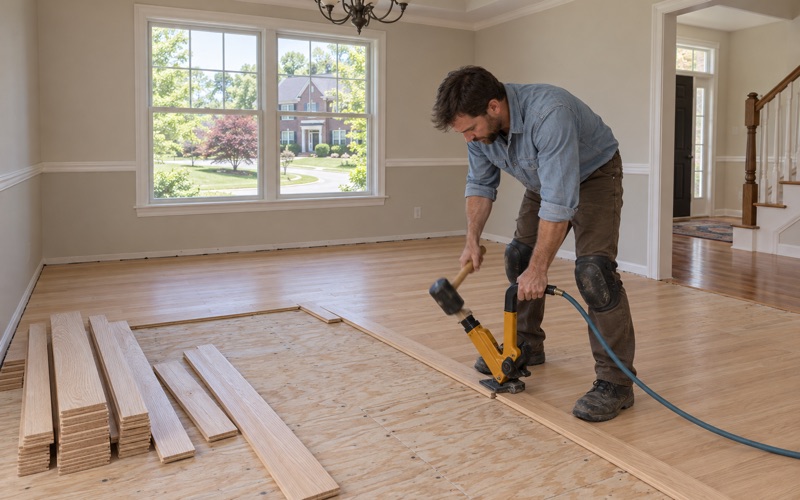
Smyrna Wood Flooring brings more than 20 years in the trade to wood flooring in Lithia Springs, and most of what we do here keeps an existing floor working instead of tearing it out. We sand and refinish solid hardwood, replace damaged boards one at a time, and rebuild worn stairs. When a room truly needs new flooring, we say so plainly and explain why.
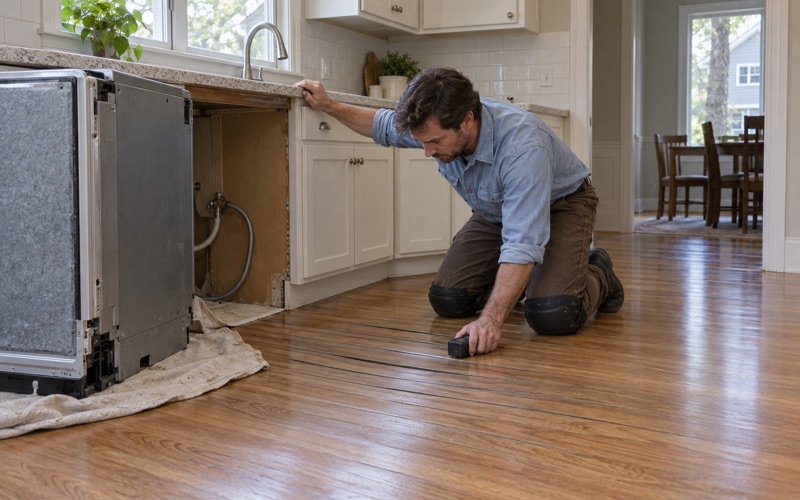
Every job starts with an assessment in the house. We check how much wood remains above the tongue, look at how the boards were fastened, and take moisture readings before any machine comes through the door. That tells us whether a floor can take a full sanding, only a screen and recoat, or needs repair first, and it keeps a sound floor from being sanded thinner than necessary.
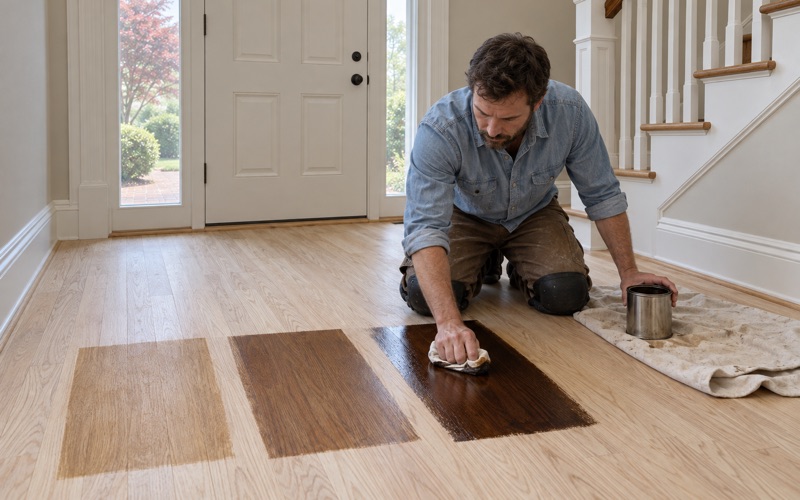
Color gets chosen with the same care. We lay stain samples on your own boards and leave them where you can see them in morning and evening light, because red oak and white oak take the same stain very differently. Finish choices, from waterborne polyurethane to oil-modified polyurethane or a hardwax oil, get weighed against pets, traffic lanes and the sheen you want.
What Douglas County’s Plan Says About Building Here
A 2021 Amendment to the County Plan
Lithia Springs is an unincorporated community, and Douglas County governs it. Zoning, permits and code enforcement run through the county rather than a city hall. In February 2021 the county adopted the Lithia Springs Small Area Plan as an amendment to its comprehensive plan, a study covering roughly 1,919 acres and 2,085 parcels along the Highway 78 corridor.
The plan is a land-use document, not a guide to flooring. We read it because it explains the housing we work in. It describes what was built after the war, where new development could go, and why so much of the study area is off the table for new houses, which shapes how long the existing homes will stay in use.
Construction Is Prohibited in the Floodplain
The plan’s environmental analysis found substantial overlap between the land it studied and areas in the floodplain. Douglas County prohibits construction in the floodplain, so those acres cannot simply be built out with new subdivisions. The county also imposes buffers around the streams and creeks that feed those low areas, trimming the buildable land further still.
These are rules about construction and land disturbance on a site. They do not reach inside an existing house or govern what goes on a living room floor. Their effect on our work is indirect but real: they limit how much new housing can appear nearby, and that keeps attention on the homes that already stand.
The Extra 150-Foot Sweetwater Basin Buffer
The study boundary sits in the Sweetwater Creek Drainage Basin, and the plan notes that the basin carries an additional 150-foot buffer from any channel or water body deemed to be state waters. Stacked on the floodplain prohibition and the county’s stream buffers, that leaves little room for new building across much of the area the plan examined.
For homeowners, the practical reading is simple. With few open lots and little prospect of a wave of replacement houses, the mid-century homes along these corridors are the housing stock for the foreseeable future. Their floors have to keep performing, which is why so much of our work here is refinishing and repair rather than removal.
Looking for wood-flooring closer to Midtown Atlanta? See Wood-Flooring in Midtown Atlanta.
Minimal Traditional and Ranch Houses
What the Plan Calls Iconic
According to the plan, postwar neighborhoods rolled out over former farms and were typified by two mid-century house types: the Minimal Traditional, built from about 1935 to 1950, and the Ranch, built from about 1935 to 1975. It names Anna Bella Estates, Oak Hill and Whitaker Hills as iconic neighborhoods of that era.
The plan also observes that the smaller houses typical of their era lend themselves to more affordable housing. That matches what owners tell us. Many would rather invest in the rooms they already have than trade up, and a refinished floor is one of the more visible improvements a compact house can get for the money spent.
Carpet Over Oak Strip
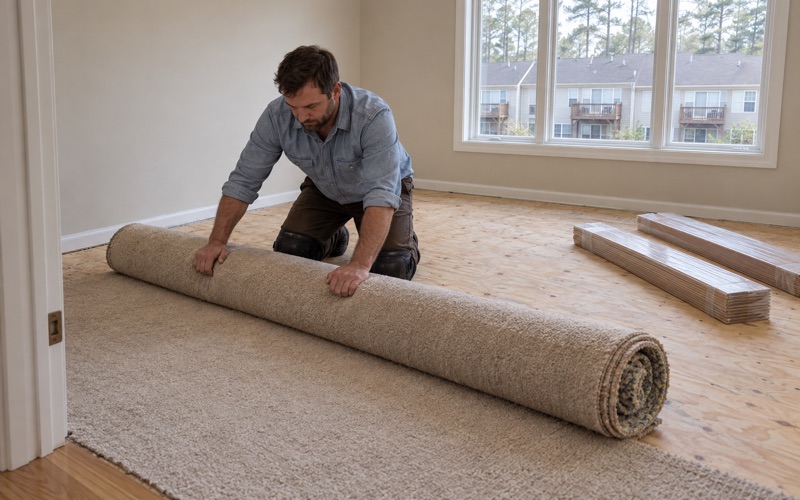
Houses from the 1950s and 1960s were often carpeted wall to wall in later decades. When the carpet and carpet pad come up, there is sometimes oak strip flooring underneath and sometimes not, so we never promise a hardwood floor until we have looked. Where oak strip is there, it can usually be sanded and refinished.
The tack strip around the perimeter leaves a row of nail holes, and the pad was usually stapled every few inches. We pull every staple and fill the tack-strip holes and staple rows rather than hiding them under a dark stain. Filled carefully, those marks fade into the grain once the new finish is down.
Painted Floors and Old Finishes
Floors in older houses may carry paint, shellac or paste wax from earlier owners. Each reacts differently to sanding and to a modern finish, and wax left in the grain can stop polyurethane from bonding. We test the existing coating before we sand, so the finish we apply actually holds instead of peeling in a year or two.
Build year matters here too. For any home built before 1978, we check the build year and any painted surfaces before sanding, since older paint can contain lead. Most Minimal Traditional houses and many Ranch houses date from before that cutoff, so this check is a routine part of how we open a job.
Floors in Anna Bella Estates, Oak Hill and Whitaker Hills
How Many Sandings Are Left
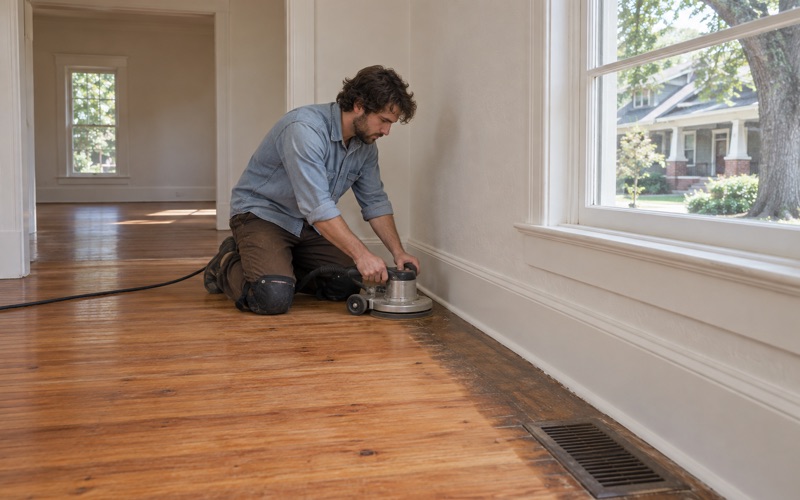
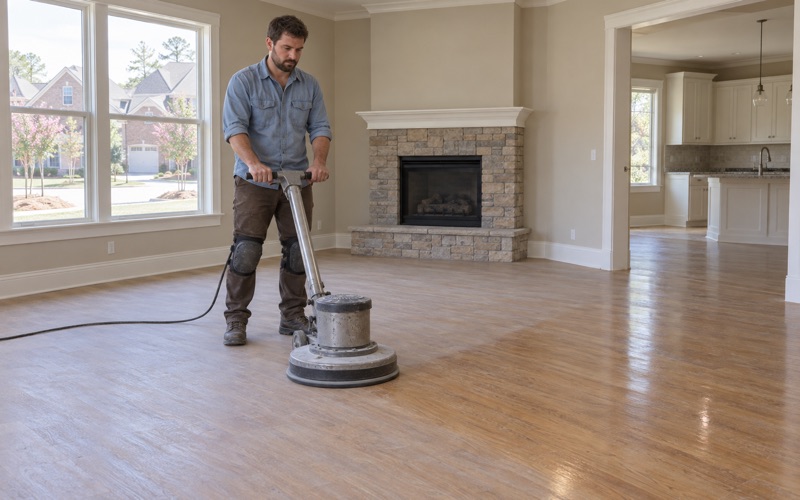
A floor laid in the 1950s or 1960s may already have been sanded several times. Each full sanding removes wood, and solid tongue and groove flooring can only lose so much before the tongue shows or boards start splintering. We check what remains above the tongue at a floor vent or threshold before quoting a drum sander job.
When the margin is thin, a screen and recoat is often the smarter call. It abrades only the finish and then adds fresh coats, removing no wood at all. For a floor with light wear and intact color, it restores sheen and protection while saving the remaining thickness for a future full refinish.
Cupping and Gapping Through the Seasons
Georgia summers are humid, and wood takes up moisture from the air. Boards that cup, with edges higher than centers, are telling us moisture is reaching them from somewhere. We read the floor with a moisture meter and find the source before anyone sands the crown flat, because sanding a cupped floor too early leaves it crowned once it dries.
Winter brings the opposite problem: board gapping as heating dries the house. Some seasonal gapping is normal in solid hardwood and closes again as humidity returns. We explain which gaps are seasonal and which point to a problem, so owners do not spend money filling cracks that would have tightened on their own by summer.
Termite Damage and Board Replacement
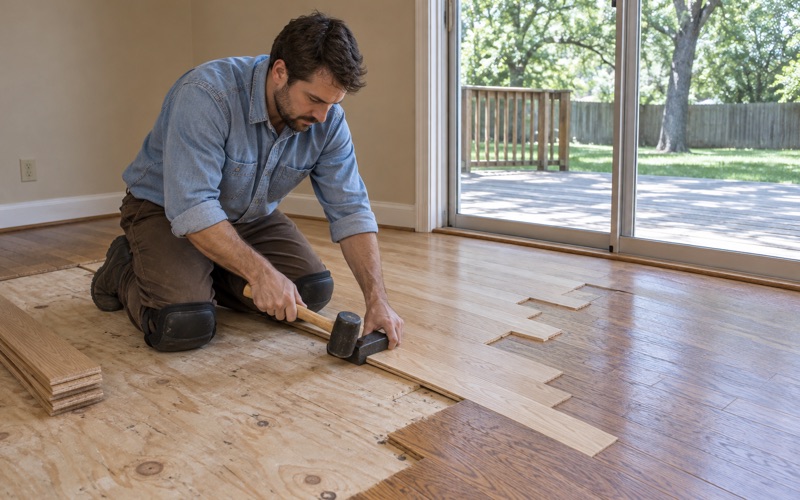
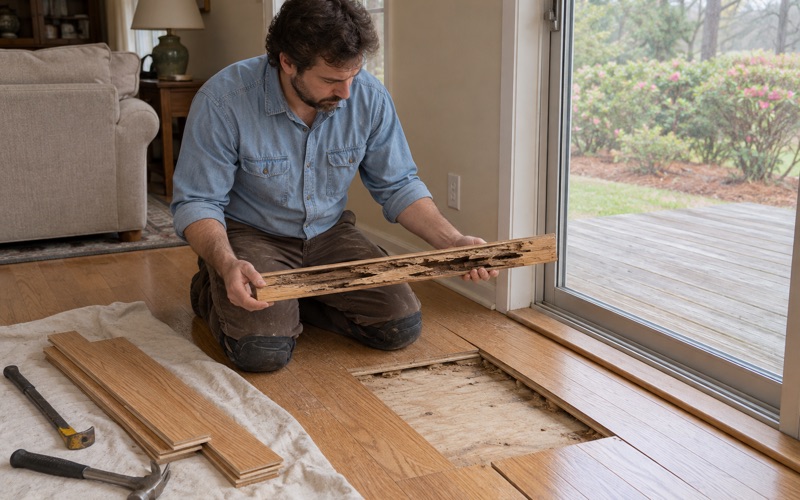
Subterranean termites are a steady concern in Georgia, and their damage often shows up as soft spots or hollow spots underfoot. If you see mud tubes along a wall or termite swarmers indoors, the pest control company comes first. Once they have treated, we cut out the damaged boards and weave in new ones.
Woven-in boards are staggered into the existing pattern so the repair does not read as a patch. We never fill termite damage with putty or cover it over, because the wood underneath is no longer sound. After replacement, the room is sanded and finished as one, and stain samples help match the new boards to the surrounding color.
Keeping Mid-Century Floors in Service
Stairs, Tread by Tread
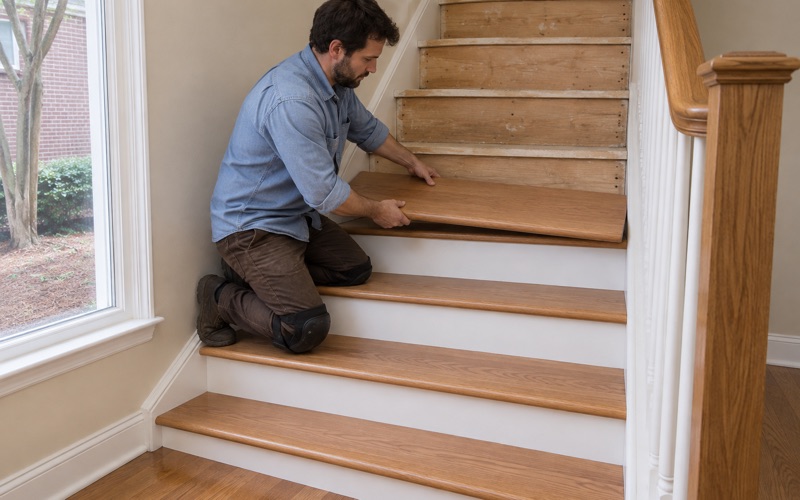
Where a house has stairs, whether to a second level or an addition, those treads take the hardest wear in the home. We quote stairs tread by tread. Refinishing sound treads and replacing worn ones are priced as the two different jobs they are, so you can see exactly what each part of the staircase costs.
Stair nosing, stair risers and the transition at the top landing all need attention along with the treads. We match the stair finish to the floor it meets. Where old carpet came off the stairs too, we deal with the staple holes and tack strip the same way we do in the rooms.
Choosing a Finish That Fits the House
Waterborne polyurethane stays clear and dries fast, which suits owners who want white oak or natural red oak without an amber cast. Oil-modified polyurethane deepens toward amber over time and suits floors where that warmth is the look. Hardwax oil is easier to spot-repair but asks for more regular upkeep.
We also talk through sheen level. A satin or matte finish hides scratches and traffic lanes better than gloss, which matters in a compact house where everyone walks the same path from the door to the kitchen. The right choice depends on how the rooms are actually used, not on what looks best in a showroom.
Care Between Refinishes
A refinished floor lasts longest when the finish is renewed before it wears through. Felt pads under furniture, mats at exterior doors and a damp-not-wet cleaning routine slow the wear considerably. When traffic lanes start to dull, a screen and recoat can restore the surface before bare wood is exposed.
Sun fade and pet urine stains are the other common marks we see. Fade often evens out after sanding, while deep urine stains may call for board replacement because the discoloration runs into the wood. Either way, we assess them in person and explain the options before any work begins.
- 20+ Years on Wood Floors
- Moisture Readings Before Repairs
- Stain Samples on Your Floor