
Smyrna Wood Flooring refinishes heart pine flooring in Smyrna, GA and has spent more than 20 years on old wood floors, serving surrounding cities including Vinings, Fair Oaks, Mableton, Marietta and Austell. We treat heart pine as the wood it is: softer than oak, rich in resin and full of color that has taken decades to develop, and we refinish it to bring that character back rather than sanding it into something new.
Heart pine comes from the dense heartwood of old-growth longleaf pine, and it cannot be bought new today in the way it was cut a century ago. That makes every board in an old floor worth keeping. Our approach is to take off as little wood as possible, repair what is damaged with matched reclaimed boards, and choose a finish that deepens the color instead of hiding it.
This kind of floor turns up most often in older intown homes, bungalows and Victorians, sometimes under carpet, paint or layers of old wax. Whatever is on top, we test it before sanding so the new finish bonds and the old wood survives the process.
What Makes Heart Pine Different
Old-Growth Longleaf Pine
Heart pine is the heartwood of longleaf pine trees that grew slowly for centuries, which gives it tight growth rings and a high resin content. Those rings make it harder and more stable than the fast-grown yellow pine sold at lumberyards today.
The resin is also what gives heart pine its deep orange-red color and its tendency to darken with age and light. That patina is the reason people love these floors, and it is the first thing a careless sanding removes.
Softer Than Oak, and Worth It
On the Janka hardness scale, heart pine sits below red oak and white oak, so it dents and scratches more easily. On a floor that has been walked on for decades, those marks are part of its history.
We do not try to sand out every dent, because chasing them would take off wood the floor cannot spare. Instead we level the surface, keep the character marks, and protect the wood with a finish suited to how the room is used.
Refinishing Heart Pine the Right Way
Testing Old Finishes, Paint and Wax
Old heart pine floors often carry shellac, paste wax or paint from earlier decades. A new polyurethane will not bond over wax, and paint in a home built before 1978 has to be tested for lead before any sanding begins.
We test every surface first and choose the removal method the results allow. Skipping this step is the most common reason a new finish peels on an old pine floor within its first year.
Gentle Sanding and Sap Bleed
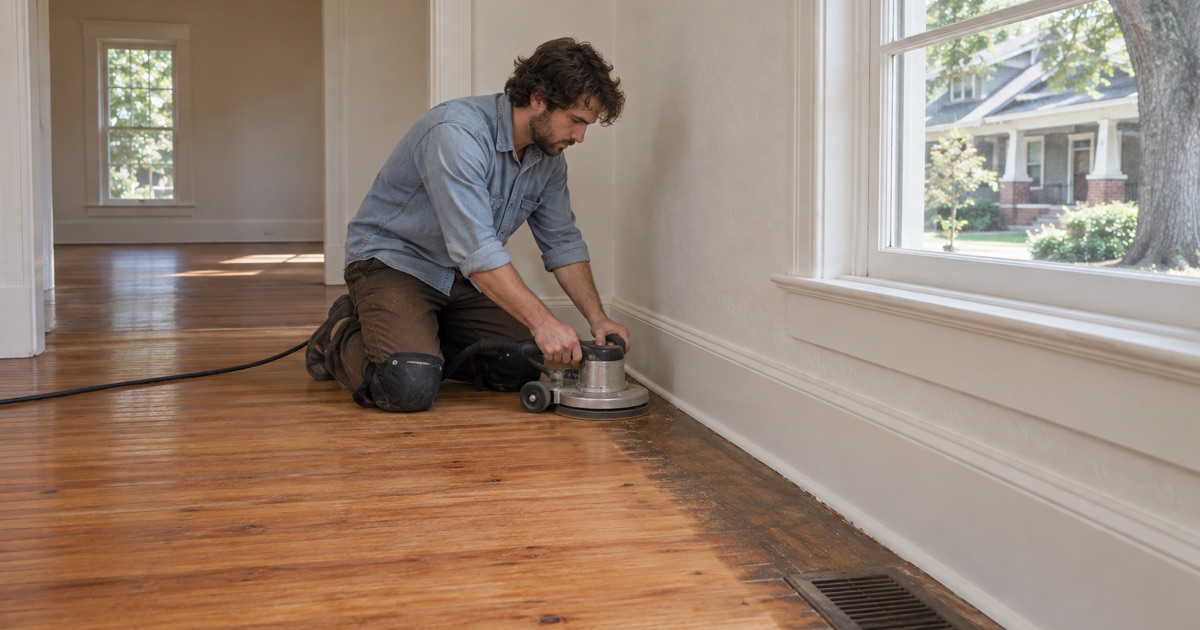
Heart pine clogs sandpaper with resin, and it sands unevenly where soft earlywood sits beside hard latewood. We use a lighter grit sequence and change paper often, so the floor ends up flat without deep scratches or dished grain.
Resin can also rise to the surface as sap bleed, especially near knots and in summer heat. We clean and seal those areas before the finish coats, so the sap does not soften or spot the new finish months later.
Choosing a Finish That Deepens the Color
Most heart pine owners want the wood’s own color, so we rarely recommend stain, which tends to blotch on pine. An oil-modified polyurethane brings out the warm amber tone and deepens with age, while a waterborne finish keeps the color closer to how it looks freshly sanded.
Hardwax oil is another option for a low-sheen, hand-rubbed look that can be spot repaired. We show you samples of each on your own floor so you can see how the color will read in the room.
Repairs and Patching
Matching Patched Boards to the Old Color
Old floors lose boards to leaks, removed walls, old floor registers and past repairs. New pine looks bright yellow and plain next to aged heart pine, so we source reclaimed boards in the same width and thickness wherever we can.
The patched boards are woven into the floor with staggered joints and blended to the old color during finishing. A good patch is one you cannot find a year later.
Gaps, Squeaks and Floors Over Joists
Many older homes have heart pine laid straight across the joists, with no subfloor below. These floors flex, open gaps between boards and squeak more than modern floors.
We secure loose boards, replace splintered ones and explain which gaps are seasonal and should be left alone. Filling a seasonal gap in winter can force the boards to buckle when the humid months return.
Insect Damage in Old Pine
Old pine can show signs of powderpost beetles or termite damage, from small round exit holes to boards that sound hollow. If we find either, we recommend having the infestation confirmed and treated before we repair the floor.
Once treatment is done, the damaged boards are cut out and replaced with matched reclaimed wood. We never fill or cover damaged wood and call it repaired.
Living With a Refinished Heart Pine Floor
Sheen and Everyday Wear
A satin or matte sheen level hides dents, scratches and dust far better on pine than a glossy finish does. It also suits the age of the wood and the houses these floors usually sit in.
Felt pads under furniture, rugs at entries and prompt cleanup of grit go a long way on a softer wood. With that care, a well-finished heart pine floor wears gracefully for many years.
When to Recoat Instead of Sanding
Because every full sanding removes wood that can never be replaced, we recommend a screen and recoat when the finish is worn but still intact. A recoat renews the protection without touching the wood itself.
We check the finish during a visit and tell you which one your floor needs. Keeping heart pine on a recoat schedule is the best way to make sure it outlasts the rest of the house.
- 20+ Years on Wood Floors
- Moisture Readings Before Repairs
- Stain Samples on Your Floor