Smyrna Wood Flooring handles wood-flooring in Grant Park the way these houses ask for it: slowly, board by board, with more than 20 years behind the sander. Most of the floors we see here are old, have been walked on for well over a century, and carry repairs from owners long gone. Our job is to bring that wood back without taking more of it than the floor can spare.
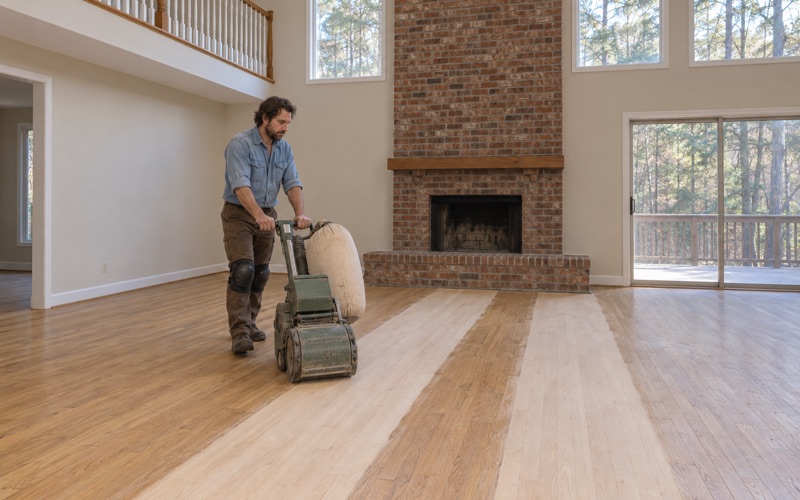
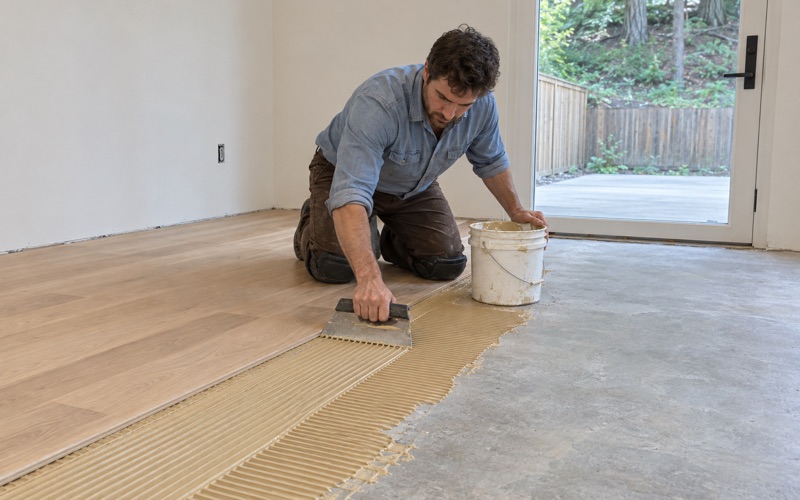
Much of our work in this part of Atlanta is refinishing and repair rather than new installation. We sand, patch, replace damaged boards, restore stair treads and lay down a finish that suits an old house. Where a floor has been painted, waxed or coated in shellac, we test it before any sanding starts, so the new coat bonds instead of peeling.
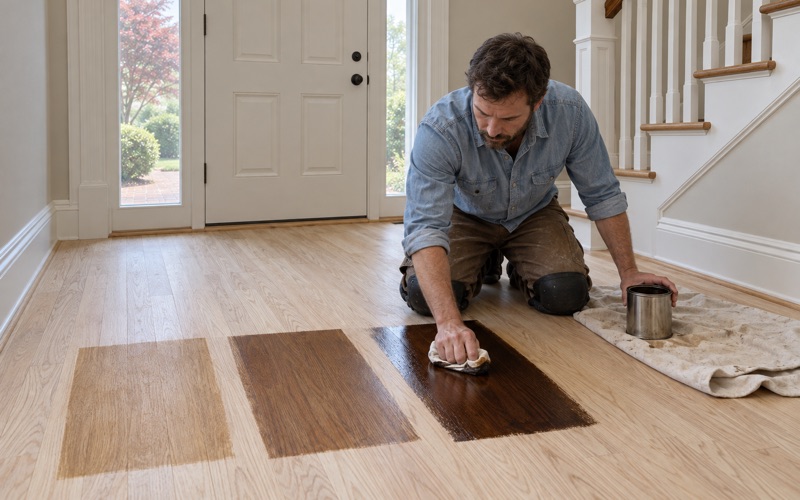
Every quote starts with a visit. We walk the rooms, check how much wood remains above the tongue, and read the moisture in any board that has lifted. Then we lay stain samples on your own floor, in your own light, so the color you choose is one you have actually seen in the house rather than on a chip.
Grant Park’s Most Common House: The One-Story Victorian Cottage
What the 1979 Nomination Found
When Grant Park was entered on the National Register on July 20, 1979, the nomination form called the one-story Victorian cottage perhaps the most prevalent residential type in the neighborhood. These were modest houses, variously sited on elevated or low lots, some with shallow front lawns and others set on deeper ones. That variety is the first thing we notice walking a Grant Park street.
The same form said most of the housing here was built about or just after 1900, and almost all of it bears the markings of Victorian eclecticism. For floor work, that date matters more than any style label. A floor laid around 1900 has usually been sanded several times already, and every pass took a little of the wood above the tongue that holds the boards together.
Hipped Roofs, Gable Wings and Low Porches
The nomination describes these cottages, for example the ones along Park Avenue, as having hipped or A-line roofs with a gable wing facing the street and low front porches on slender posts. Behind that front is usually a compact plan of smaller rooms opening one into the next, each with its own doorway and threshold.
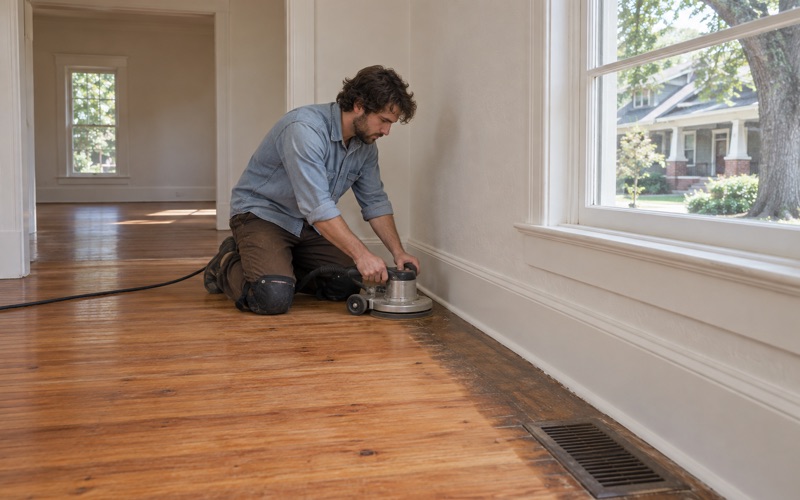
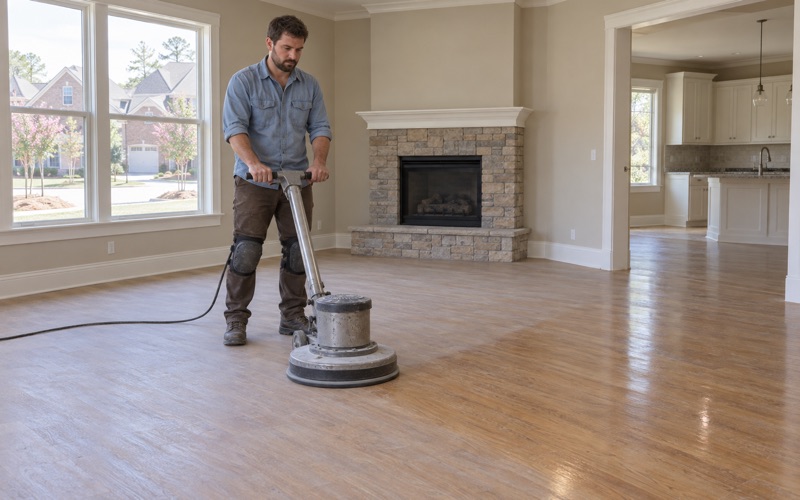
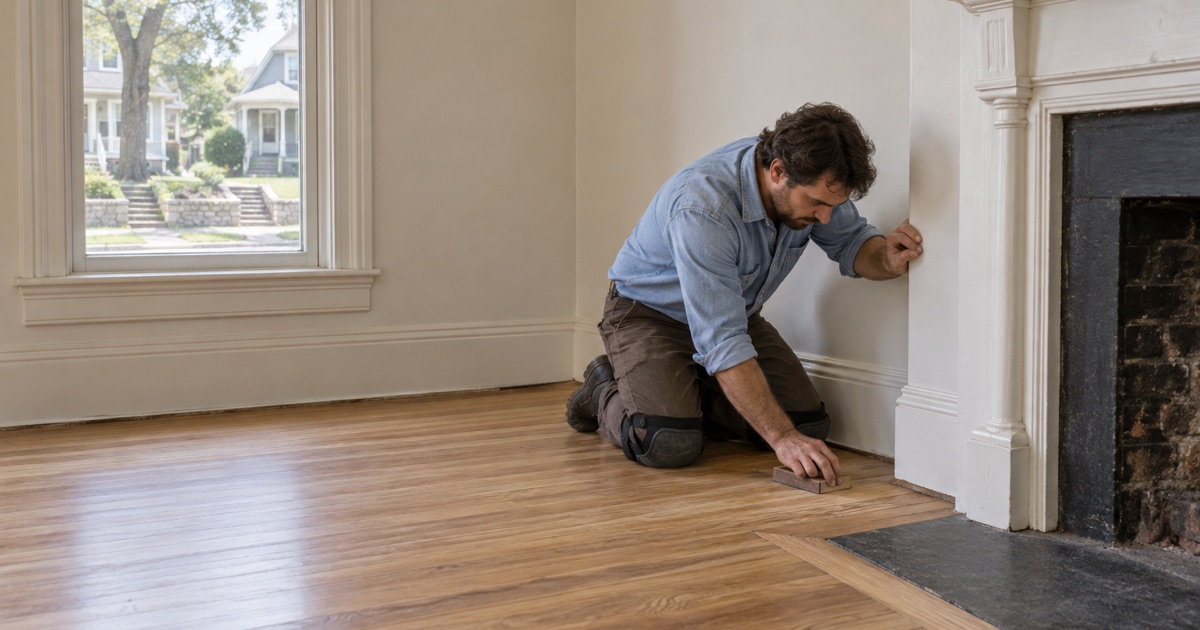
Small rooms change how a refinish goes. A drum sander covers the open middle quickly, but in a cottage a large share of the floor sits along walls, in closets and around hearths, where an orbital sander and hand scraping do the work. We price that edge work honestly rather than quoting a cottage as if it were one open room.
Where the Wear Shows in an Old Cottage
A century of foot traffic leaves traffic lanes through every doorway and a worn path from the front door to the kitchen. We also find water stains near kitchens and baths, pet urine stains in bedrooms, sun fade under front windows, and boards patched at some point with whatever wood was on hand.
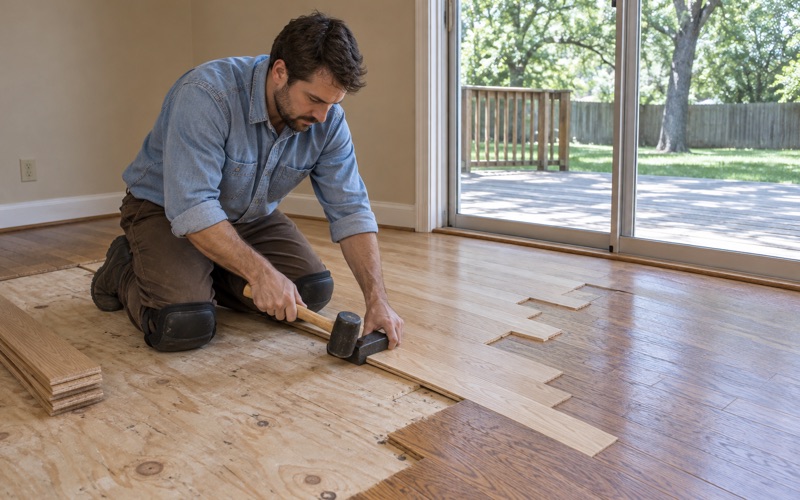
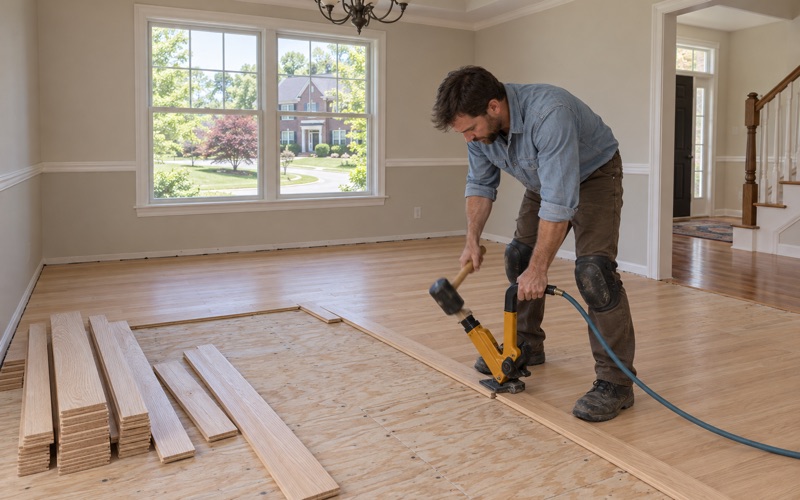
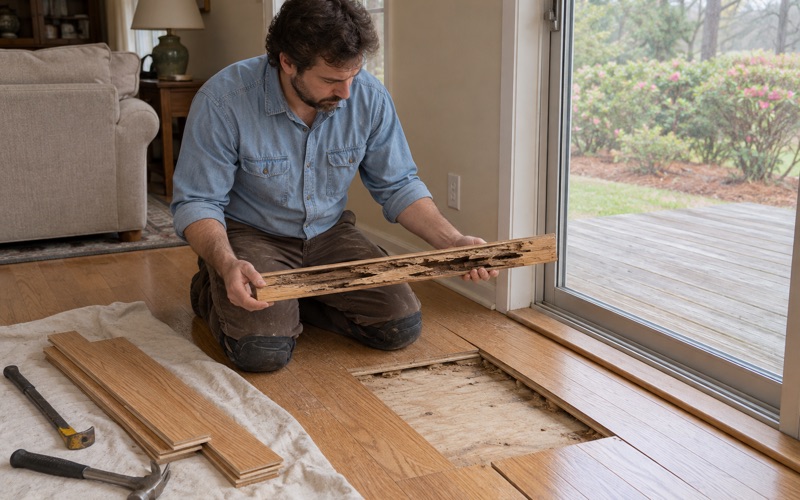
Each of those calls for a different repair. A gray water stain may sand out, while a black one has usually gone deep enough that the board is replaced. Where we cut out a damaged board, we weave the new piece into the surrounding rows and blend its color to the old floor, so the patch reads as part of the room rather than a square of new wood.
Looking for wood-flooring closer to Sylvan Hills? See Wood-Flooring in Sylvan Hills.
Built by Many Developers, Not One Plan
From a Park Gift to Small Subdivisions
The neighborhood grew out of a single estate. In 1883 Lemuel Grant carved about one hundred acres from his land and gave it to the city for a public park, the first large city park in Atlanta. The city extended its limits to take in the whole park in 1885, and the land around it kept being divided into smaller holdings.
By the late 1880s, new residential subdivisions were following the street railway lines toward the park. Steam streetcar service ran to a pavilion in the park in 1888 along the street now called Park Avenue. The nomination dates the present street network and housing pattern around the park from those years into the early 1900s.
No Two Blocks Built by the Same Hand
The 1979 nomination is direct about it: Grant Park is not a planned suburb but has developed from the work of many developers and small subdivisions. Houses of many types, sizes and periods stand side by side. Unlike a subdivision where one builder repeated a plan down the street, the cottage next door here may have come from a different crew entirely.
That history shows up underfoot. Board widths, nailing patterns and the way floors meet at doorways can change from one house to the next, and sometimes from one room to the next where an addition went on later. We never assume the floor in your house matches the one we finished two doors down.
Matching Repairs to the Floor You Have
Before we order replacement stock, we lift a loose board or a heat register cover to read the thickness, width and tongue and groove profile of what is there. Old boards are often a different thickness from anything sold new, so a repair may mean milling or planing new stock to sit flush with its neighbors.
Color is the harder half. Old wood has built up a patina that new boards lack, so we sand the patch area with the rest of the floor and test stain on the new pieces until they sit close to the old. Our goal is a floor where a visitor cannot find the repair without being told where it is.
Cottages on Raised Lots Above Stone Walls
Retaining Walls and Access Stairs
Grant Park sits on some 430 acres of rolling terrain, and the nomination notes that houses along many streets sit on elevated lots above stone retaining walls. It points to the numerous retaining walls and access stairs that seem to bond buildings and ground, and to a sensitivity to topography in how houses were set into their high sites.
Those walls and steps are part of what makes a Grant Park street look the way it does. They also shape a flooring job before a single board is touched, because everything we bring to the house, and everything we take away, goes up and down those stairs by hand. A few extra trips add up on a full-house refinish.
Getting Equipment Up to the Porch
A drum sander is heavy, and so are boxes of flooring and pails of finish. On a raised lot we plan the carry before the job starts: where the truck parks, which stair run is safest, and where material can be staged so it is not left on the sidewalk. We protect the stair treads and the porch floor on the way in.
Dust is the other concern on a lot this close to the neighbors. We run dustless sanding with vacuum extraction at the sander, which keeps most of the fine dust out of the air inside and off the porch outside. It also means less cleanup for you in rooms with old trim, built-ins and deep window sills.
Reading Moisture on a Sloped Site
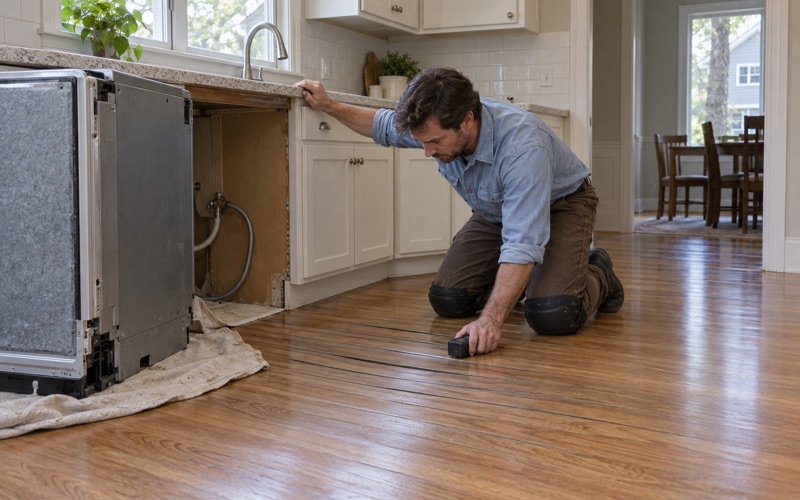
Houses set into a slope can collect moisture differently from front to back. In a humid Georgia summer, that can show up as cupping, with board edges higher than their centers, or in worse cases as buckling. A musty smell or soft spots near an exterior wall are worth mentioning when you call.
We read cupped boards with a moisture meter and look for the source first, whether that is a gutter, a grade that drains toward the house, or a plumbing leak. Sanding a cupped floor flat before it dries only sets up crowning later, when the boards shrink back. Once the readings settle, the floor can be sanded and finished to stay flat.
Queen Anne Houses, Local Ornament and a Careful Refinish
Frame Houses Along Boulevard
Not every house here is a cottage. The nomination says a large body of the housing stock can be classified as modified Late Victorian Queen Anne style, including the two-story frame residences along Boulevard north of Berne Street, with asymmetrical massing and eclectic, often classically inspired detailing. Craftsman bungalows are also common on the eastern side of the park, which was subdivided and built up in the early twentieth century.
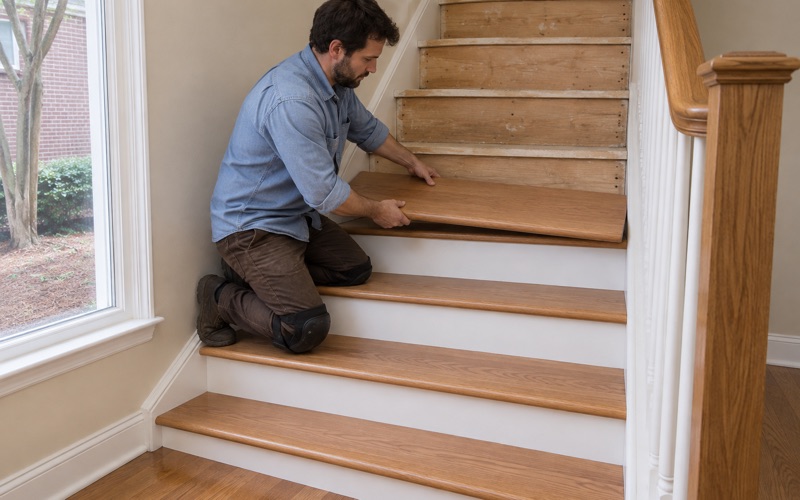
A two-story house brings its own floor work. Stair treads and nosings wear faster than any room, so we quote a stair tread by tread, with refinishing and new treads priced as the separate jobs they are. Upstairs floors often show less traffic wear and more sun fade, so the same house may need a lighter touch on one level than the other.
Flat Stick Ornament on Berne and Cameron
The nomination singles out cottages and bungalows on Berne and Cameron Streets for a distinct flat stick ornament, sometimes in sunburst and fan patterns, that appears to have been the product of some local craftsman. It is one more sign that the houses here were shaped by individual builders rather than a catalog.
We bring the same attitude indoors. Old floors in these houses often carry the marks of their own history, from a patched hearth outline to a board run that changes direction at an old wall line. Where those details are sound, we keep them and refinish around them instead of replacing a room to make it uniform.
Testing Old Finishes Before Sanding
Floors laid about 1900 have usually been through shellac, paste wax, paint and at least one modern coat since then. We test the existing finish before sanding, because wax left in the grain keeps a new polyurethane from bonding, and painted floors need their own plan. The grit sequence and the finish we choose follow from what that test shows.
Every home built before 1978 gets a check of its build year and painted surfaces before sanding starts, since old paint on floors, thresholds and trim can contain lead. With a Grant Park cottage, that check is routine. We then apply waterborne or oil-modified polyurethane, or a hardwax oil, at the sheen level you pick from samples on your own floor.
- 20+ Years on Wood Floors
- Moisture Readings Before Repairs
- Stain Samples on Your Floor