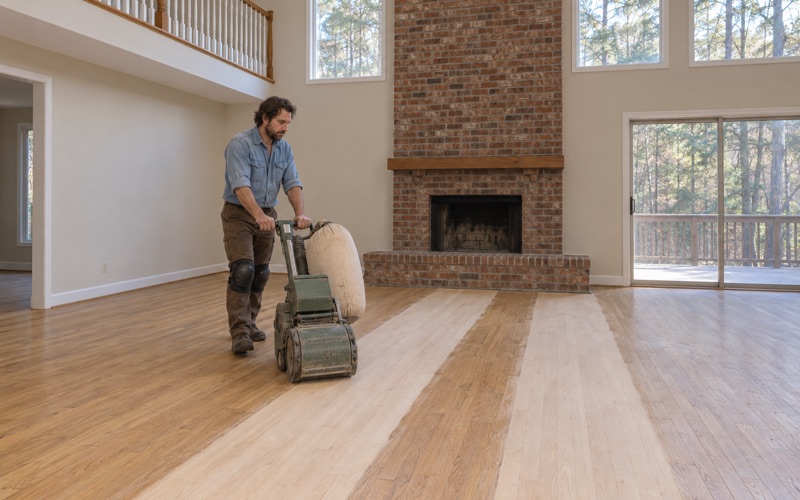
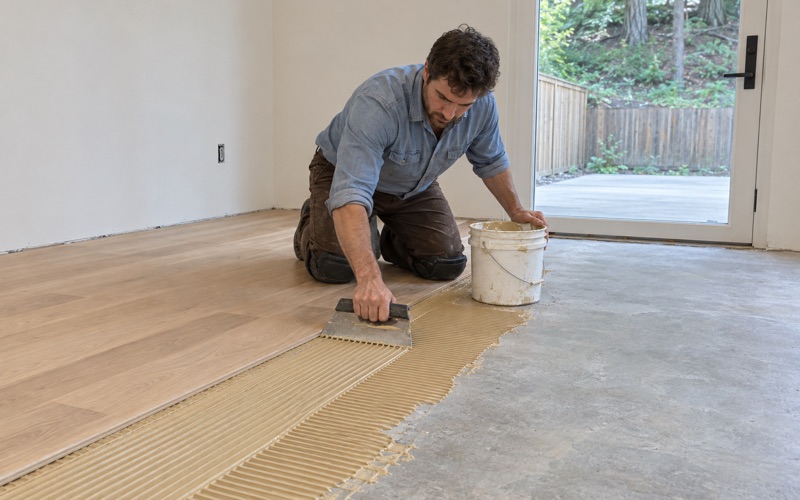
Smyrna Wood Flooring takes on wood-flooring in Forest Park with more than 20 years in the trade, and a good share of the work here is rehab rather than a cosmetic refresh. A house that sat empty for a few seasons, or one that changed hands without much care, rarely keeps its floors in decent shape. We start by sorting out which boards can be saved and which have to come out.
That sorting matters more than usual in this city. Floors that are rotted, stained by a slow leak or simply missing are part of what makes a house feel abandoned, and they are often the last thing an owner tackles because the damage looks overwhelming. In many cases sound wood is waiting under the mess, and the repair is smaller than the first walk-through suggests.
This page walks through the city’s blight tax, what the ordinance treats as blighted, and how we approach the floors in a neglected house from tear-out to finish. If you own a vacant property, bought one to bring back, or inherited a place that needs real work, the sections below explain where flooring fits in the larger job and what we check before any sanding starts.
Forest Park’s 2024 Blight Tax
Ten Extra Mills on Blighted Property
In 2024 the Forest Park City Council adopted a municipal blight tax ordinance. As the Clayton News-Daily reported it, the ordinance increases ad valorem taxes by 10.0 mills on residential and commercial properties deemed blighted, abandoned or unsafe. That is a meaningful added cost on top of the existing rate, and it is aimed squarely at owners who leave a building to deteriorate.
The ordinance does not reach every parcel in town. Tax-exempt land such as churches, cemeteries and charitable property is not affected, so the added millage falls on private homes and commercial buildings. For a homeowner or investor holding a run-down house, the practical question becomes how quickly the property can be brought back into safe, livable condition, and what that work will involve room by room.
How the Relief Is Described
News accounts describe the relief side of the ordinance in different words. One report says the millage rate decreases for a period of time once the property is remediated or redeveloped, another says it reverts to the original rate, and a third describes the tax applying until the owner begins to mitigate the problems. We do not predict which reading the city will apply to a given house.
What every account agrees on is that remediation is the path out. For our part, that means a floor that is solid, clean and safe to walk on, with rot and water damage removed rather than covered. Questions about the tax itself belong with the City of Forest Park, and we would rather point you there than guess at how an assessment will be handled.
Why the City Took This Step
The ordinance arrived with a real backlog behind it. Canopy Atlanta reported that code enforcement had over 106 open cases in spring 2024, most of them started by officers rather than residents. City leaders have said they want Forest Park to be the cleanest city in America, and the blight tax is one of the tools they chose to push neglected properties toward repair.
Not everyone welcomed it. One participant at a listening session worried the tax could negatively affect seniors or those with limited resources. That concern is worth keeping in mind if you are an owner facing a determination, because a flooring plan can often be staged so the most serious hazards are handled first and cosmetic work follows when the budget allows.
Looking for wood-flooring closer to Riverdale? See Riverdale Wood-Flooring.
What Makes a Property Blighted Under the Ordinance
Uninhabitable, Unsafe, Abandoned or Unhealthy
Canopy Atlanta described blighted properties as those that are uninhabitable, unsafe, abandoned, or conducive to ill health. Commercial space with no business activity for more than three months can also qualify. Those are broad terms, and floors touch nearly all of them, since a sagging or rotted floor is a safety issue and a soaked, moldy one can make a house unfit to live in.
The phrase conducive to ill health is the one we think about most. A floor that has absorbed water, pet urine or years of neglect can hold a musty smell and trapped moisture long after the source is gone. Pulling those boards and drying what sits beneath them is often the difference between a house that reads as abandoned and one that is ready for people again.
Complaints, Inspection and a Written Determination
According to Canopy Atlanta, a public officer or five resident complaints can trigger an investigation. A code enforcement officer then completes an inspection report, and the city decides whether the property meets the standard. After that inspection, the owner receives a determination in writing, which is the document that tells you where the city stands on your property.
If you have received one of those letters, keep it close when you call us. We cannot interpret the city’s findings for you, but knowing what the inspector noted helps us focus a floor assessment on the rooms and conditions that matter. Atlanta News First reported that owners are expected to demolish or bring homes into compliance, so the paperwork usually sets the scope.
Where Floors Fit in Remediation
Flooring is rarely the only item on a remediation list. Roofs, plumbing and electrical work often come first, and a new floor laid before a roof leak is stopped will simply be ruined again. We plan our work to follow the repairs that keep water out, so the wood we install or refinish has a dry, stable house around it.
Once the shell is sound, floors do a lot of visible work. A cleaned, refinished or rebuilt floor changes how a house reads to a buyer or a future tenant almost immediately. It is also one of the few interior jobs where the finished result is obvious in every room, which helps when a property needs to show clear progress.
Floors in a Vacant or Neglected House
The Housing Stock Behind the Problem
Forest Park’s homes are older than many people assume. Census figures show 78.0 percent of the city’s housing was built before 1980, and 55.9 percent went up between 1950 and 1969. That concentration of mid-century houses means many properties facing blight review are sixty or seventy years old, with floors that have been through several owners and several coverings.
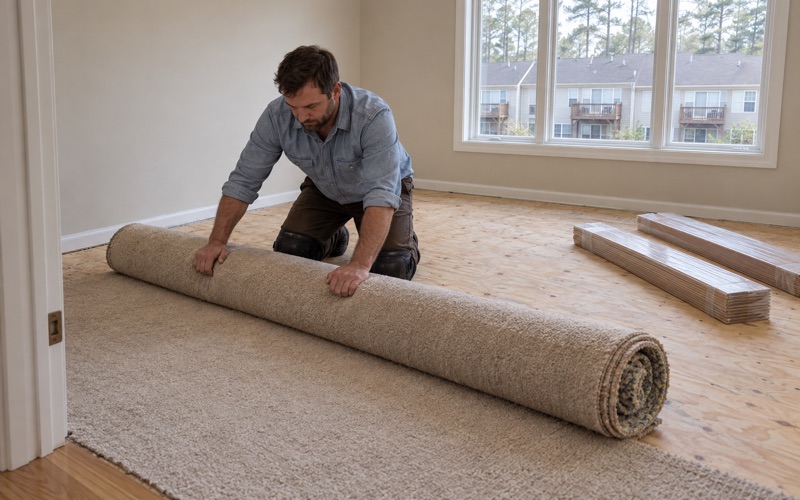
Houses of that era often have oak strip flooring hidden under wall-to-wall carpet, vinyl or both. When a house sits empty, those layers trap moisture and hide damage, so the wood underneath can be better or worse than the surface suggests. We never assume either way until the carpet pad, tack strip and any sheet goods are pulled back in several rooms.
What We Usually Find
In a vacant house the damage follows the water. Boards near a failed water heater, a leaking toilet or a roof opening tend to show cupping, buckling, soft spots and dark water stains, while rooms away from the leak may need nothing more than sanding. Pet urine stains are common in houses that turned over quickly, and they often run deeper than the finish.
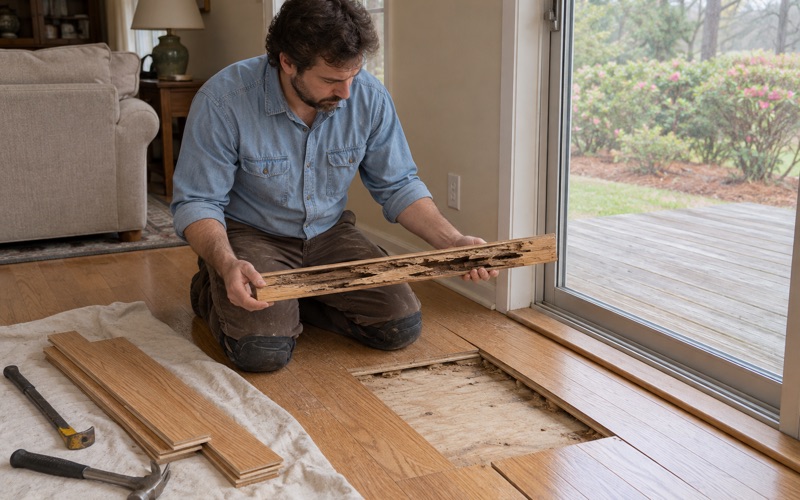
We also look for insects. Subterranean termites and powderpost beetles both favor damp, undisturbed wood, and a house nobody has lived in for a while suits them well. Mud tubes along a wall or hollow spots underfoot tell us to stop and bring in a pest control company before any board replacement, because new wood laid over an active colony does not last.
Lead Paint and Old Finishes
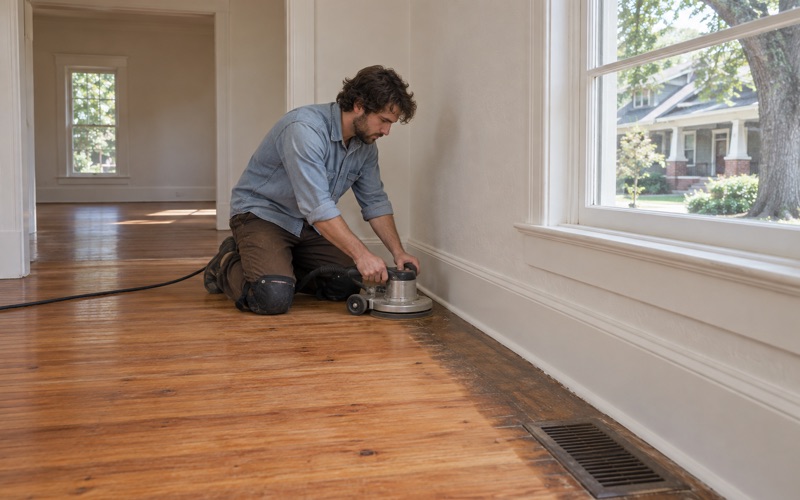
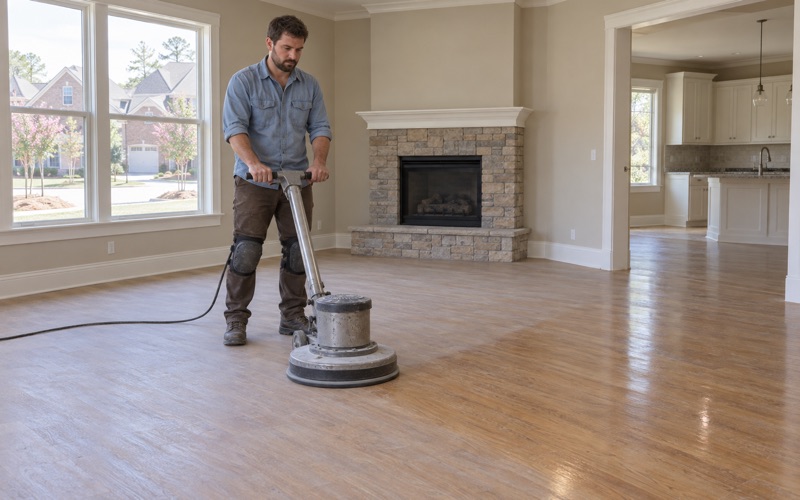
Nearly every house in a 1950s or 1960s rehab predates 1978, which puts it in the range where lead-based paint may be present. We check the build year and any painted surfaces before sanding, and we plan the work around the EPA RRP Rule when it disturbs paint in a pre-1978 home. Painted floors in particular get tested before a drum sander touches them.
Old finishes need the same caution. Shellac, paste wax and layers of unknown coating can keep a new finish from bonding, which leaves a floor that peels within months. We test what is on the boards first, then choose between waterborne polyurethane and oil-modified polyurethane based on what the wood will actually accept and how the house will be used.
Tearing Out, Rebuilding and Planning the Rehab
Cutting Out Damaged Boards
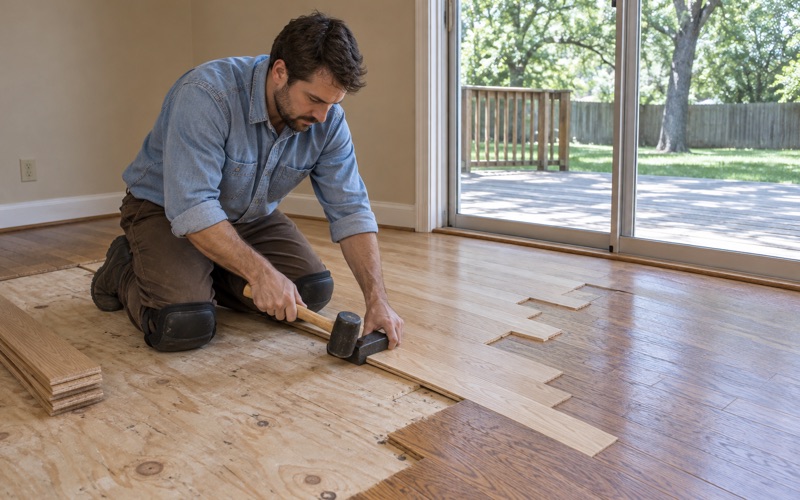
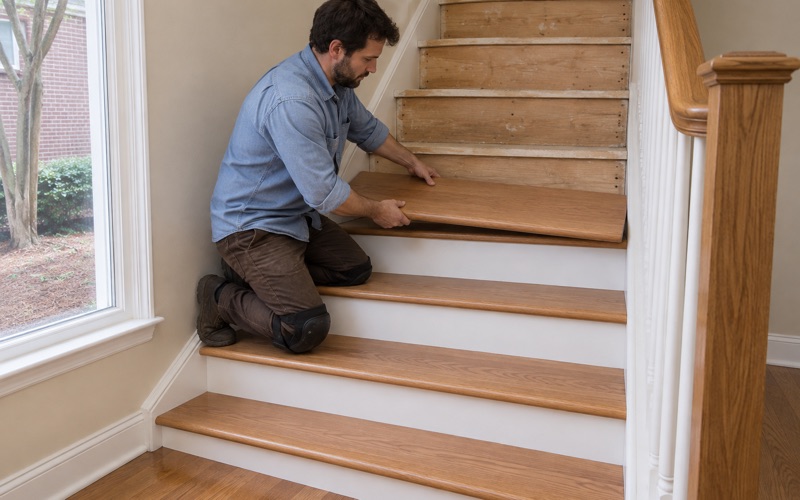
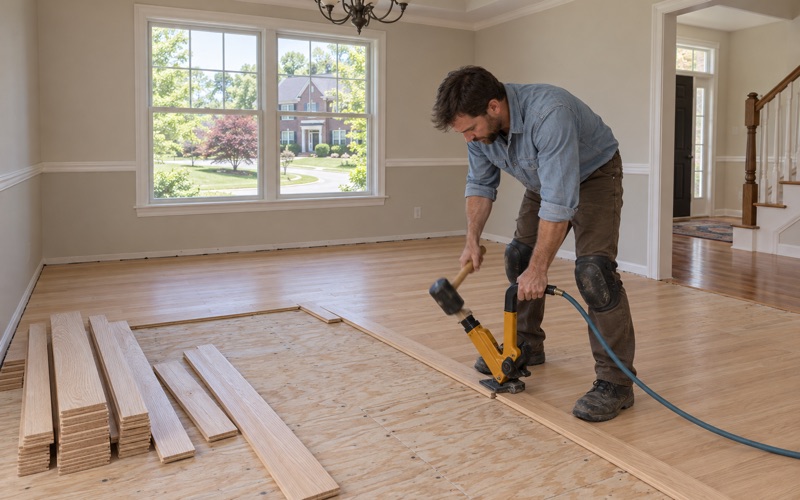
Where damage is limited to a few areas, we cut out the rotted, stained or insect-damaged boards and weave new ones in, staggering the joints so the repair blends with the rest of the room. Termite-damaged boards are replaced only after the pest control company has treated, and they are never filled or covered over. The goal is a floor that is sound all the way through.
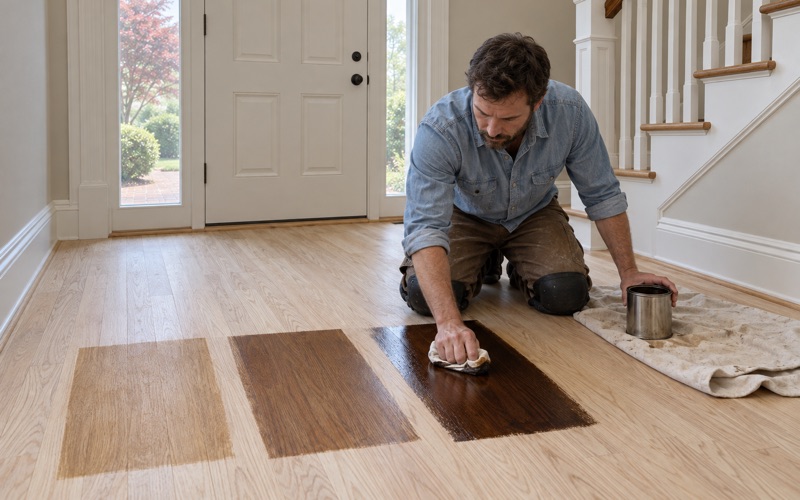
Matching matters on older red oak and white oak. We source boards of the same width and species where possible, then sand the whole room together so the new and old wood take the same stain. On a floor with sun fade or a heavy orange oak tone, stain samples laid right on the floor show how the patch will look before we commit.
Rebuilding From the Subfloor Up
Some neglected houses need more than patches. If water has reached the subfloor or a joist, that structural repair has to happen first, and we open the floor far enough to show how wide the damage goes. Rotted subfloor sections must be replaced with sound material before new tongue and groove flooring goes back down.
For a full rebuild, solid hardwood and engineered flooring are both options, and the choice depends on the house and the budget. Solid oak can be refinished many times over the life of the house, while an engineered wear layer limits how often that can happen. We explain the tradeoff plainly so you can weigh long-term value against the cost of getting the house back into use.
Planning the Rehab Sequence
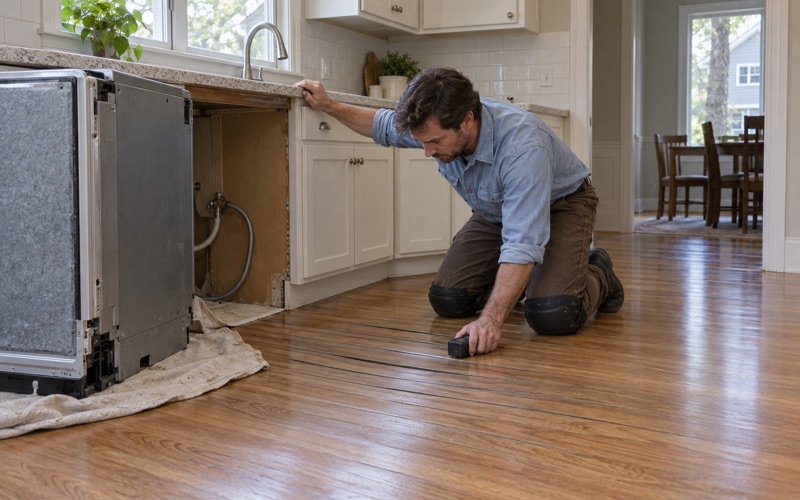
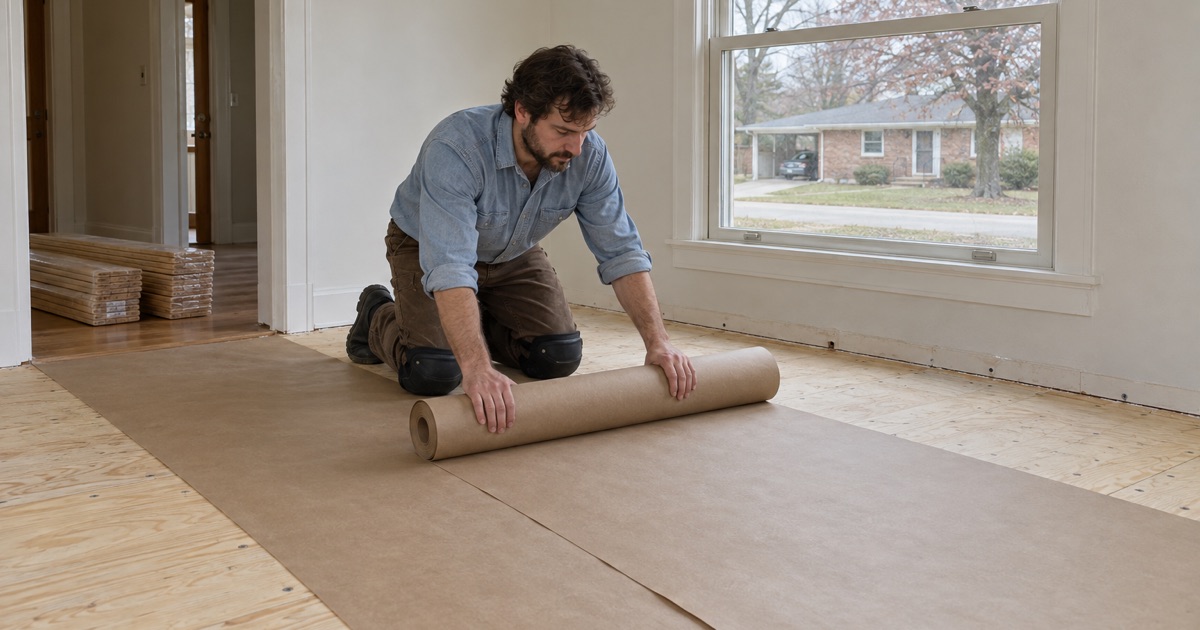
Flooring should be one of the last interior trades in a rehab. Drywall, paint, cabinets and plumbing all produce debris and traffic that can scratch or stain a fresh finish, so we schedule sanding and coating after the heavy work is done. When a house has been closed up without air conditioning, we also run a moisture meter across the boards before we start.
Humidity is the other variable. A Georgia summer can push moisture into wood that has sat in a closed, unconditioned house, and sanding a cupped floor flat before it dries leaves it crowned later. We read the moisture, find the source, and let the house and any new boards reach acclimation before the finish goes down.
Whether you are answering a written determination, preparing a house for new occupants or restoring a family home, we give a room-by-room assessment that separates what must be replaced from what only needs refinishing. That lets you see the real scope, set priorities and fit the floors into the rest of your rehab schedule before committing to the full job.
- 20+ Years on Wood Floors
- Moisture Readings Before Repairs
- Stain Samples on Your Floor