Smyrna Wood Flooring has spent more than 20 years on wood-flooring in Fair Oaks and the surrounding part of Cobb County, and a large share of that work starts the same way: someone has recently taken the keys to a house and wants to know what the floors are really worth. We refinish, repair and install hardwood, and we help you sort out which of those three a room actually needs.
That sorting is the hard part. A house that has passed through several owners rarely has one floor. It has a living room that was sanded twice, a bedroom still under carpet, a hallway patched after a leak and a kitchen someone covered with luxury vinyl plank. We look at each room on its own terms before anyone talks about price.
What follows is how we approach a first floor project in a home that has history, from pulling back carpet to deciding whether an old finish can take a new coat. It is written for owners who want to spend once, on the right rooms, rather than replacing a floor that only needed sanding or sanding one that should have come out.
Who Owns Homes in Fair Oaks Today
Most owners arrived in the last fifteen years
Fair Oaks is an unincorporated community in Cobb County, and its ownership has turned over heavily. Census estimates from the American Community Survey count about 1,117 owner households, and roughly 603 of them, or about 54 percent, moved in during 2010 or later. The margins on those figures are wide, so we treat them as a strong pattern rather than an exact count.
For us that pattern means a lot of first projects. An owner who has been in a house for a year or two is still learning what the floors do across a Georgia summer, where the traffic lanes form and which boards squeak. We plan our visits around those questions, because the answers shape whether a room needs a light screen and recoat or a full sanding.
A younger group of owner households
The same census tables show about 543 owner householders between 25 and 44, close to half of all owners here. Again the margins are wide, but the direction is clear: many Fair Oaks owners are early in their time in a house and often early in their time as homeowners.
That changes the conversation. Younger owners tend to ask practical questions about durability, pets and children, and how long a room will be out of use. We answer with specifics on waterborne polyurethane versus oil-modified polyurethane, cure times and sheen level, so you can choose a finish that fits how the house will actually be lived in.
Housing that mostly predates 1980
About 62.7 percent of the housing units in Fair Oaks were built before 1980, with large counts from the 1950s, 1960s and 1970s. Houses of that age have usually had their floors worked on more than once, whether or not anyone kept records of it.
That is why we never assume what a floor is made of or how much wood is left. We check species, board width, fastening and remaining thickness in each room, and we look for signs of past sanding, board replacement and covered-over damage before recommending anything.
Looking for wood-flooring closer to Mableton? See Mableton Wood-Flooring.
Your First Floor Project After Buying
Start with what is under the carpet
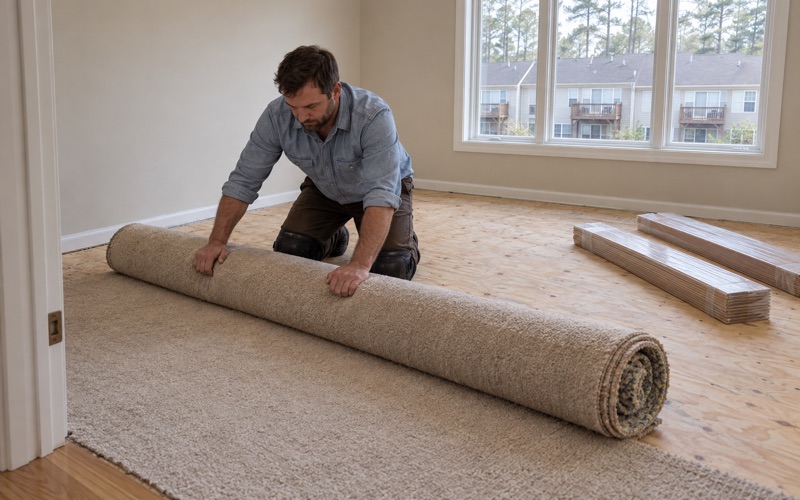
Wall-to-wall carpet is the most common thing new owners want gone, and it is also the biggest unknown. Under the carpet pad there may be oak strip flooring in fair shape, plywood subfloor, an older vinyl layer or a mix of all three. We pull a corner in a closet or along a wall first so nobody commits to a plan blind.
When oak strip turns up, we look at the tack strip holes and staple rows around the edges and across the room. Those get filled with care during refinishing rather than hidden under a dark stain, and we tell you honestly how visible they will be once the floor is finished.
Test the old finish before any sanding
Floors in houses with several past owners often carry more than one finish. Shellac, paste wax and newer polyurethane can sit in different rooms, and a paste wax residue left in the grain will stop a new coat from bonding. Painted floors add another layer to account for.
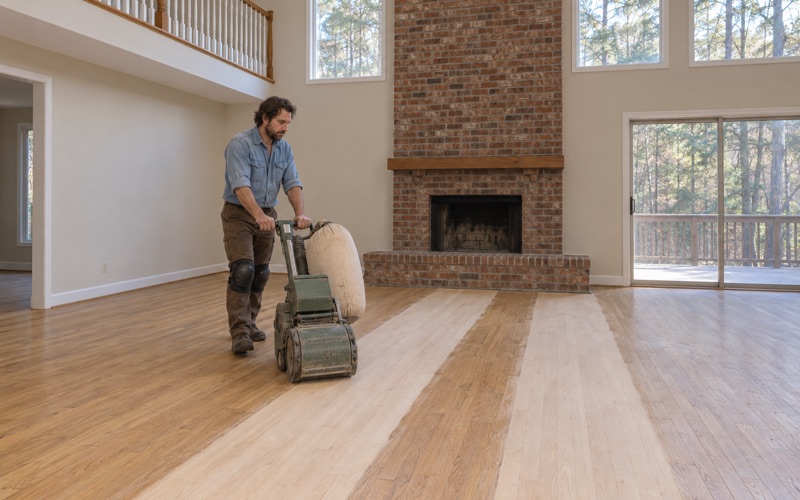
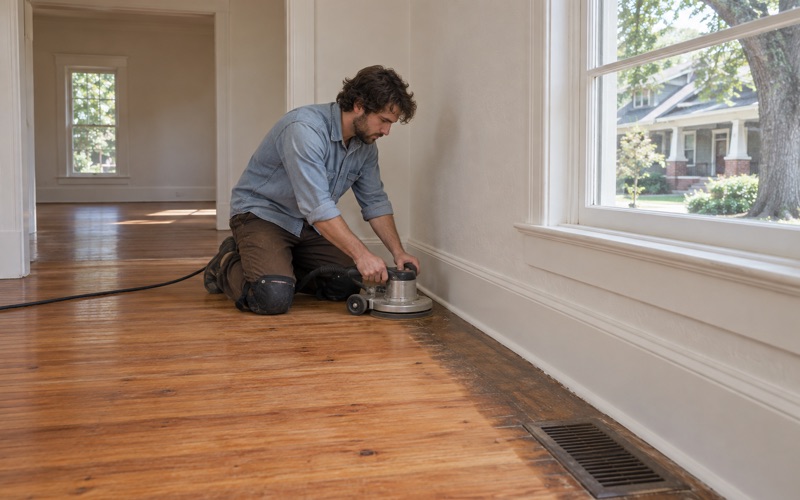
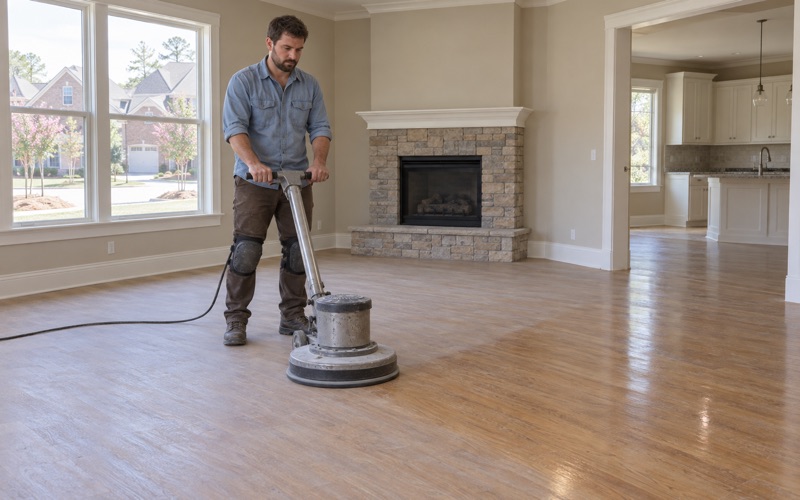
We test the existing finish in each room before sanding or recoating. A simple test tells us whether a screen and recoat will hold or whether the floor needs to go back to bare wood with a proper grit sequence on a drum sander and an orbital sander.
Sequence the work before furniture arrives
The easiest time to refinish is before the moving truck, when rooms are empty and a few days of cure time costs nothing. If you are already moved in, we plan the job in zones so you keep a working kitchen and a place to sleep while each area is sanded and coated.
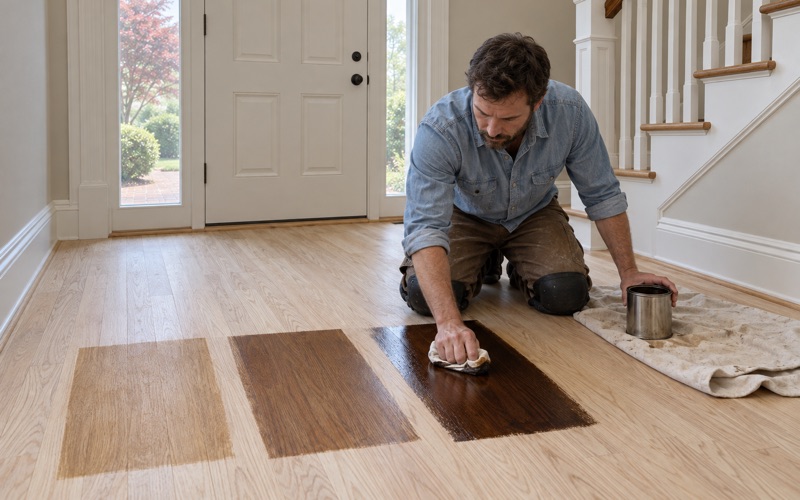
We also schedule stain samples early. Laying samples on your own floor, in your own light, takes a day, and it saves the regret of a color chosen from a small printed chip that looks nothing like it did in the store.
Keep, Refinish or Replace an Older Floor
When refinishing is the right call
Solid hardwood with enough wood above the tongue can usually be sanded again, even after an earlier refinish. Worn traffic lanes, sun fade, light water stains and dated orange oak tones are surface problems, and a full sanding with a fresh stain or a clear finish handles all of them.
We measure before we promise. Pulling a floor vent or a threshold lets us see board thickness at the tongue and groove, and that tells us whether one more sanding is safe. If the margin is thin, we say so and suggest a lighter approach.
When individual boards need replacing
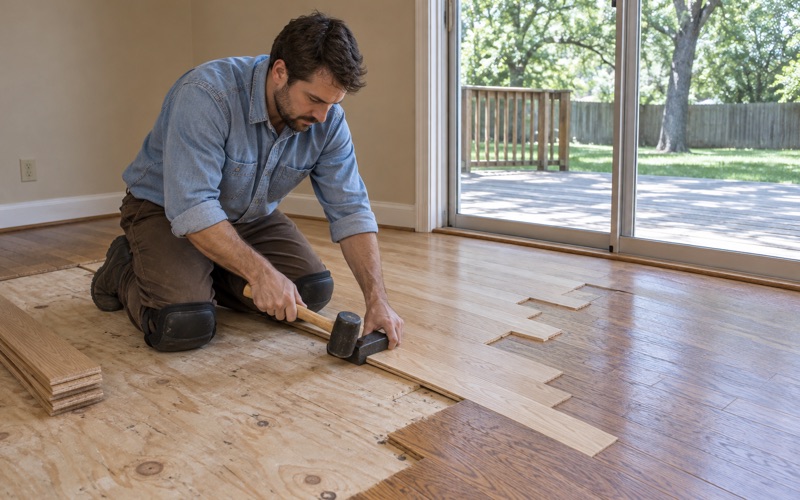
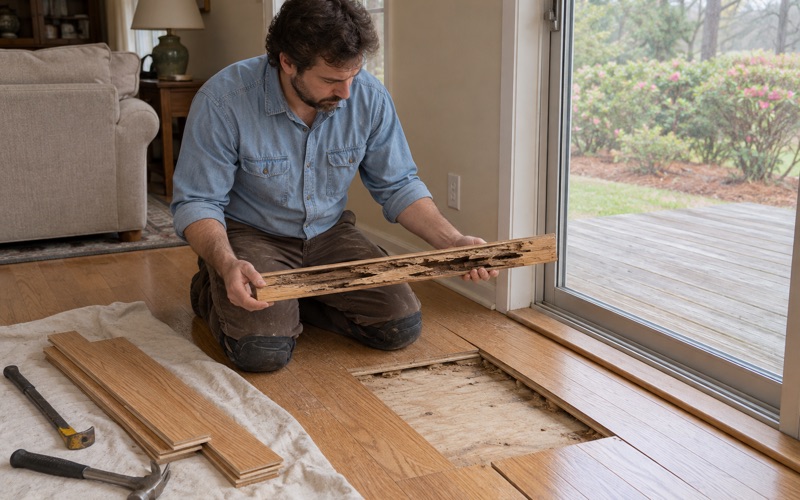
Some damage does not sand out. Deep pet urine stains, splintering boards, soft spots and boards weakened by subterranean termites need board replacement. We cut damaged boards out and weave new ones into the surrounding pattern so the repair does not read as a square patch.
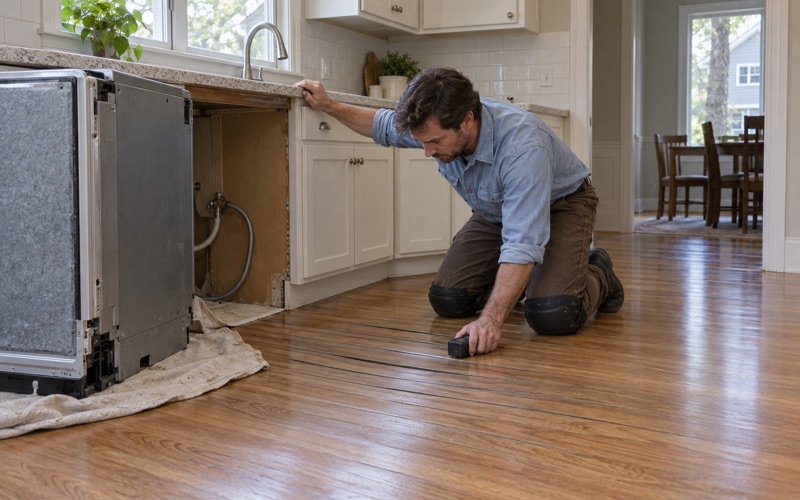
If we find mud tubes or termite damage, the pest control company treats first and we repair after. If boards are cupping or crowning, we read them with a moisture meter and find the water source before sanding, because flattening a cupped floor that is still wet only moves the problem.
When a new floor makes the most sense
Replacement is right when a floor has been sanded too thin, when damage runs across most of a room, or when a past owner left a layer that cannot be salvaged. It is also a fair choice when you want continuous flooring through rooms that currently hold three different materials.
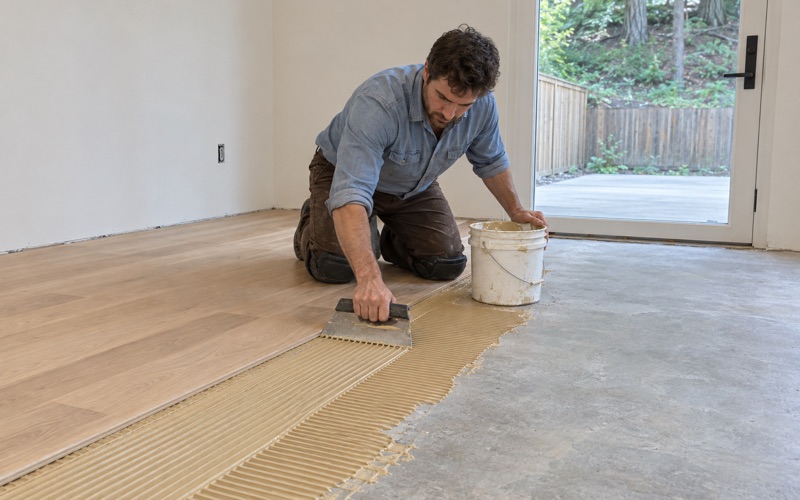
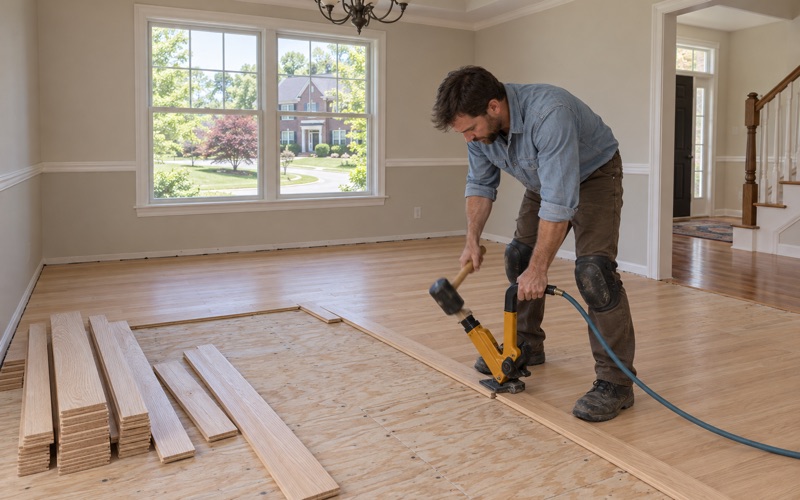
We install solid hardwood, prefinished boards and glue-down engineered flooring, and we will explain the engineered wear layer and Janka hardness of any product you are weighing. Every install follows acclimation guidance and leaves a proper expansion gap under the quarter round.
What Earlier Owners Leave Behind
Patches, paint and mismatched rooms
A house with a long ownership history often shows it at the thresholds. One room was refinished with a warm amber finish, the next with a clear waterborne coat, and a patched doorway uses boards of a different width. We match patched boards to the surrounding color so a repair blends into the patina.
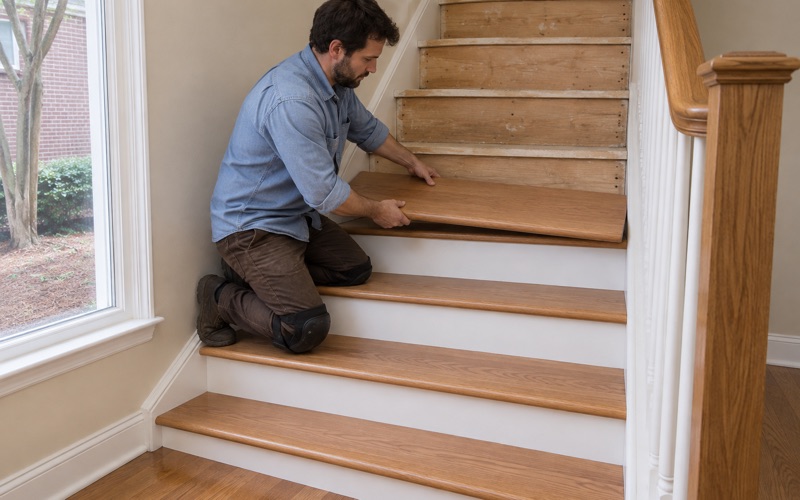
Stairs are a common leftover problem too. Stair treads may be carpeted, painted or finished to a different color than the floor they meet. We quote stairs tread by tread, pricing refinishing and new stair treads as separate jobs, because they take different time and materials.
Build year and painted surfaces come first
With so much of the housing here built before 1980, lead paint is a real consideration. Before we sand a home built before 1978, we confirm the build year and check painted surfaces such as baseboards, stair risers and any painted floors, since sanding can disturb old paint.
When the house and the work fall under the EPA RRP Rule, we follow its work practices. We would rather spend an hour on this check than create dust nobody accounted for in a house where you may have young children.
Floor work in unincorporated Cobb County
Fair Oaks has no city government. It is a census-designated place, and zoning, permits and code enforcement are handled by Cobb County, with Cobb County Community Development as the building department. Many residents use Marietta or Smyrna mailing addresses, which can make it unclear who governs a given property.
If your project goes beyond refinishing, such as moving walls or changing a subfloor structure, we point you to Cobb County for any questions about requirements. The community was named for its mature native oaks, and many of the floors inside its homes have outlasted several owners. With the right checks, most of them can keep going for the next one.
- 20+ Years on Wood Floors
- Moisture Readings Before Repairs
- Stain Samples on Your Floor