Smyrna Wood Flooring brings more than 20 years of wood-flooring work to Druid Hills, and most of what we do here is refinishing and repair for people who plan to keep living on the floor we touch. We sand, stain, finish, patch and replace boards in houses where the next few decades matter more than the next checkout date.
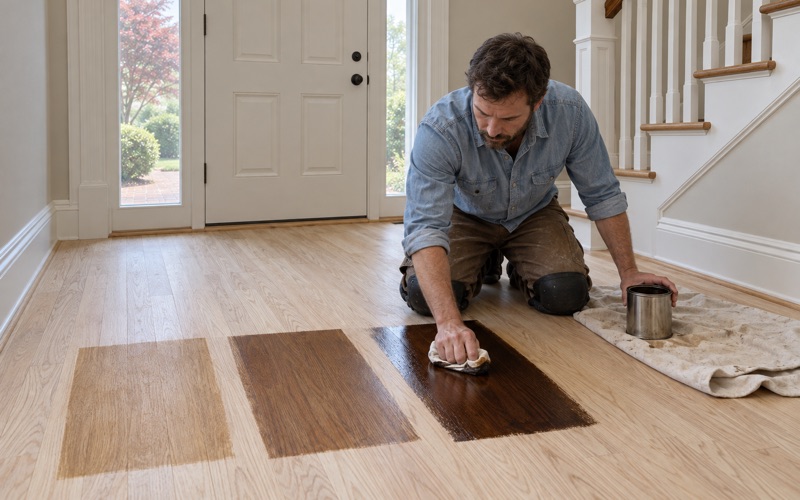
That shapes how we quote. A floor refinished for a household that intends to stay gets a finish chosen for daily wear, repairs that address the cause instead of the symptom, and stain colors approved on the boards themselves. We would rather spend an extra visit testing an old finish than come back in two years to fix a coat that never bonded.
Below, we explain why homes in the neighborhood tend to stay owner homes or ordinary leases, what that means for the condition of the wood we find, and how we plan work for owners and landlords who measure a floor’s life in years. We also cover how the county and city line runs through the neighborhood, because it changes which figures describe your street.
Why Druid Hills Houses Are Homes, Not Guest Stays
DeKalb’s Short-Term Rental Rules
Short-term rental regulations took effect in unincorporated DeKalb County on May 20, 2026. The county defines a short-term rental as a room or overnight stay lasting thirty consecutive days or less, and an operator needs a license that renews every year, with an annual application fee of $175 plus a small processing fee.
The line that matters here is short: DeKalb will not approve short-term rental permits for dwelling units inside the county’s locally designated historic districts. For the unincorporated part of Druid Hills, that closes the nightly-booking route, so houses remain family homes or rentals on ordinary leases. The floors we work on are walked by the same people month after month.
One of Two Local Historic Districts
DeKalb lists only two local historic districts, the Druid Hills Historic District and Soapstone Ridge. The county approved the Druid Hills local district in 1996 and adopted design guidelines for it, along with a public hearing process for changes to sites and buildings. The broader Druid Hills Historic District was listed on the National Register in 1979.
The Druid Hills Civic Association tells homeowners that external changes to a property need a Certificate of Appropriateness before work proceeds. Our work is inside the house, and we do not give rulings on what the design guidelines cover. If a project touches anything beyond the floors, we suggest owners check with the county’s preservation staff first.
DeKalb County or the City of Atlanta
Druid Hills is two places on a map. Part of it is a census-designated place in unincorporated DeKalb County, and part is a neighborhood inside the City of Atlanta, where it is a city landmark district. The civic association notes that most of its districts sit in unincorporated DeKalb, with only districts 1 and 4 inside city limits.
The short-term rental rule above is a DeKalb County rule for unincorporated DeKalb, so it does not describe the Atlanta side. The census figures on this page also come from the DeKalb census-designated place only. Atlanta annexed the Emory campus effective January 1, 2018, which is one reason the two halves are counted separately now.
Looking for wood-flooring closer to Grant Park? See Grant Park Wood-Flooring.
Houses Owners Have Kept for Decades
Detached Houses and Long Tenure
In the Druid Hills census-designated place, about 89 percent of owner households live in detached houses, according to the 2024 five-year American Community Survey. Owners outnumber renters, with roughly 2,073 owner households against 1,526 renting ones. These are freestanding homes with room after room of wood, not shared-wall units with a single living area.
Tenure runs long. About a third of owners, 720 of 2,073 households, moved in before 2000, and another 618 arrived during the 2010s. A family that has lived on a floor for twenty-five years has usually seen at least one refinish already, and sometimes more, which changes how much sanding the boards can still take.
Build Years and What Sits Under the Finish
Of the housing units in the census-designated place, about 21.8 percent were built in 1939 or earlier and 57.8 percent before 1980. Older floors often carry layers we have to identify before sanding: shellac, paste wax, a painted border, or a finish applied over an earlier one. We test those surfaces first so the new coat actually bonds.
For any home built before 1978, we check the build year and look at painted surfaces before a sander touches the room. Lead-based paint on baseboards, thresholds or a painted floor changes how we contain dust and clean up. It adds planning time, and it is the right order of operations for a household that will keep living in the space.
Wear From a Household, Not a Booking Calendar
Floors in long-held houses wear in patterns. We see traffic lanes from the kitchen to the back door, sun fade in front of tall windows, pet urine stains near a doorway, and water stains around a radiator or refrigerator line. Each of those tells us something about how the room is used and what the refinish has to hold up to.
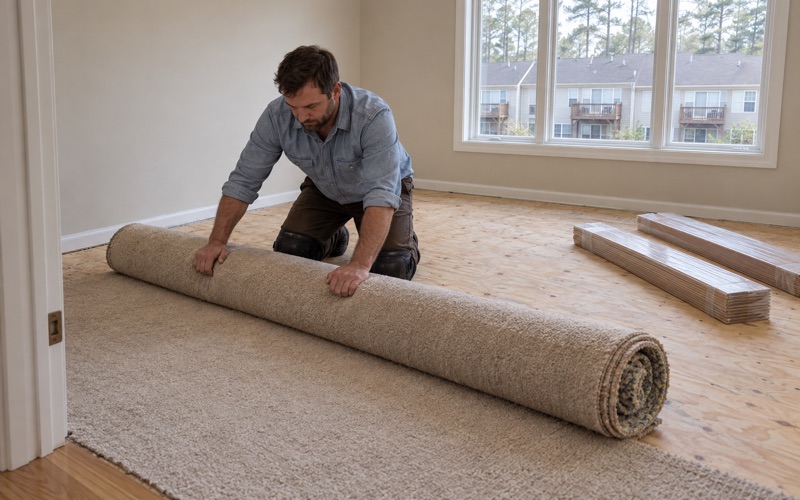
Some houses also carry oak strip flooring under wall-to-wall carpet laid decades ago. When we pull that carpet, carpet pad and tack strip, we fill the tack-strip holes and staple rows rather than hiding them under a dark stain. A floor that was covered for thirty years can come back well when the surface damage is repaired honestly.
Floor Work Planned for Years of Living
Full Refinish or Screen and Recoat
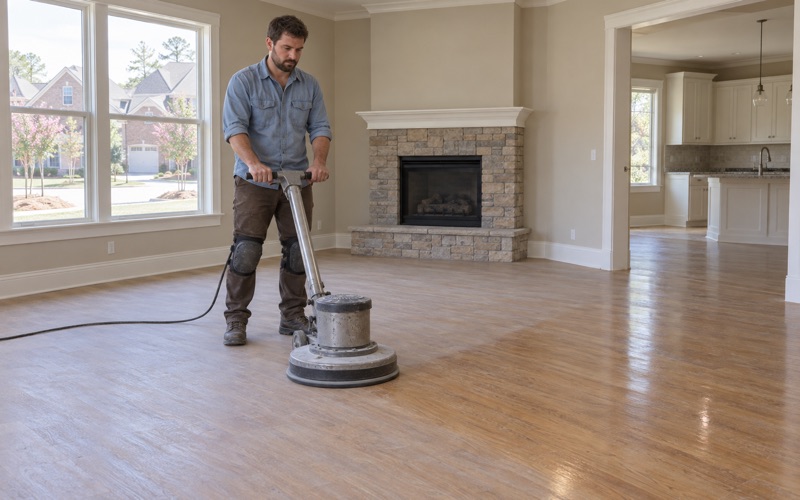
When a finish is worn but the wood beneath is sound, a screen and recoat can freshen the surface without taking boards down to bare wood. It suits a floor with dull traffic lanes but no gray stains or deep scratches. It also preserves wood thickness, which matters in a house that has already been sanded more than once.
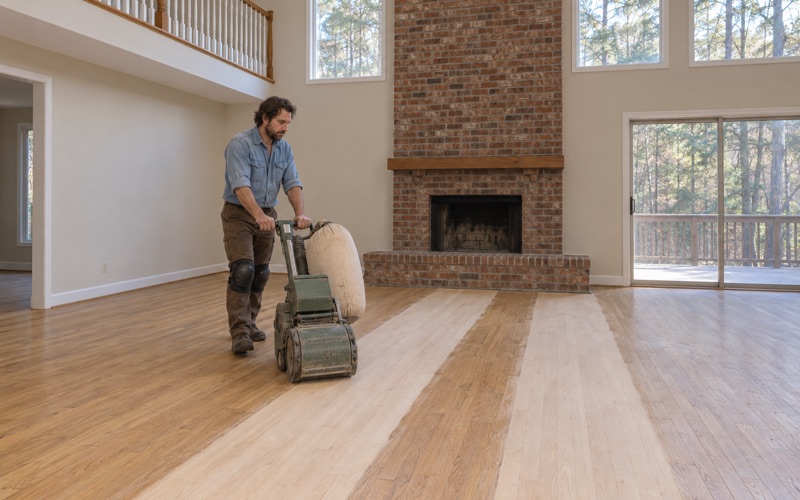
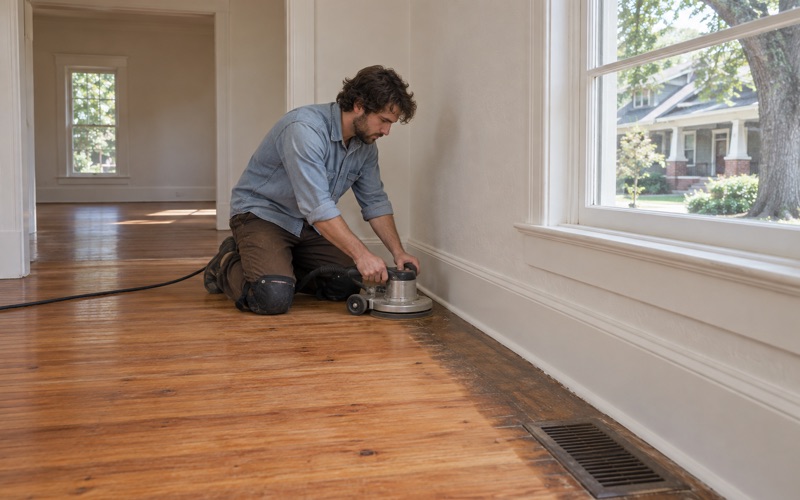
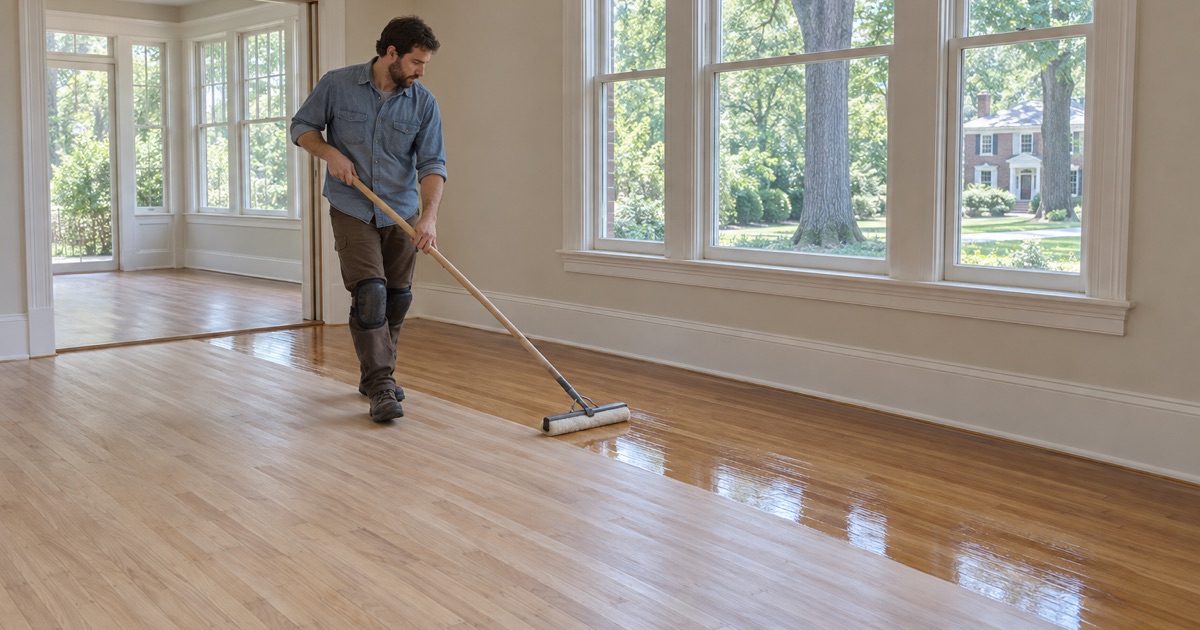
A full sanding with a drum sander and orbital sander, run through a proper grit sequence, is the answer when stains have reached the wood or the finish has failed. For site-finished oak from the 1980s, we check how much wood remains above the tongue before recommending it. If too little is left, we say so and talk about board replacement instead.
Choosing a Finish You Will Live With
A household planning to stay should pick a finish by how the room gets used. Waterborne polyurethane stays clearer and dries quickly, while oil-modified polyurethane ambers over time and can deepen the orange oak look some owners dislike. Hardwax oil is easier to spot-repair but asks for more upkeep, and sheen level changes how much scratching shows.
We lay stain samples on your own floor, in your own light, before anyone chooses a color. Red oak and white oak take the same stain differently, and a sample on a board in a showroom rarely matches a north-facing living room. For darker colors we may use water popping so the grain accepts stain more evenly across the room.
Repairs Meant to Last
Cupping in a humid Georgia summer is read with a moisture meter before anyone sands the crown flat. If boards are cupped, the source might be a leaking supply line, poor ventilation or a dehumidifier that stopped running. Sanding a cupped floor before the moisture is fixed leaves crowning once the boards dry out, and nobody wants that repair twice.
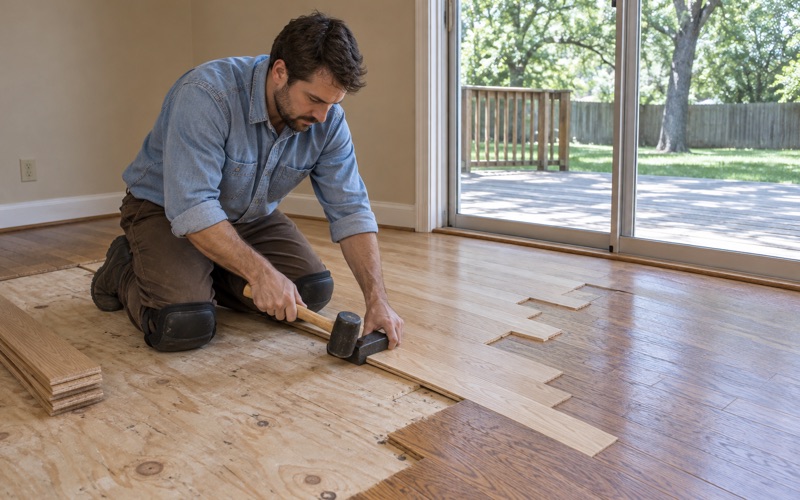
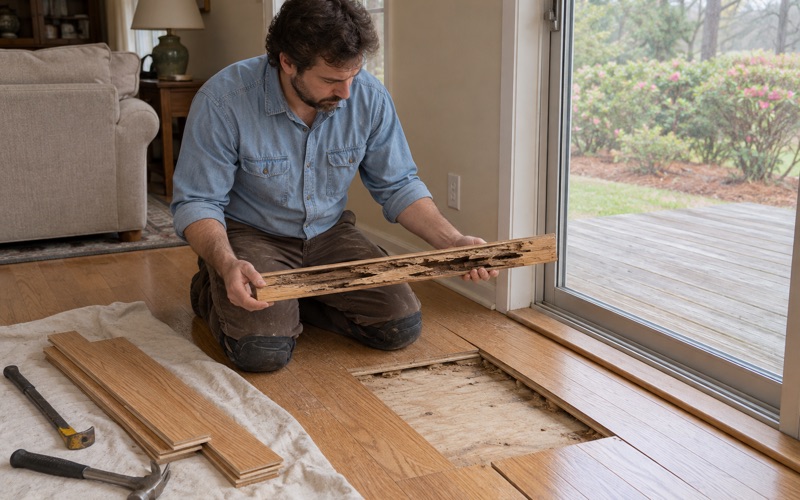
Boards damaged by subterranean termites are cut out and woven in only after the pest control company has treated the house. Mud tubes, hollow spots and soft spots near exterior walls are the signs we flag. After a leak from a washer, dishwasher or storm, we trace, dry and measure the area first, and document it room by room for the adjuster.
Apartments and Long-Lease Rentals in the Neighborhood
Renters in Larger Buildings
Renters in the Druid Hills census-designated place mostly live in apartment buildings. About two-thirds of renter households are in buildings of ten or more units, and 57 percent of renter households moved in during 2020 or later. That is a quicker cycle than the owner side, even without any short-term stays in the historic district.
For a building owner or manager, floor work between leases is about durability and schedule. We plan sanding and finishing around the days a unit sits empty, choose finishes that hold up to furniture moving in and out, and handle board replacement where a previous tenant’s plants or pets left water stains that sanding alone will not lift.
Houses Leased for a Year or More
Some detached houses in the neighborhood are rented on ordinary leases, often to households that stay for a year or longer. A landlord refinishing one of those floors is buying years of wear rather than a fresh look for listing photos. We usually recommend a tougher finish and a sheen that forgives scratches over the highest gloss.
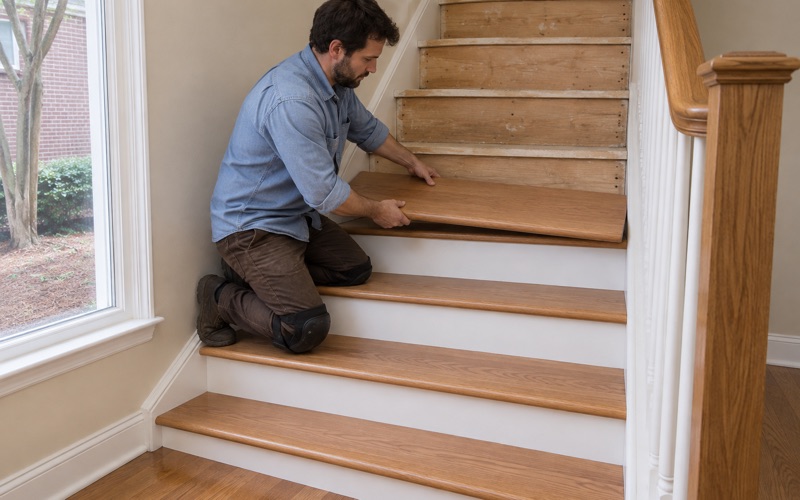
Stairs deserve their own line on the quote. We price stair treads tread by tread, and we treat refinishing existing treads and installing new ones as two different jobs. On a rental, worn stair nosing and loose risers are also a safety question, so we point out anything that should be addressed before the next tenant moves in.
Timing Work Around Weather and Occupancy
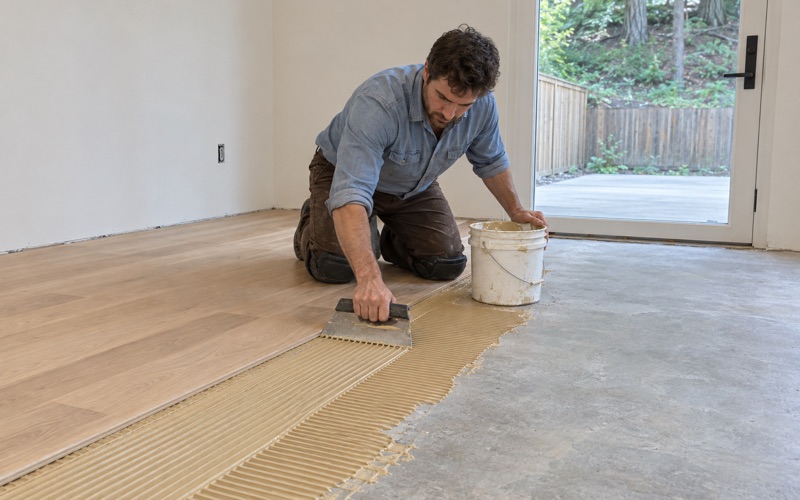
Druid Hills falls in the National Weather Service forecast zone GAZ045, named DeKalb, and summer humidity affects how boards behave and how finish cures. We check moisture in the wood and the subfloor before starting, and new flooring goes through acclimation in the house before we install it. The expansion gap at the walls is covered by quarter round or baseboard afterward.
Whether the house is lived in by its owner or leased, we sequence rooms so the household can keep functioning. Dustless sanding helps when people stay home during the job. The goal is the same across both kinds of occupancy: a floor refinished once, done well, and left to wear for years before it needs us again.
- 20+ Years on Wood Floors
- Moisture Readings Before Repairs
- Stain Samples on Your Floor