Smyrna Wood Flooring brings more than 20 years of wood-flooring work to College Park, and most of our jobs start with a question about water rather than a question about stain color. Before a drum sander touches a floor, we want to know how much moisture sits in the boards, the subfloor and the air around them. That reading decides whether a job is a refinish, a repair or a wait.
Homeowners and landlords usually call us about something they can see: cupping across a hallway, water stains near a back door, gray traffic lanes in a living room or a soft spot by the kitchen sink. Each of those has a cause, and the cause is often outside the floor itself. We find it first, because sanding a symptom flat only hides it until the next wet season.
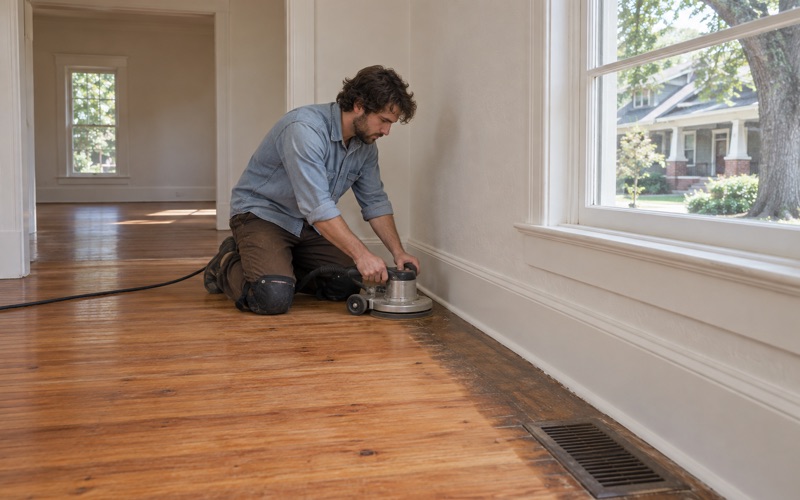
Our work covers sanding and refinishing, board replacement, stair treads, and new solid hardwood or engineered floors. Every visit begins with a moisture meter, a look at the finish already down and a check of the build year. Stain samples go on your own boards, in your own light, before anyone commits to a color for the whole house.
Where the Flint River Begins
A Storm System That Drains to the Flint
College Park sits at the head of the Flint River, and the city’s storm sewer system drains to the Flint basin. The city’s August 2024 stormwater management program, filed under its federal NPDES permit, names the Flint as the river basin its storm sewers discharge to. That makes the rain falling on a College Park yard the start of a river, not the tail end of one.
For a floor, that fact matters in a practical way. Water leaving a roof, a driveway or a patio has to go somewhere, and at the top of a watershed it moves through local pipes and ditches rather than arriving from upstream. When that path backs up or runs slowly, water lingers beside the house longer, and the wood inside is often what reports it first.
Headwaters on the College Park-East Point Line
The Flint first surfaces on a 7.25-acre tract off Willingham Drive, on the College Park-East Point line. MARTA bought the land in 1985 to manage stormwater runoff from the East Point station, and the property has long served to capture stormwater. In 2021, MARTA agreed to sell the tract to College Park for $218,000 for a nature preserve and an outdoor classroom.
From there the river runs for nearly two miles in pipes and culverts beneath the airport’s terminal and runways. Finding the Flint, the group behind the preserve effort, notes that during heavy rain the headwaters surge into parking lots and backyards. That is the same kind of surface water we trace when a floor near an exterior door starts to lift at the board edges.
Why the River’s Start Shapes Our First Visit
Because so much runoff here moves through built drainage, we start every College Park visit outside. We walk the downspouts, the grade along the walls, the window wells and the path water takes toward the street. A gutter emptying against the wall beside a dining room often explains more about a cupped floor than any amount of staring at the boards.
Then we come inside with the moisture meter and read the floor in a grid, room by room. Wet readings that follow an exterior wall point outside, while readings that bloom around a dishwasher or washer point to a supply line. Knowing which one we have decides whether a homeowner needs a gutter repair, a plumber or a flooring crew first.
Looking for wood-flooring closer to Clarkston? See Wood-Flooring Services in Clarkston.
College Park’s Mapped Storm System and Your Floors
Catch Basins, Pipes, Ditches and Detention Ponds
The city keeps a GIS-based map and inventory of every storm system component it owns or maintains inside city limits. That inventory lists catch basins, storm drain pipes, ditches, detention and retention ponds, and underground detention. It is the city’s record of where public stormwater goes once it leaves private property, and it ends at the lot line.
Most of the water that damages floors never reaches that public system. It collects in a low corner of a yard, runs under a back step or pools against a wall with no gutter above it. We note those spots during the visit, because a floor laid or refinished beside an unsolved drainage problem is a floor we will be back to repair.
Inspections on a Schedule
Under the same program, the city commits to inspecting at least 5 percent of its storm structures each reporting period, with every structure inside city limits inspected over the course of the permit. That is a steady rhythm of checking rather than waiting for a failure to announce itself. We think a wood floor deserves the same habit.
A yearly look at a floor near an exterior door, a laundry closet or a kitchen sink takes a few minutes. Board gapping that closes in summer and opens in winter is normal seasonal movement. Crowning, buckling or a musty smell is not, and catching that second kind early usually means replacing a handful of boards instead of a whole room.
Detention Ponds and the Water Near Your Door
Finding the Flint also notes that, in College Park, residential areas that used to see severe flooding have been replaced by secure detention ponds. Those ponds hold storm runoff and release it slowly, which is how they are meant to work. They do not change what happens at an individual house when a gutter overflows or a downspout empties beside the steps.
That smaller scale is where we work. Storm water that reaches a floor gets traced to its entry point, the area is dried with a dehumidifier and fans, and the boards are measured again before any are cut out. For an insurance claim, we document the readings room by room so the adjuster can see what was wet and when it dried.
When Outside Water Becomes a Floor Problem
Cupping, Crowning and Buckling
Cupping is the most common sign that water is reaching a floor from below. The board edges rise above the centers because the underside has taken on more moisture than the face. In a humid Georgia summer, we read the cupping with a moisture meter and find the source before anyone suggests sanding, since flattening the edges on a wet floor leaves crowned boards once they dry.
Crowning is the opposite shape, and it is often the mark of a floor that was sanded too soon. Buckling, where boards lift off the subfloor entirely, means water has been present long enough to overwhelm the expansion gap. Each of these calls for its own repair, and each depends on the floor returning to a normal reading first.
Water Stains, Soft Spots and a Musty Smell
Dark water stains near a door or window usually mean water sat on the finish long enough to reach the wood. Gray stains are often shallow and sand out, while black stains have gone deep and usually mean board replacement. Pet urine stains look similar and behave much the same, so we test the edges before promising a sand-out.
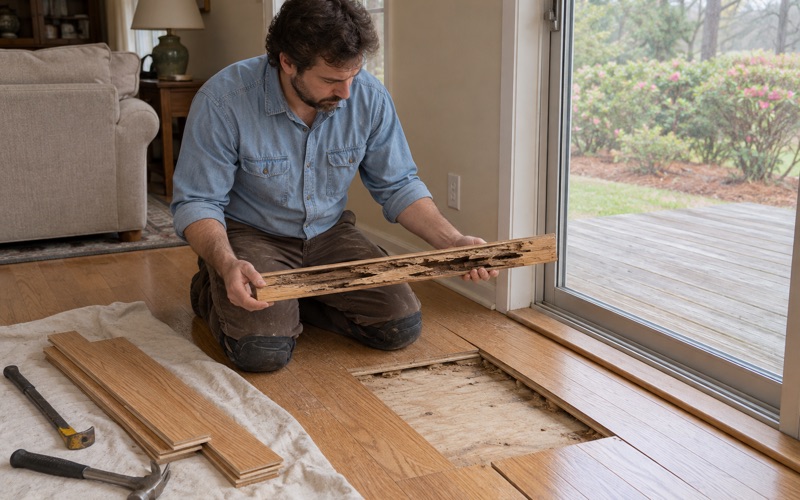
Soft spots underfoot and a musty smell point below the floor rather than at it. When we find either, we check the subfloor and the joist beneath through a register opening or a pulled board before quoting a refinish. Where subterranean termites have been at the wood, the pest control company treats first, and then we cut out the damaged boards and weave in new ones.
Supply Lines, Appliances and Storms
Some wet floors have nothing to do with the weather. A dishwasher, a washing machine, an ice maker line or a toilet supply can leak slowly for weeks before the floor shows it. The moisture pattern usually gives the source away, spreading out from a single point rather than running along an exterior wall.
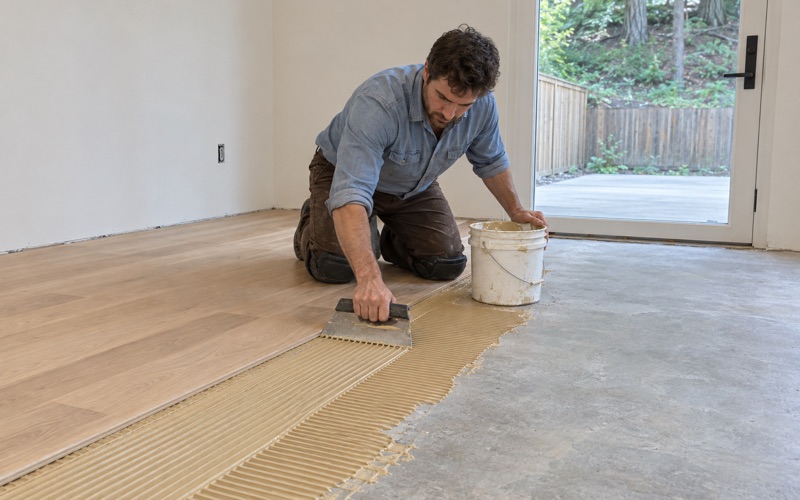
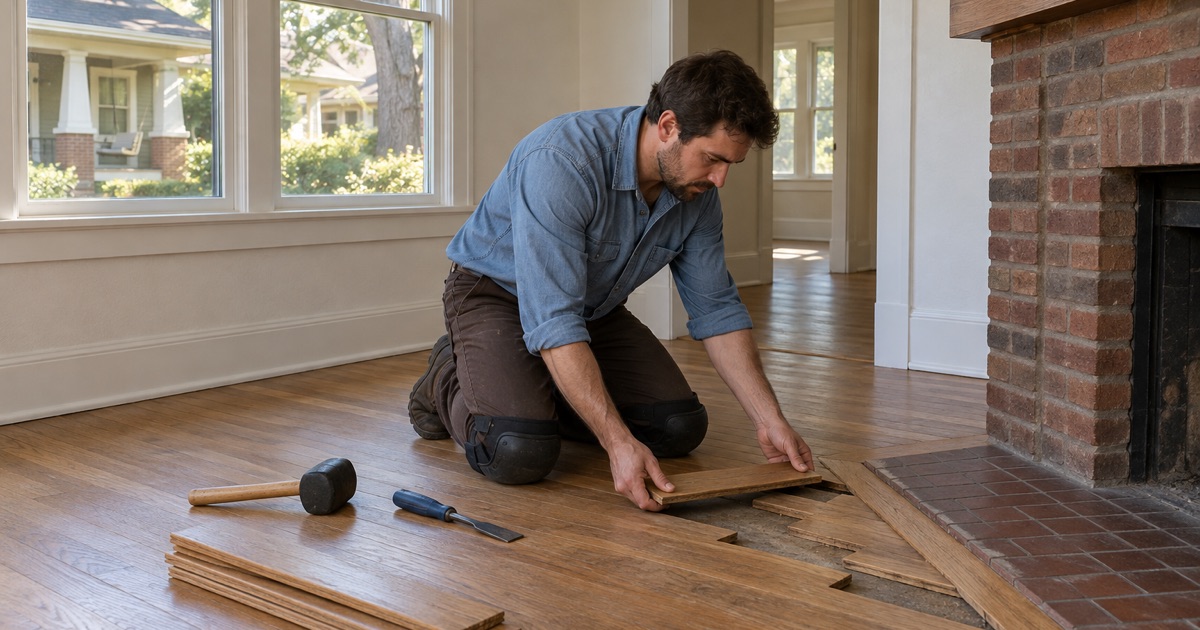
Whatever the source, the order of work does not change. We stop the water, dry the area, and measure it again until the readings match a dry part of the same floor. Only then do we pull damaged boards, lace in replacements and sand the room so the patch disappears into the rest of the field.
Checking Moisture Before Refinishing Older Floors
A Housing Stock Built Mostly Before 1980
About 70.6 percent of College Park homes were built before 1980, according to the Census Bureau’s 2024 five-year American Community Survey. Some of those floors have been refinished several times, some sit under carpet, and some still carry the finish they were given decades ago. Age alone does not tell us which, so we look before we quote.
In an older house, we check how much wood remains above the tongue before planning a full sanding, since every refinish takes some of it. Where carpet comes up to reveal oak strip flooring, we fill the tack-strip holes and staple rows rather than hiding them under a darker stain. Patched boards are matched to the color the floor already has.
Old Finishes, Paint and the 1978 Line
Older floors often carry shellac, paste wax or paint beneath or on top of later coats. A new polyurethane will not bond properly over wax, so we test the existing finish before sanding and choose a finish that will actually hold. Painted floors get their own look, because paint can hide damage and change how the boards sand.
For any home built before 1978, we check the build year and any painted surfaces before a sander runs. Lead-based paint was common in homes of that era, and disturbing it creates dust that has to be handled under the EPA RRP Rule. Confirming this at the start keeps the schedule honest and the house safe to live in afterward.
Rentals, Townhomes and Stairs
Most College Park households rent, with 21.5 percent of occupied homes owner-occupied in the same survey. That makes landlords and property managers a large share of the people deciding when a floor gets refinished or replaced. We schedule around move-outs and turnovers, and we hand an owner the moisture readings along with the quote.
In a townhome with an association, we confirm written approval before replacing or refinishing any floor, because interior flooring rules come from your own declaration, not state law. On stairs, we quote each tread separately and price refinishing and new treads as the two different jobs they are. Either way, the moisture check comes first, because a dry floor is the only kind worth finishing.
- 20+ Years on Wood Floors
- Moisture Readings Before Repairs
- Stain Samples on Your Floor