Smyrna Wood Flooring brings more than 20 years of wood-flooring work to Clarkston, and much of it here happens one apartment at a time. Owners and managers of small and mid-size buildings call us when a unit turns over, when a tenant reports a soft spot near the bathroom, or when an interior inspection is on the calendar. We repair, refinish and replace floors so each unit is ready on the schedule you set.
Our work in these buildings is practical rather than decorative. A worn traffic lane in a living room, a buckled board beside a leaking dishwasher, or a stair tread that has started splintering are the problems we see most. Each one gets a written scope before anyone brings in a sander, so you know what the unit needs, what it will cost and how many days it will sit empty.
We are not part of the city’s inspection process, and we make no promise about its outcome. What we offer is floor work done carefully, documented clearly and finished in time for a unit to be seen in good repair. The sections below explain how the local rule works, what we look for unit by unit, and how we schedule around tenants who are still living in the building.
Clarkston’s Apartment Inspection Rule and Its Certificate

What the 2012 Ordinance Requires
On September 4, 2012, Clarkston’s Mayor and City Council passed an ordinance requiring apartment complexes and other multifamily dwellings of at least four units to have the interior of each unit inspected. The stated purpose was the health, safety and welfare of the people who would live there. For an owner, that puts the inside of every apartment, not just the hallways and grounds, into the conversation with the city.
The rule matters more here than it would in most suburbs. Of Clarkston’s occupied homes, 81.7 percent are rented, according to the Census Bureau’s 2024 five-year estimates. Where most households lease, the condition of a unit’s interior rests largely with whoever owns the building, and the ordinance puts that interior on the record.
Who Signs the Code Compliance Certificate
The city’s Code Compliance Certificate is signed by a Certified Building Inspector acting under City of Clarkston Ordinance section 11-96. The form states that the listed apartment units have been inspected and found in compliance with the city’s applicable building codes currently in effect. The inspector named on it is the person making that statement, not the contractors who worked in the unit.
The form also notes that an inspector employed by the owner or manager signs only in that capacity and takes on no personal liability. Nor does the certificate stop the city from enforcing the Georgia Minimum Standard Codes. Our role sits well before any of that, in getting each unit’s floor sound and finished before the inspector arrives.
What Minimum Standards Means on the Form
Compliance, as the certificate words it, means units meet minimum standards for basic equipment and facilities for dwellings as set out on the inspection reports attached to it. Those attached reports hold the details, and we have not reviewed them, so we do not tell you what they include. Ask the inspector for the report form before we start.
What we can say is that a floor with a soft spot, a lifted board edge or an open gap is a problem for a tenant regardless of any form. Fixing it before an inspection visit is simply good practice for a building you intend to keep leased. We price that work so you can decide unit by unit what to address now and what can wait.
Looking for wood-flooring closer to Norcross? See Norcross Wood-Flooring.
Floor Problems We Fix Unit by Unit
Water Damage From Kitchens and Baths
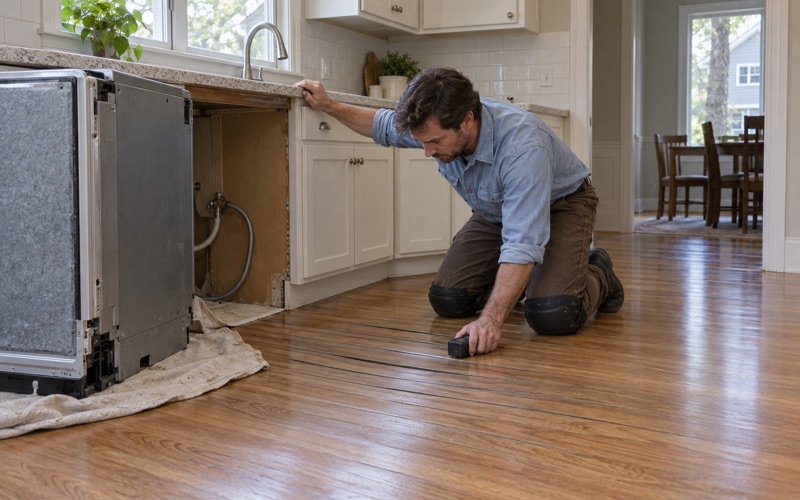
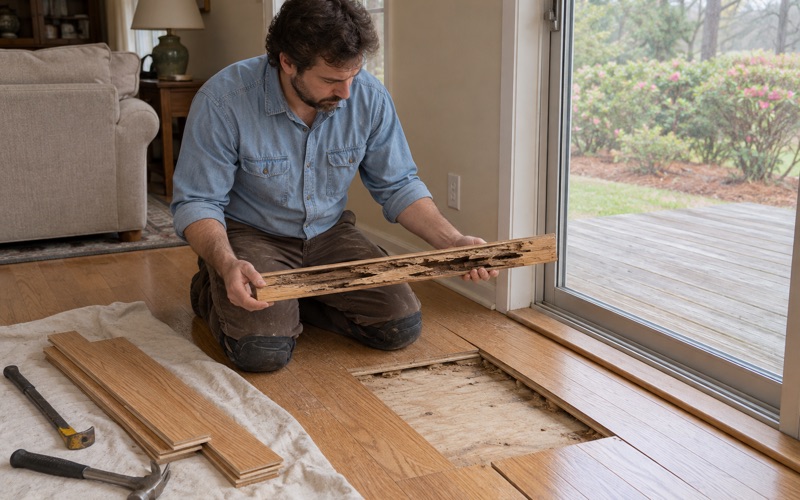
Most unit repairs start where water lives. A dishwasher supply line, a washer hose or a leaking toilet seal can push moisture into oak strip flooring for weeks before a tenant mentions it, and by then the boards show cupping, dark water stains or a musty smell. We trace the source, dry the area and take moisture meter readings before any board comes out.
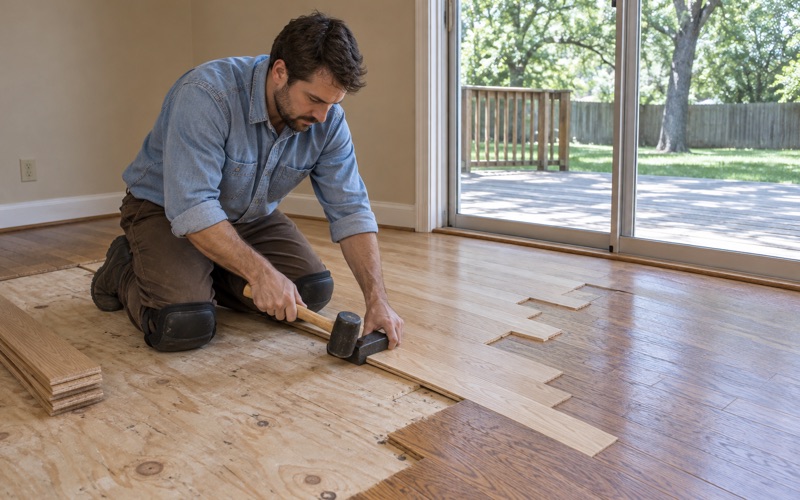
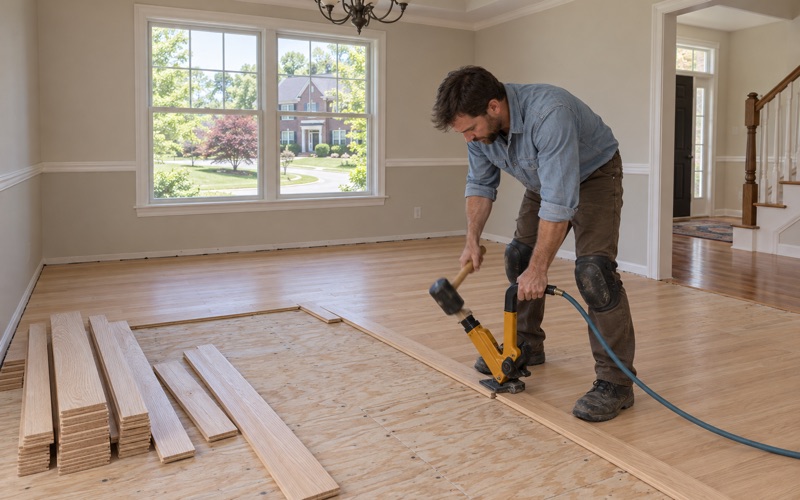
Replacing boards over a wet subfloor only moves the failure a few months down the calendar. Once readings settle, we cut out the damaged boards, check the subfloor and joist beneath for rot, and weave new tongue and groove boards into the field. If an insurance claim is involved, we document the readings and the affected area room by room for the adjuster.
Worn Traffic Lanes, Pets and Sun Fade
Long leases leave their own marks. The path from the front door to the kitchen wears through the finish first, pet urine stains blacken the wood near doorways, and sun fade turns a patch of red oak lighter than the rest of the room. Each has a different fix, and treating them all the same wastes money.
A worn lane that has not reached bare wood can often take a screen and recoat. Graying that has worked into the grain needs a full sanding, and a black urine stain usually means cutting out those boards because the discoloration runs deeper than sanding can reach. We show you which is which before we quote, so the scope matches what the floor actually needs.
Soft Spots, Gaps and Loose Treads
Soft spots and hollow spots underfoot usually trace to a failed fastener, a subfloor panel that has lost its nailing, or old water damage below. We open the area, find the cause and refasten or replace what is failing rather than simply screwing the surface down. Board gapping from seasonal drying gets the same attention before any filler is considered.
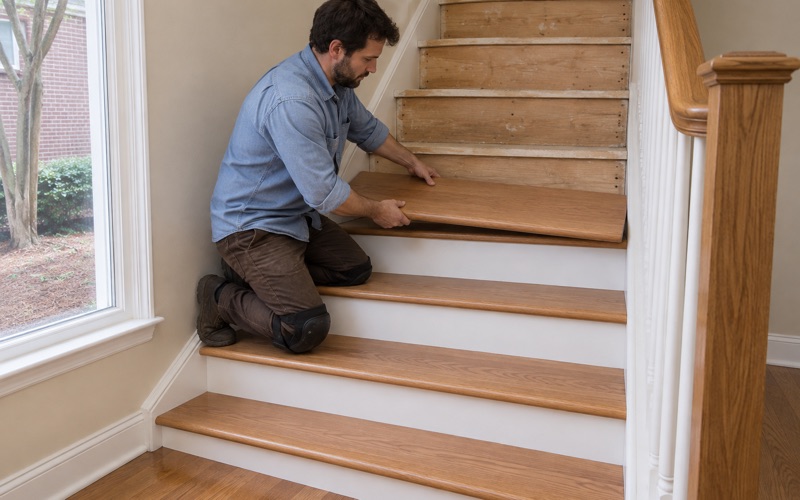
Stairs inside two-story units take hard use, and a loose or splintering tread is a hazard for everyone living there. We quote stairs tread by tread, pricing refinishing and new stair treads as the two separate jobs they are. Worn stair nosing and cracked risers are noted in the same visit so nothing gets missed.
Refinishing or Replacing Floors Between Tenants
Clarkston’s Building Stock and Its Floors
Clarkston’s homes lean toward one era. Census estimates put the 1970s as the largest build decade, at 31.2 percent of housing units, and the city’s own 2040 plan calls for enhancing its aging multifamily properties. In buildings of that age we find a mix of site-finished oak, carpet over pad and tack strip, and later layers laid on top, so every unit starts with a look at what is actually there.
Before we sand a floor in a building constructed before 1978, we check the build year and test painted surfaces, because older finishes and trim paint can contain lead. That check sets how the work area is contained and cleaned under the EPA RRP Rule. It takes little time and protects the next tenant, our crew and anyone living next door.
When a Refinish Is Enough
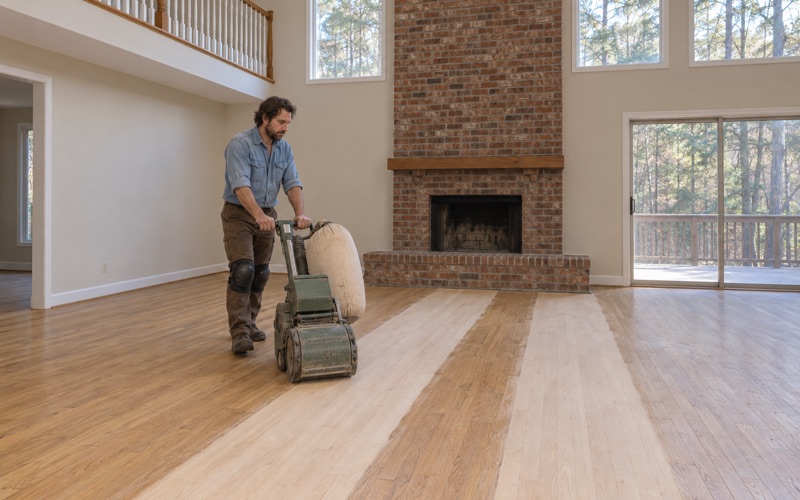
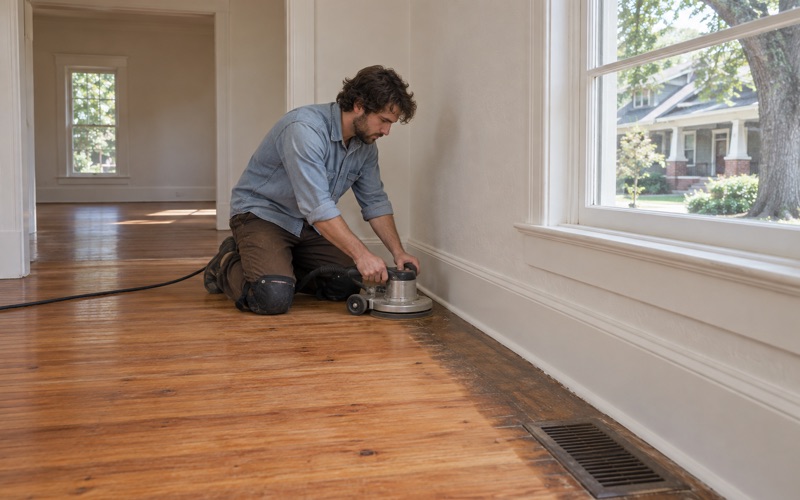
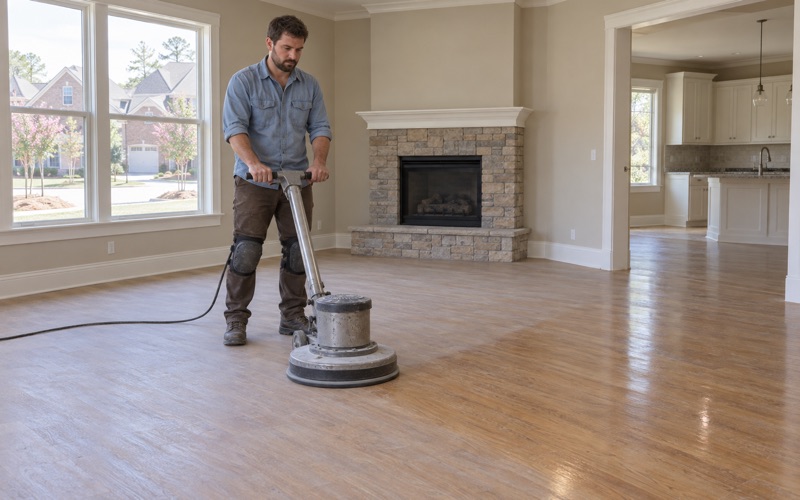
A turnover is the best window for a full refinish because the unit is empty and the finish can cure without furniture or foot traffic. If the oak has enough wood left above the tongue, sanding through a proper grit sequence and applying fresh finish restores it for far less than replacement. We check that thickness first, at a floor vent or threshold, so no one sands into the tongue.
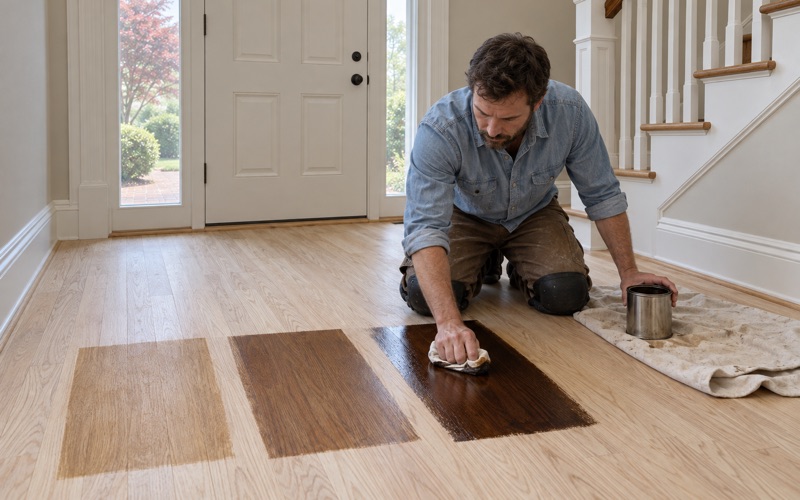
Waterborne polyurethane is our usual choice in occupied buildings because it dries quickly and carries a milder odor than oil-modified polyurethane. Neighbors notice less, and the unit can be back on the market sooner. We can lay stain samples in the unit’s own light if you want a color other than natural, though many owners keep rentals neutral.
When Replacement Makes More Sense
Some floors have been sanded too many times, have a thin engineered wear layer, or carry damage across most of a room. In those cases replacement usually costs less over the next several leases than another round of patching. We lay out both options with prices so the decision rests on numbers, not on a guess.
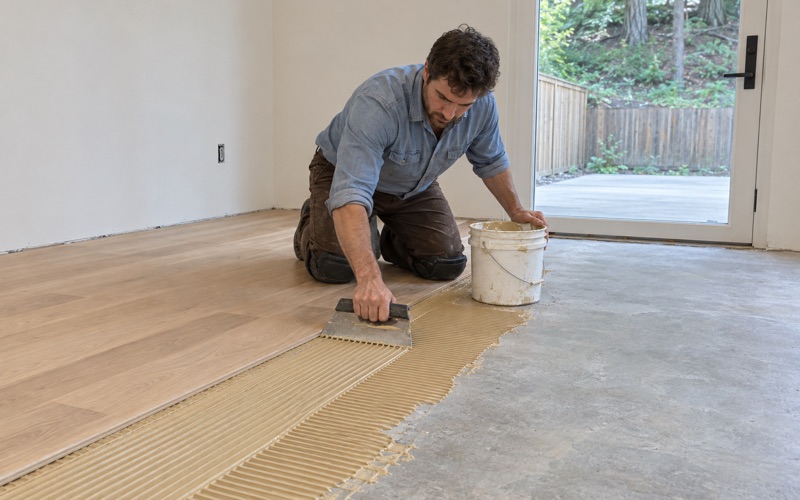
Replacement in a rental calls for a durable product that is easy to repair. Prefinished solid hardwood or glue-down engineered flooring with good Janka hardness handles turnover well, and a floor installed with proper acclimation, an expansion gap and clean reducers stays flat and tight. We leave spare boards labeled by unit so a future repair matches the rest of the room.
Working in Occupied Three- to Nineteen-Unit Buildings
The Buildings Most Clarkston Renters Live In
Clarkston covers about 1.86 square miles, and 62.4 percent of its homes sit in buildings of three to nineteen units. That makes it a city of walk-ups, quadplexes and small garden complexes rather than towers. For an owner, a portfolio here might be one building of eight units or a handful of small ones.
Small buildings have thin margins for vacancy, so the work has to fit a turnover window or a tenant’s schedule. We scope each unit separately, give a firm count of working days, and staff the job so that count holds. A floor that runs a day long costs you rent, and we plan around that.
Scheduling Around Neighbors and Tenants
In a building with shared walls and floors, sanding noise and dust travel. We use dustless sanding with containment at the unit door, keep the loudest work to normal daytime hours, and let you tell neighbors in advance when the drum sander will run. Finish coats go down at the end of a day so they cure overnight.
When a tenant is still living in the unit, we work room by room. Furniture moves to one side, each finished room is ready before the next one opens, and the kitchen and bath stay usable. It takes longer than an empty unit, but it lets you fix a problem floor without waiting for a lease to end.
A Clear Record for Every Unit
Owners with several units need to know which floors were done, when and how. For each apartment we record the rooms worked, the species, the finish used and any board replacement, along with moisture readings where water was involved. That record helps with the next turnover, an insurance claim or a question from a manager who was not there.
Whether you own one quadplex or a few small complexes, the approach stays the same: look at each unit, fix what is actually wrong, and finish on time. Call us when a unit turns over, when a tenant reports a floor problem, or when you want every floor in a building brought to one standard before its inspection date.
- 20+ Years on Wood Floors
- Moisture Readings Before Repairs
- Stain Samples on Your Floor