Smyrna Wood Flooring has spent more than 20 years on wood-flooring in Chamblee and across the metro, and most of what we are called in for starts at the front door. A hallway that looked fine two summers ago now shows a dull path from the entry to the kitchen. That path is ordinary wear, and it is far cheaper to answer early than late.
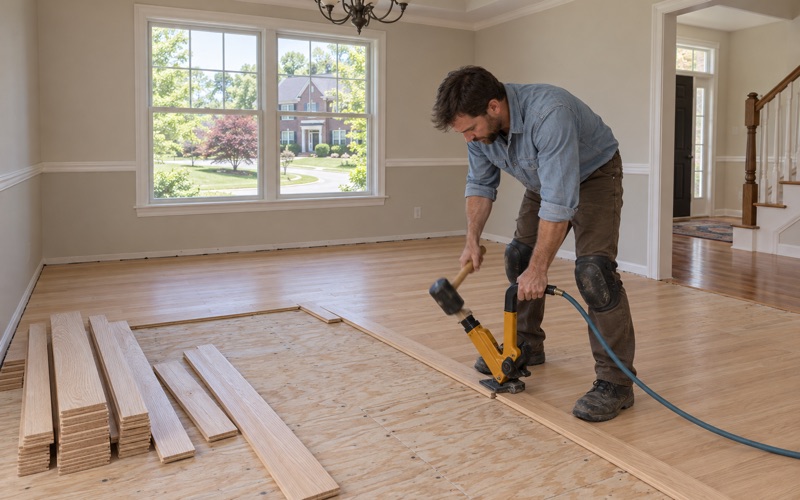
We refinish, repair and install solid and engineered wood floors, and we do it with an eye on where a household actually walks. Stairs, entries and the stretch of hall outside a bedroom take more foot traffic than a formal room ever will. Our job is to read that pattern and put your budget where the wear really is.
This page covers how that plays out in a city that is deliberately building places to walk, bike and bring the dog. It explains what tends to come in on shoes and paws, how entries differ between older houses and newer townhomes, and why a timely recoat usually beats a full sanding later on.
Chamblee’s Rail Trail and the Plan for More Trails
The 1.96-Mile Corridor
The City of Chamblee describes its Rail Trail as 1.96 miles long, running from the softball field at Keswick Park to Peachtree Road. It follows a former rail corridor, and trail listings describe it as paved and twelve feet wide. Near the Clairmont Bridge the city has placed outdoor games and musical instruments, which gives people a reason to linger rather than just pass through.
A trail like that changes how a neighborhood moves. Errands that once meant a car can become a walk, and an evening loop with a stroller or a dog becomes routine. For floors, the result is simple: more trips in and out of the house, each one carrying a little of the outdoors across the threshold.
The April 2023 Trail Master Plan
The city officially adopted the Chamblee Trail Master Plan on April 18, 2023. In the city’s own words, the plan aims to reconnect residents to destinations within their community and to each other through a network of trails anchored by greenways. Reporting at the time described an aim of eventually linking toward the north fork of the Peachtree Creek Greenway in Brookhaven.
The Rail Trail itself has grown in stages, with a ribbon cutting on sections four, five and six on September 7, 2023. We don’t treat any future segment as a date on a calendar, since plans shift. What matters for a homeowner is the direction, because Chamblee intends more of daily life to happen on foot.
Keswick Park and Huntley Hills Park
On October 17, 2023, the city adopted master plans for the upper area of Keswick Park and for Huntley Hills Park. Keswick anchors one end of the Rail Trail, and Huntley Hills sits in the neighborhood Chamblee annexed in 2010. Both plans signal that the city is investing in parks meant for regular, everyday use.
Parks and greenways send home sand from ball fields, mulch from playgrounds and damp grass clippings on the soles of sneakers. None of it is dramatic, and none of it ruins a floor in a week. It simply adds up over a season in the places where everyone walks, which is where we look first on any Chamblee visit.
Looking for wood-flooring closer to Doraville? See Doraville Wood-Flooring.
What Comes Through the Door After a Walk or a Ride
Grit on Shoes and Tires
Fine grit is the quiet enemy of a wood finish. Each step grinds it against the topcoat like light sandpaper, and the entry, the hall and the turn into the kitchen take the most passes. Over months that abrasion leaves traffic lanes, a dull band where the sheen has worn off while the edges of the room still look new.
Bikes add their own wear when they are wheeled through the house to a back room or a rear door. Tires carry grit, and a kickstand or pedal set down on the floor can leave dents and scratches. A wall rack near the entry, or a route over a runner, keeps that wear off the finish entirely.
Paws, Leashes and Water Bowls
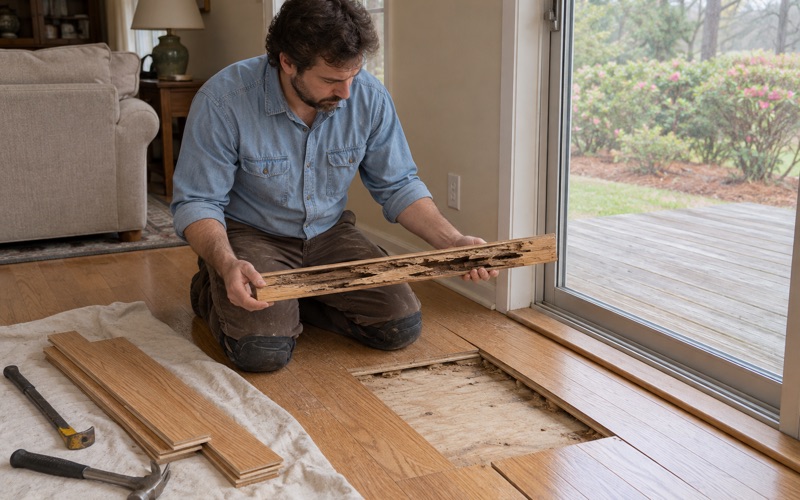
Dogs come home from a walk with wet feet, sandy pads and nails that act like small chisels on a soft finish. The scratches rarely reach the wood at first; they sit in the topcoat, where a recoat can deal with them. Pet urine stains are a different matter, since urine that soaks past the finish can gray or blacken the boards themselves.
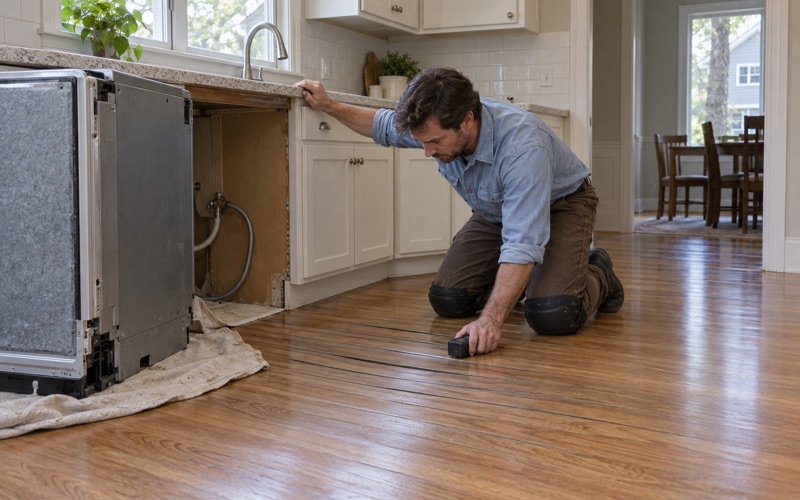
Water bowls deserve their own mention. A bowl that gets splashed every day by the back door can leave water stains, and in time the boards around it may start cupping as moisture works into the edges. We check that spot with a moisture meter before recommending anything, because a sanded floor over wet wood will not stay flat.
Mats, Pads and Daily Habits
The cheapest floor protection starts outside. A coarse mat on the porch catches the heavy grit, and a softer mat inside the door picks up what is left. Felt pads under chairs and a shoe tray by the entry do more for a finish than most products sold for the purpose, and none of it requires changing how a household lives.
Rubber-backed mats are the one thing we steer people away from. Some trap moisture against the finish and can discolor it, especially on a floor that gets damp paws every morning. A breathable mat or a woven runner does the job without leaving a ghost of its outline when it finally gets moved.
Entries and Halls in 1960s Houses and Newer Townhomes
What the Census Says About Chamblee Homes
Census estimates show that 46.9 percent of Chamblee homes were built before 1980, and the 1960s lead every decade with 2,618 homes, or 19.0 percent of the total. At the other end, 35.4 percent date from 2000 or later. That split means a single week of our work here can move between a house from the 1960s and a townhome finished in the last decade or two.
The two groups wear differently. Older houses often have entries that open straight into a living room, so the traffic spreads across a wider stretch of floor. Newer townhomes tend to funnel everyone through a narrow hall and up a staircase, which concentrates wear on fewer boards and on the stair treads.
Oak Under Carpet in 1960s Houses
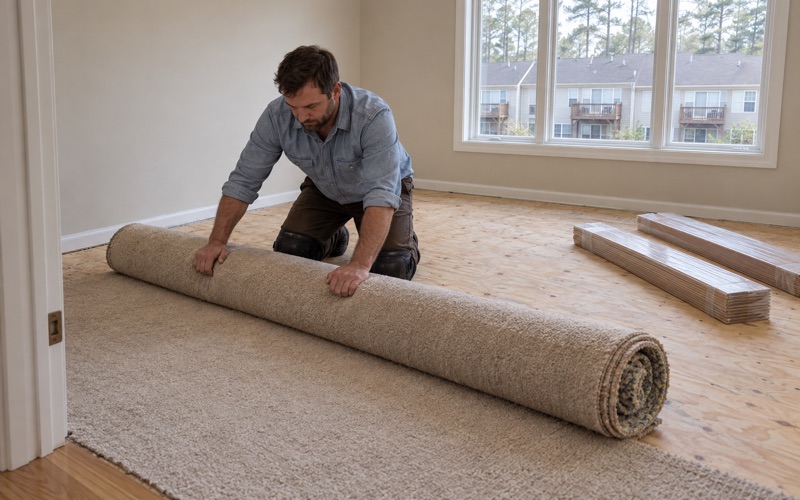
When we find oak strip flooring under wall-to-wall carpet in a 1960s house, the entry and hall usually show tack strip holes along the walls and staple rows across the field once the carpet pad comes up. We fill those rather than hiding them under a rug. Then we sand and refinish the floor as a whole, so the hall matches the rooms around it.
A hall is often the thinnest part of a floor that has been sanded before. We check how much wood remains above the tongue before deciding anything, since a board with little left may take one more careful sanding or none at all. Because these homes predate 1978, we also check the build year and any painted surfaces before a sander touches them.
Townhomes and the Association’s Rules
About 21.8 percent of Chamblee homeowners live in one-unit attached homes, which is where association rules come into play. Any interior flooring rule comes from your own declaration, not from state law. We confirm the association’s written approval before replacing or refinishing a townhome floor, a short step that heads off a dispute after the work is done.
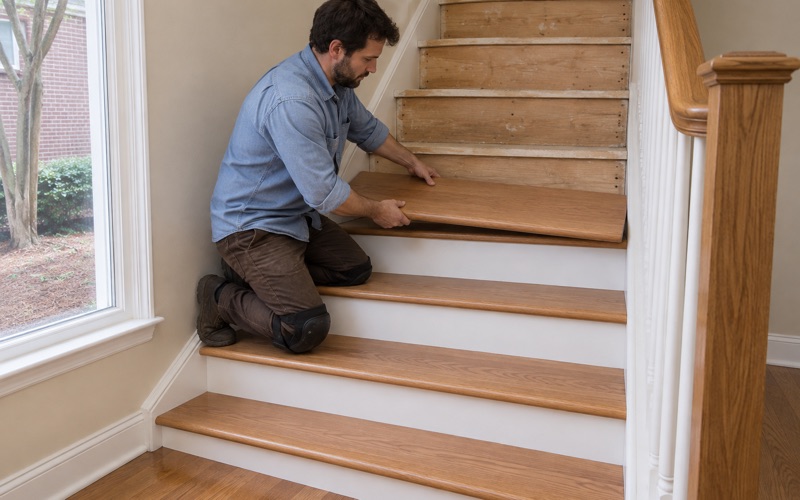
Townhome entries often run from the door straight to a staircase. Stair treads and stair nosing take the brunt of the traffic, and we price them tread by tread, treating a refinish and new treads as two separate jobs. A worn nosing at the bottom step is often the first sign that the hall above it needs attention too.
Recoating Before Wear Reaches the Wood
Reading a Traffic Lane Early
A traffic lane has stages. First the sheen fades while the finish is still intact, then the finish thins until the wood starts to show, and finally bare wood darkens and grays. The first stage is the one to catch, because the fix at that point is a fresh coat of finish rather than a trip down to raw wood.
One simple test helps. Look along the hall toward a window in late afternoon light, and compare the entry with the corner of the room nobody walks on. If the lane looks dull but the color is even, the finish is doing its job and simply needs renewing, while a change in color means the wear has reached the wood.
Screen and Recoat
A screen and recoat lightly abrades the existing finish with a buffer and applies a new topcoat. No stain is removed and no wood is sanded away, so the floor keeps its patina and its thickness. In an entry and hall that see daily trips out to the trail or the park, that kind of renewal can keep the wood itself from ever being exposed.
It has limits. A recoat won’t bond over a floor that has been waxed or treated with some maintenance polishes, so we test first. Waterborne polyurethane and oil-modified polyurethane each have a place, and sheen level matters in a hall, where a lower sheen hides scratches from paws and grit far better than gloss.
When a Full Refinish Is the Right Call
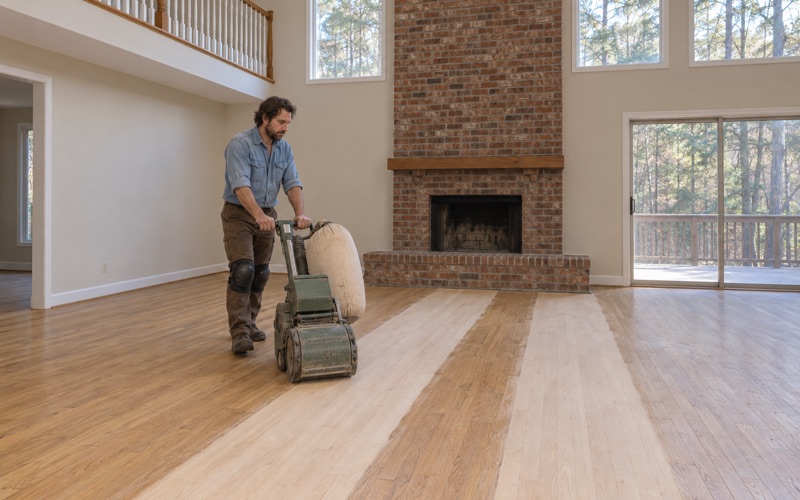
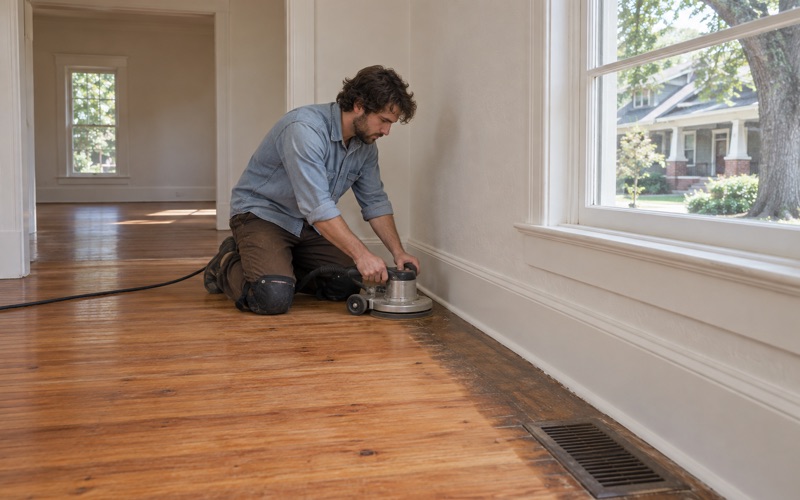
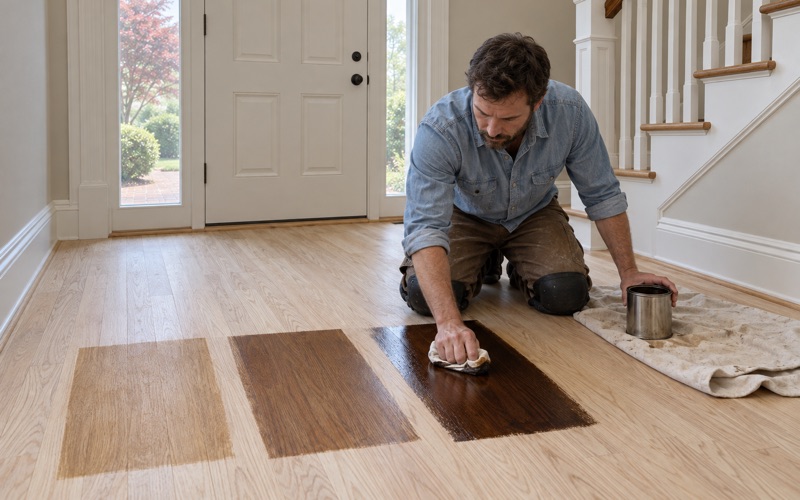
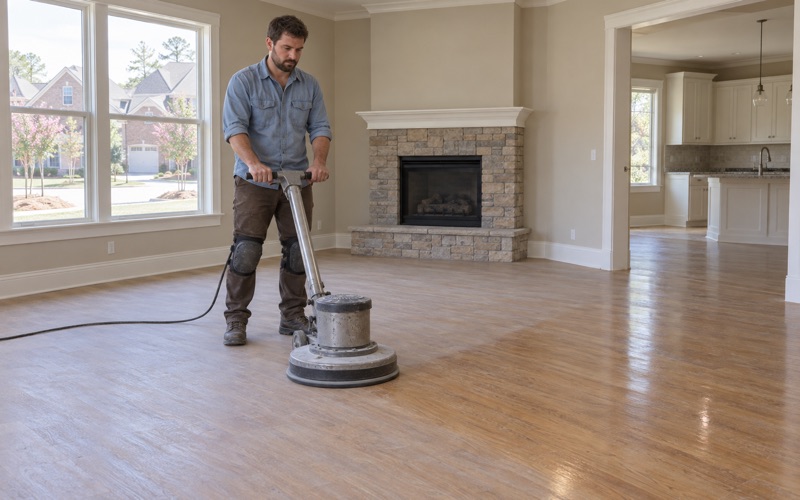
Once gray wood, deep pet urine stains or heavy scratches show through, a recoat no longer reaches the problem. At that point we sand with a drum sander and an orbital sander through a proper grit sequence, repair any damaged boards and build the finish back up. Stain samples go down on your own floor, in your own light, before a color is chosen.
A full refinish is not a failure; it is what a floor needs every so often. The point of recoating ahead of wear is to make those refinishes rarer, so the wood lasts through more of them. For a Chamblee household that walks, rides and heads to the park, that rhythm is usually the most economical way to keep an entry looking right.
- 20+ Years on Wood Floors
- Moisture Readings Before Repairs
- Stain Samples on Your Floor