Smyrna Wood Flooring has spent more than 20 years on wood flooring in Buckhead and around metro Atlanta, and more and more of that work now happens several floors above the street. Owners in towers built during the 1980s and 1990s are finding that the floors inside their units have simply aged out, even where kitchens, baths and paint were updated along the way.
A unit floor in an older tower is its own kind of job. The wood, the finish and the layers beneath it all carry a history, and the building sets the terms for how materials arrive, when machines can run and where the dust is allowed to go. We plan around every one of those limits before a single board is touched.
Most owners we talk with are not redoing the whole unit at once. They want the living room refinished this year, the bedroom hallway next year, and perhaps a kitchen transition fixed when the cabinets finally change. We quote each piece as its own job, so a floor can come back one room at a time without leaving mismatched colors or sheen behind.
Buckhead’s First Generation of Condo Towers
Buckhead is the uptown district of the City of Atlanta, annexed into the city in 1952, and it covers roughly the northernmost fifth of it. Along Peachtree Road, the residential towers that went up in the 1980s have reached the age where the buildings themselves need attention, not only the units inside them.
A Tower Reaching Its First Big Renovation
Park Place on Peachtree, at 2660 Peachtree Road NW, shows the pattern clearly. The tower holds 294 condominium units, and in 2024 it began its first major renovation in 37 years, a $15 million project. Published sources disagree on when the building opened, with Wikipedia giving 1986 and Buckhead.com giving 1987, but either way the structure is well into its fourth decade.
The published scope is about the shared building: the exterior, the common areas on the residential floors, a new porte cochere on Peachtree Road, an enlarged pool and the landscaped grounds. Inside the units, the same reporting notes that parts of the interior have been renovated piecemeal. That split, with the association reinvesting in the building while owners handle their own floors, is the situation this page is written for.
What the Census Numbers Say About Tower Living
Tower ownership is not a side arrangement here. In ZCTA 30326, a Census ZIP-area proxy for the Lenox and Phipps area whose boundary against Buckhead has not been verified, 89.3 percent of owner households live in buildings of fifty or more units. In that same proxy, 22.7 percent of housing units were built between 1980 and 1999.
In ZCTA 30305, a second labeled proxy that covers part of Buckhead, 2,372 owner households live in fifty-plus-unit buildings. Those are households whose floors sit many stories up, and whose projects run through a management office, a loading area and a freight elevator rather than a driveway and a garage door.
Decades-Old Unit Floors
A unit floor laid in the late 1980s has usually lived through several owners. Some floors were refinished once or twice; others were carpeted over, patched after a leak, or replaced in one room and not the next. We start by finding out what is actually there, room by room, before recommending any particular approach.
That inventory decides the job. Solid hardwood or a thick engineered wear layer can often be sanded again. A thin wear layer, a floating floor, or glue-down engineered planks that were already sanded once may have no refinish left in them, and we would rather tell you that up front than discover it halfway through the grit sequence.
Looking for wood-flooring closer to Atlantic Station? See Wood-Flooring in Atlantic Station.
When the Association Renovates the Building
An association project and a unit project run on separate tracks. Knowing where one ends and the other begins keeps your floor plans from colliding with the board’s schedule, and keeps expectations clear on both sides of the front door.
The Building Is the Association’s Project
When an association takes on the exterior, the corridors and the grounds, those decisions and that timeline belong to the board and its contractors. Your unit floor sits outside that scope unless your own documents say otherwise, which is why we ask to see the relevant sections of your declaration rather than assuming anything.
The Georgia Condominium Act and your recorded declaration set the framework, and any interior flooring rule comes from those documents rather than from general state law. We confirm in writing what your building expects before we order material or book a date, so nothing about the install has to be undone after the fact.
Refreshed Hallways Change How a Unit Looks
When the common areas on a residential floor are redone, the contrast at your front door can suddenly feel sharp. Fresh hallway finishes make a tired entry floor, an orange oak tone or worn traffic lanes look older than they did the week before. That contrast is a common reason owners start looking hard at their floors.
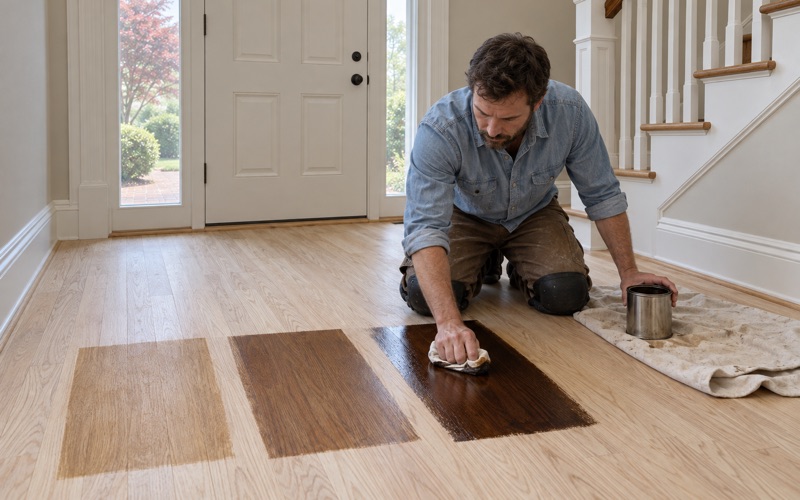
We help you decide whether the answer is a screen and recoat to restore sheen, a full sand and refinish to change the color, or replacement where the wood has run out. Stain samples go down on your own floor, in the light your windows actually give, so the choice is made against the real room.
Timing a Unit Job Against Building Work
While an association renovation is underway, loading areas, elevators and entrances can be busier or rerouted. A porte cochere under construction may change where a work van can stop and unload. We check with management about current access before quoting a start date, and we build slack into the schedule for the unexpected.
Some owners prefer to wait until the common-area work on their floor winds down, so dust and deliveries are not competing for the same elevator. Others want their floors done first so the unit is settled before the hallways reopen. Either choice is reasonable, and we talk through which one suits your floor and your plans.
Updating the Floors Inside Your Own Unit
Once the building’s side is understood, the work inside the unit comes down to what the existing floor can take and what you want it to become. These are the decisions we walk through with owners on a first visit.
Refinishing What Is Already There
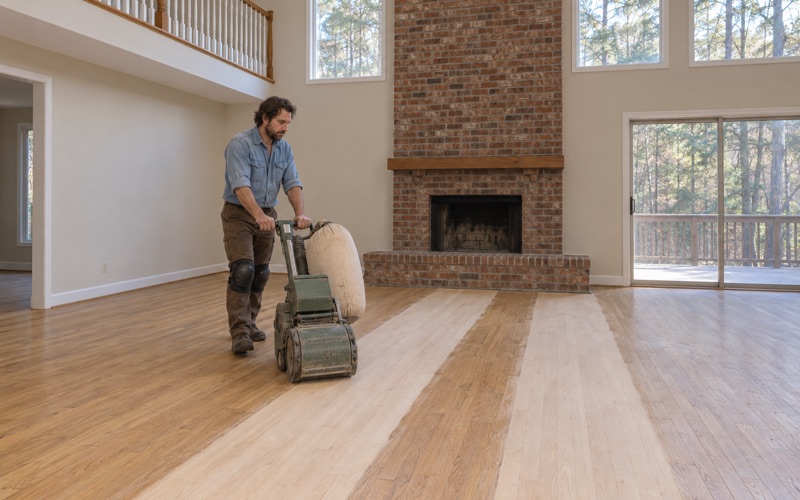
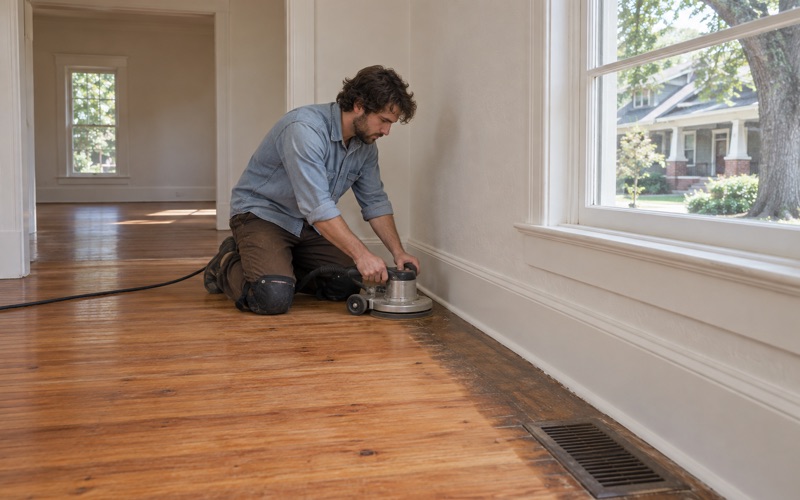
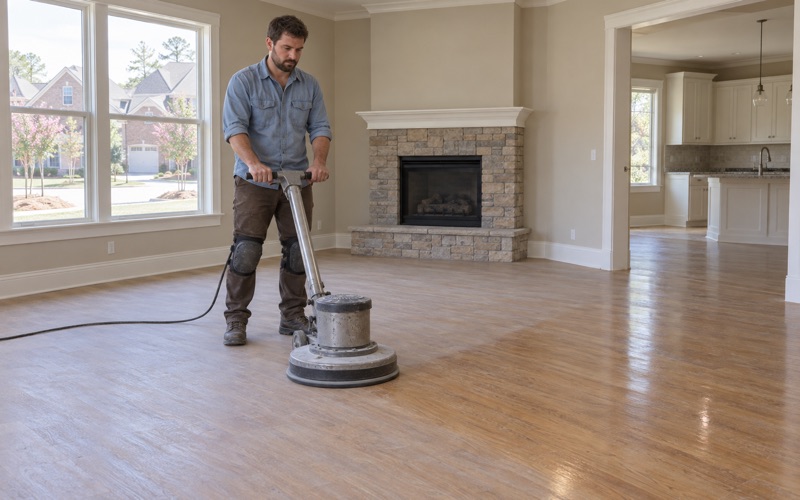
Site-finished oak from this era often has more life in it than it first appears. Before recommending a sand, we check how much wood remains above the tongue at a threshold or a vent opening. If there is enough, a careful refinish with a dustless sanding setup brings back an even surface without tearing anything out.
Finish choice matters in a closed tower unit. Waterborne polyurethane dries faster and carries less odor, while oil-modified polyurethane and hardwax oil each have their own look, cure time and upkeep. We walk through sheen level and maintenance with you so the finished floor suits how you actually live in the space.
Replacing Boards and Whole Rooms
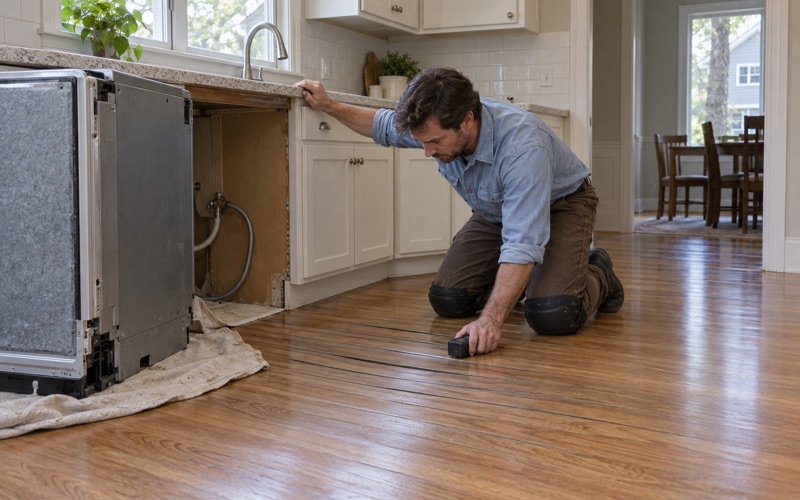
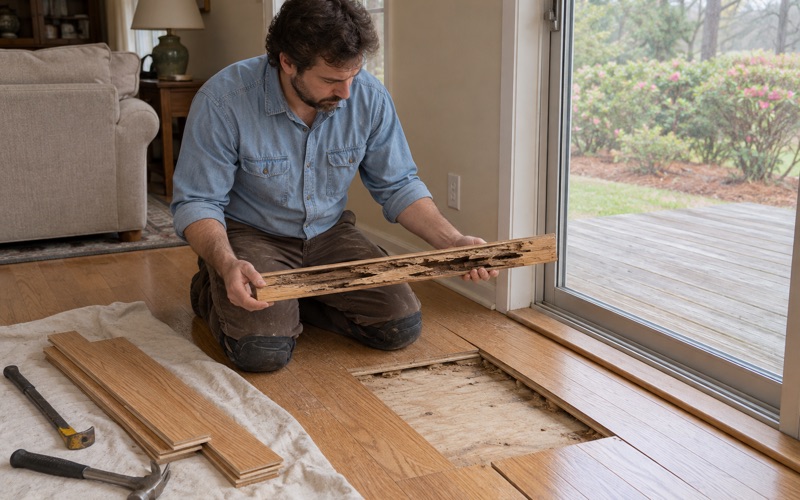
Where a room was damaged by a past leak, we trace the source and take readings with a moisture meter before any board replacement. Water stains, cupping and soft spots near a kitchen or laundry closet usually point to a problem that has to be solved first, and in a tower that source can sit in the unit above.
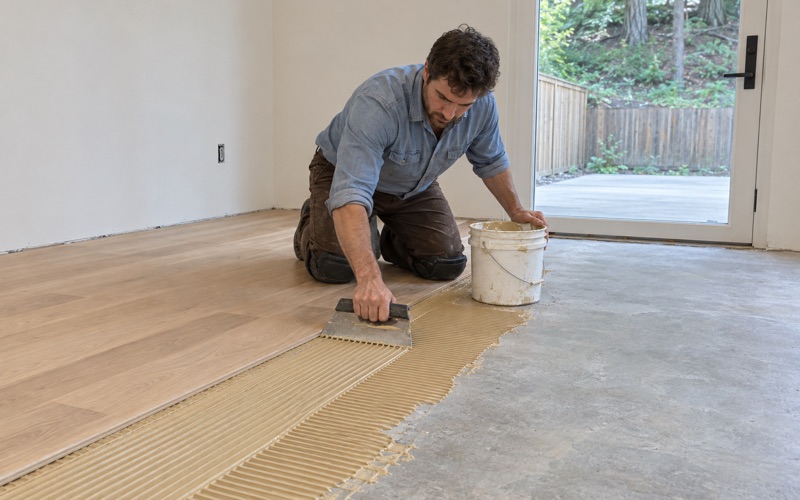
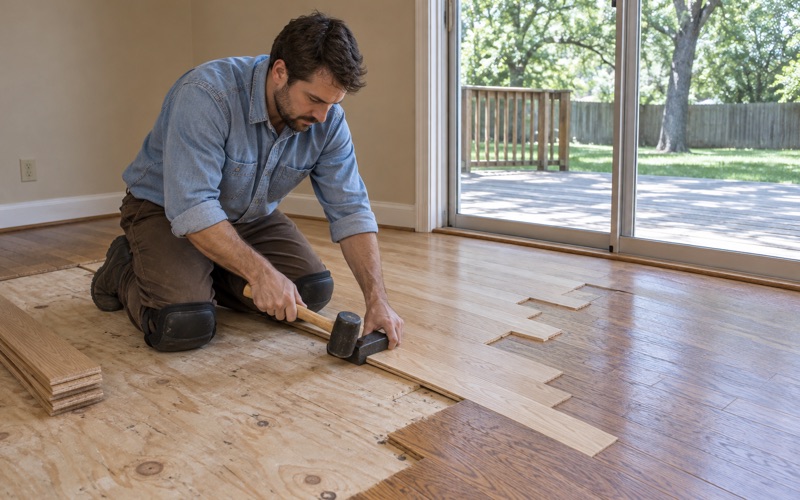
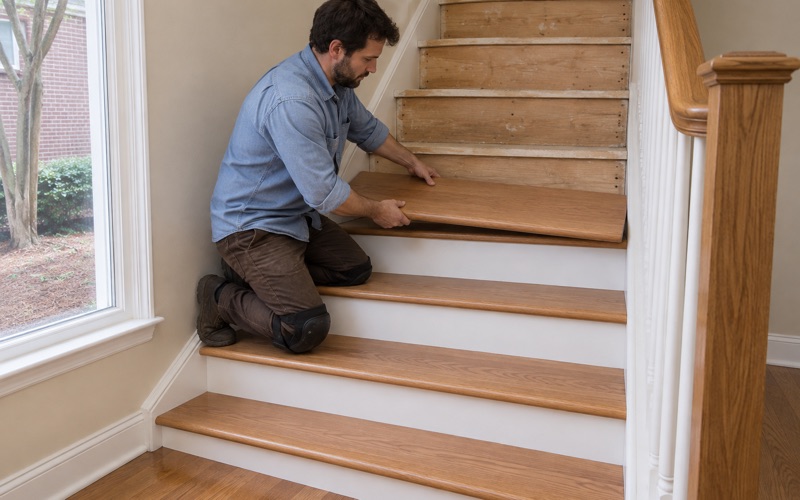
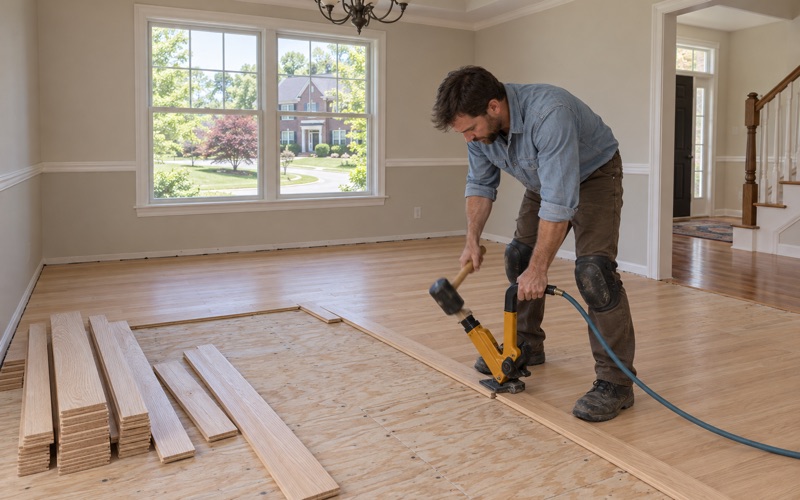
When a whole room needs new flooring, the options include solid hardwood where the assembly allows it, glue-down engineered planks, or a floating floor. Each behaves differently over the existing subfloor, needs a proper expansion gap at the walls, and meets the neighboring rooms with a reducer or quarter round that we plan ahead of time.
Parquet, Carpet and Earlier Updates
Units of this age often carry a patchwork: parquet in an entry, wall-to-wall carpet in the bedrooms, and a newer prefinished floor someone added in the living room. We look at how those pieces meet and whether they can be blended, rather than treating each room as though its neighbors did not exist.
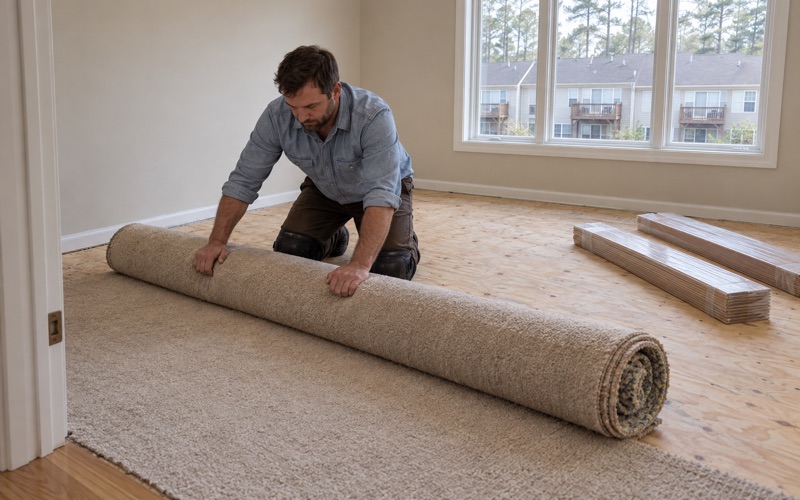
Pulling carpet exposes tack strip holes, staple rows and carpet pad residue that we fill rather than hide. Painted floors, old shellac or paste wax under a later coat all get tested before sanding, so the new finish actually bonds. Those small checks separate a refresh that lasts from one that peels within a season.
Planning a Unit Refresh in an Older Tower
The practical side of a tower job is mostly logistics. A well-planned schedule is what lets an owner update decades-old floors on their own timeline while the rest of the building carries on around them.
Elevators, Quiet Hours and Deliveries
High-rise work runs on the building’s calendar. We book the freight elevator through management, stage material inside the unit rather than in the corridor, and schedule the loudest sanding for the hours your building allows. Acclimation time for new wood is planned into those bookings, so boards are never rushed in on install day.
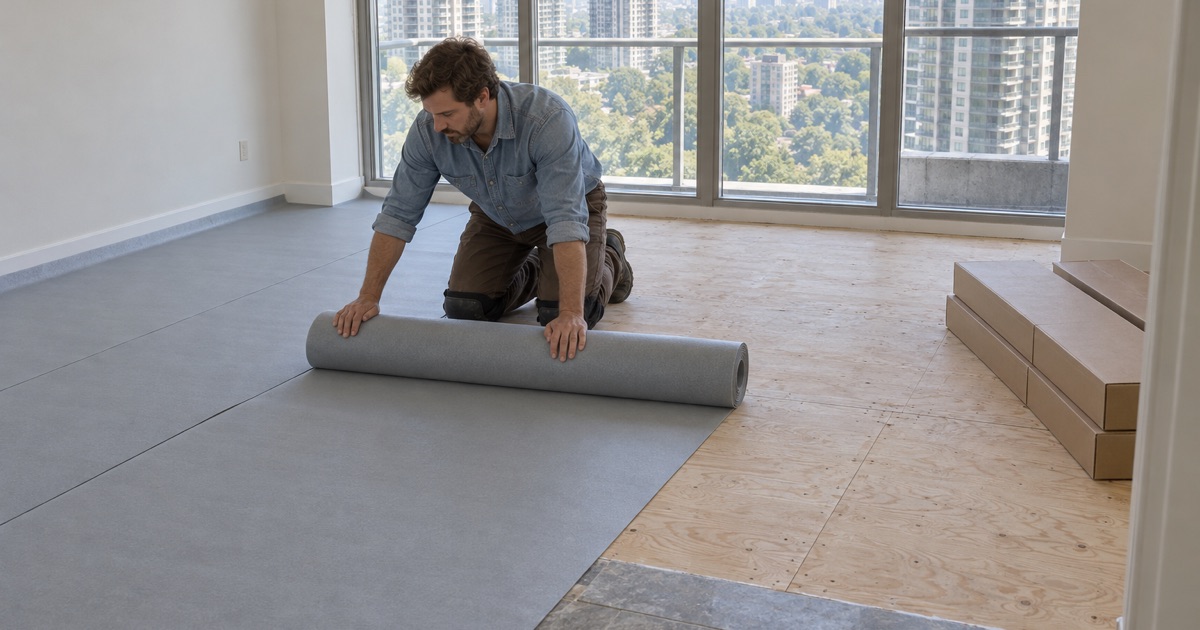
We also ask whether your building’s documents call for a particular acoustic underlayment before ordering anything. Where the documents are silent or unclear, we point that out and let you raise it with management, rather than guessing and having a finished floor questioned by a neighbor or the board later on.
Doing One Room or One Phase at a Time
Piecemeal work is how most unit interiors evolve, and floors can follow the same pattern. We can refinish a living area now and match it in a second phase later, keeping records of the stain, the finish and the sheen level so the rooms read as one continuous floor when both are done.
Phasing also lets you live in the unit through the project. We seal off the working rooms, protect the paths between them and leave the rest usable. For owners who travel, we can time the noisier steps to the weeks you are away, with management informed ahead of each visit and each elevator booking.
Humidity Inside a Closed-Up Unit
Buckhead sits in the National Weather Service North Fulton forecast zone, GAZ033, and Atlanta summers bring long humid stretches. Even in a climate-controlled tower, a unit left shut with the air off can swing enough to cause cupping or board gapping once the system comes back on and the wood starts to adjust.
We take moisture readings in the wood before sanding a crowned or cupped floor, and we recommend keeping the air running through and after an install. If a dehumidifier or a change in thermostat habits is the real fix, we will say so rather than sanding flat a floor that is still moving.
- 20+ Years on Wood Floors
- Moisture Readings Before Repairs
- Stain Samples on Your Floor