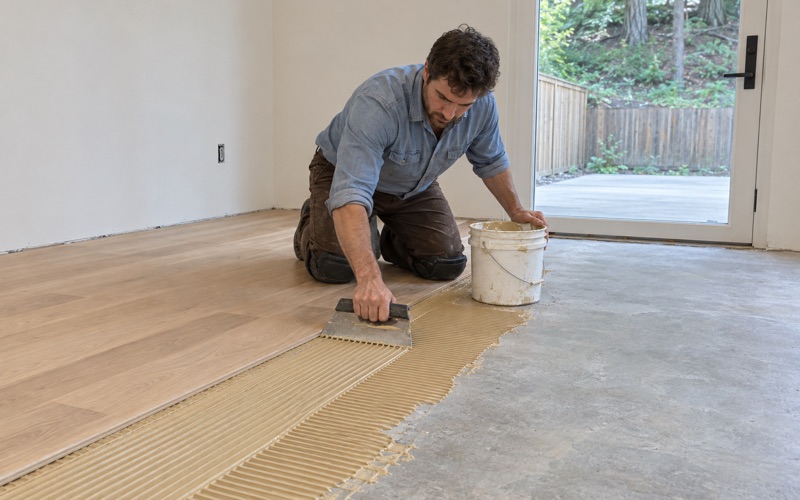
Smyrna Wood Flooring has handled wood-flooring in Austell for more than 20 years, and most of the calls we take there fall into two groups: older houses whose floors are worth saving, and newer homes whose site-finished oak has simply worn through its finish. We treat those as different jobs from the first visit, because the wood, the finish and the goal of the work are rarely the same.
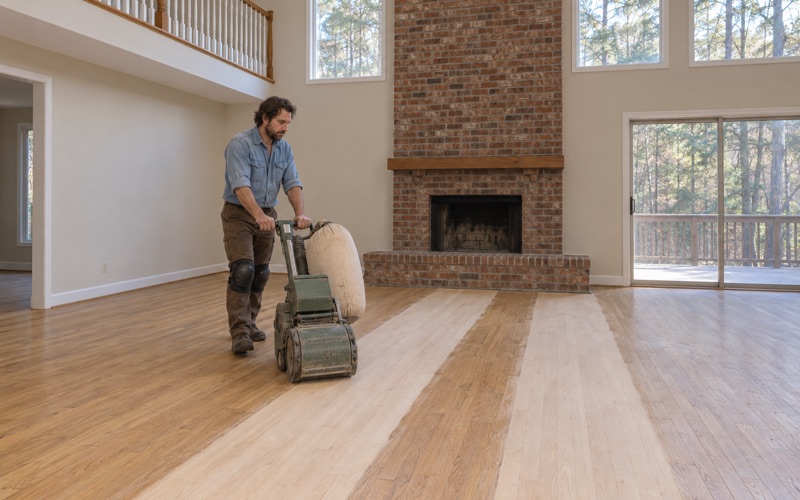
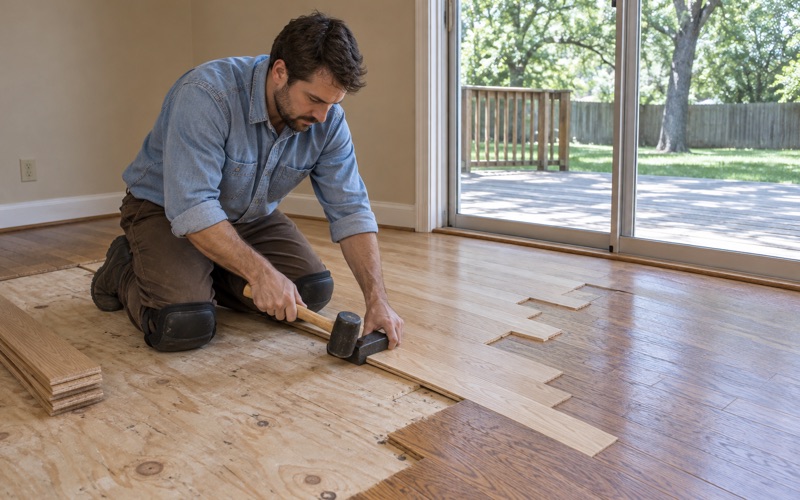
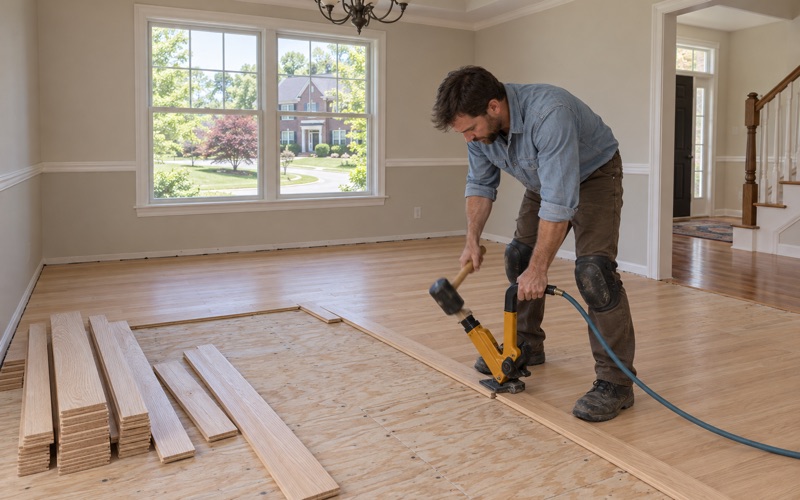
Refinishing is usually the first question we answer. A floor that still has enough wood above the tongue can be sanded, stained and sealed again, often for far less than new boards would cost. Where boards are damaged by water, pets or insects, we cut them out and weave in replacements so the repair disappears into the field instead of sitting on top of it.
Before any quote, we walk the rooms with a moisture meter, look at the edges and thresholds, and ask what the house has been through. Old wax, shellac or paint on the surface changes our finish plan, and so does the age of the home. You get a written scope that says what we will sand, what we will replace and what we will leave alone.
Austell’s Love Street District and the Homes Worth Keeping
What the City’s 2006 Assessment Recorded
The City of Austell’s 2006 Community Assessment, prepared for submission to the Atlanta Regional Commission, looked hard at the town’s housing and its history. It singled out the Love Street district, where historic homes and churches stand, and it named the Love Street District together with the Threadmill Complex as the city’s Historic Area on its map of preliminary character areas.
For a city incorporated in 1885 around a railway stop, that is a small cluster of older houses. The same assessment also noted historic buildings in the Central Business District along Main Street at the railroad. When we work in the older part of town, we are working in the homes that document described as the core of Austell’s character.
About Twenty Homes, Not a Designated District
The assessment says approximately 20 homes in the Love Street area are considered historically significant and may qualify for National Register nomination. That wording matters, and we repeat it carefully. It describes eligibility, not a finished nomination, and the same document put developing a historic district ordinance on its list of issues still to be addressed rather than something already adopted.
So we do not tell a homeowner their house sits in a regulated district, and we do not guess at which rules might apply to it. What we do tell them is that a floor in one of these houses deserves a slower, more careful approach. Sanding removes wood that cannot be put back, and an older floor may already have been sanded several times.
Why a Historic Area Changes the Plan
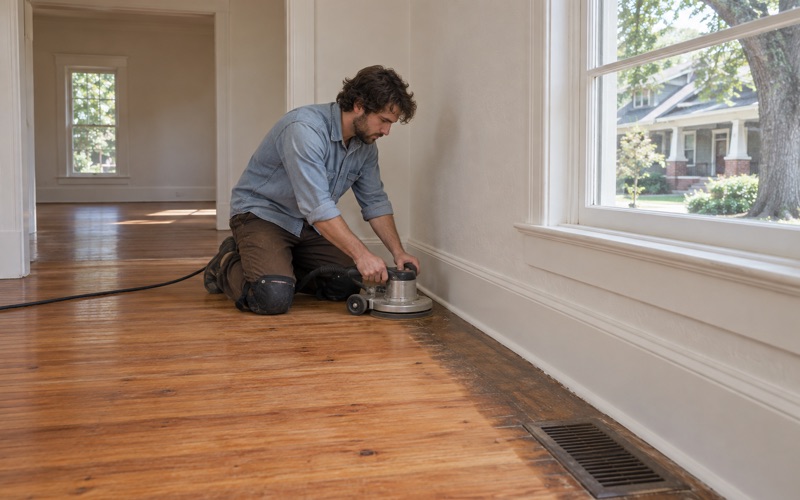
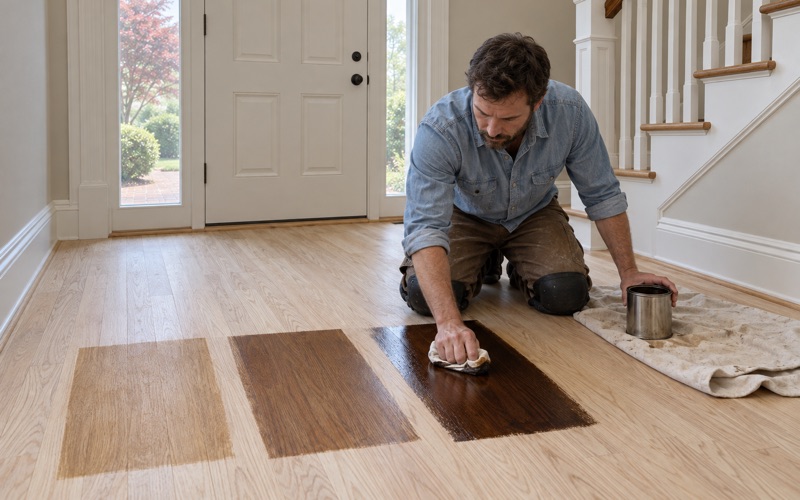
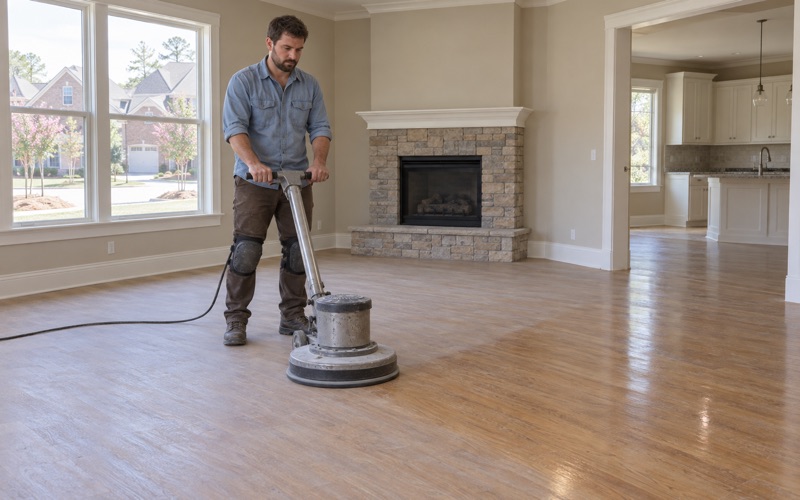
In a house worth keeping, the goal is to preserve the floor, not to make it look new. That usually means lighter sanding passes, a finer grit sequence and a finish chosen for how it will age. Some owners want the patina of decades kept in the boards; others want an even color. We lay stain samples on the floor itself so you can see which direction suits the rooms.
We also check how much wood remains above the tongue at a heat register or a threshold before committing to a full sand. If a floor is thin, a screen and recoat or a careful partial refinish can buy years without spending the last of its wear. Telling you that honestly is part of keeping an old house in service.
Looking for wood-flooring closer to Buckhead? See Buckhead Wood-Flooring.
Small Lots, Sidewalks and Alleys in the Older Neighborhoods
Working in a Traditional Neighborhood Area
The same assessment describes a Traditional Neighborhood Area in the older part of Austell: small, regular lots, sidewalks and street trees, on-street parking, houses built close to the front property line and alleys behind them. It recommended that these areas maintain their original character. For us, that describes the logistics of the job as much as the look of the street.
A drum sander, an edger and a dust collection system do not always fit a narrow side yard, so we plan where the equipment and the trailer will sit before the first day. An alley can be the best route to a back door. On-street parking means we arrive early and keep the sidewalk clear for neighbors walking past.
Dust Control in Houses Built Close Together
When houses sit close to one another with little building separation, noise and dust travel. We run dustless sanding with a vacuum connected to the sander, seal doorways with plastic, and keep the loudest work to normal daytime hours. Neighbors on a small lot notice a flooring crew, and we would rather they notice how little disruption there was.
Finish choice follows the same thinking. Waterborne polyurethane has a lower odor and dries faster than oil-modified polyurethane, which helps when a family is living in the other half of a compact house. Oil-modified finish still has its place where an owner wants the warmer amber tone it brings, and we explain the tradeoff rather than choosing for you.
Floors in Neighborhoods Needing Revitalization
The assessment was candid that Austell had existing residential neighborhoods in need of revitalization and pockets of substandard housing. It also listed an opportunity to preserve small-town charm and community identity through housing stock. Floors are one of the most practical places that opportunity plays out, because a sound wood floor is often hiding under years of neglect.
We see it when a house changes hands or an owner finally gets to the inside. Water stains, pet urine stains, soft spots and board gapping look alarming, yet many of those floors can be saved with targeted board replacement and a full refinish. Replacing only what is truly lost keeps the house’s own wood in place and keeps the project within reach.
Repairing and Refinishing Floors in Austell’s Older Houses
Testing Old Finishes Before Sanding
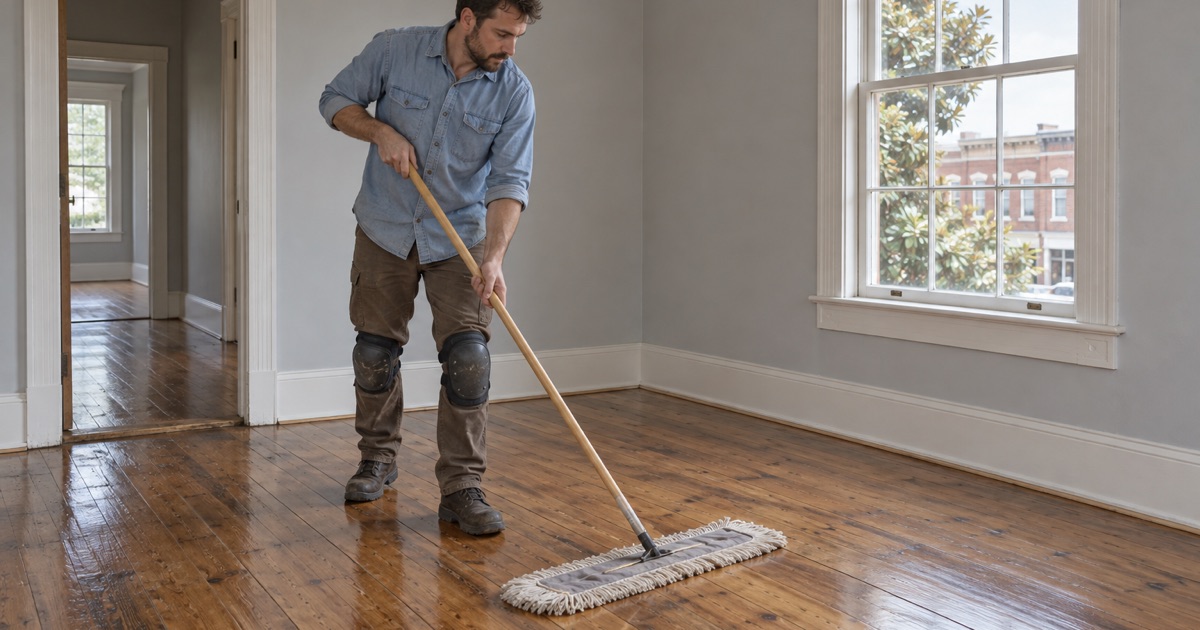
Older floors often carry layers from earlier eras: shellac, paste wax, a coat of paint along the edges, or an oil finish that was never fully removed. A new polyurethane will not bond reliably to wax, and paint clogs abrasives and hides what is underneath. We test the surface in a closet or corner first so the finish that goes down actually stays down.
Painted floors take extra care. Some owners want the paint gone to reveal the wood; others want to keep a painted bedroom or hall floor and simply refresh it. Either choice is fine, but it has to be made on purpose, after we know what the paint is and what condition the boards are in beneath it.
Houses Built Before 1978
Recent census estimates put 1,288 of Austell’s 3,176 housing units before 1980, so an older house here is far from rare. For any home built before 1978, we check the build year and look for painted surfaces before sanding, since old paint on floors, trim and thresholds may contain lead. The EPA RRP Rule sets how that work has to be handled.
In practice, that means confirming what is painted, containing the work area and cleaning up to a stricter standard when paint will be disturbed. It adds time to the schedule, and we say so in the quote instead of surprising you midway. Your family, and the next owner of the house, benefit from the job being done the careful way.
Weaving In Boards and Matching Color
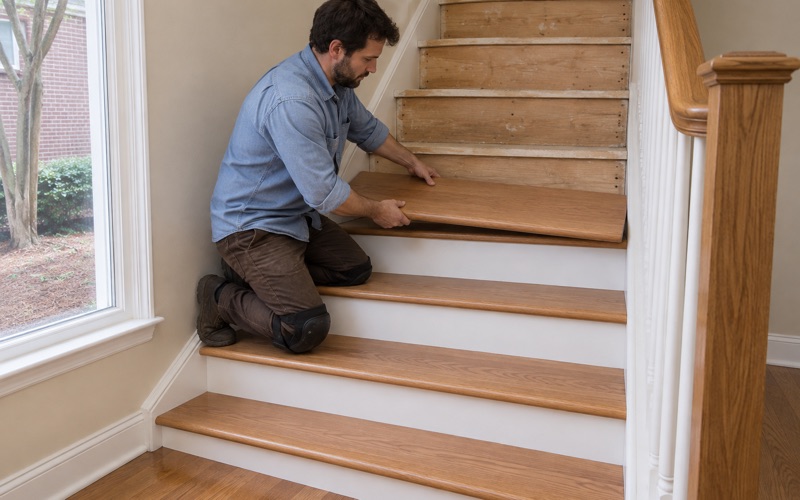
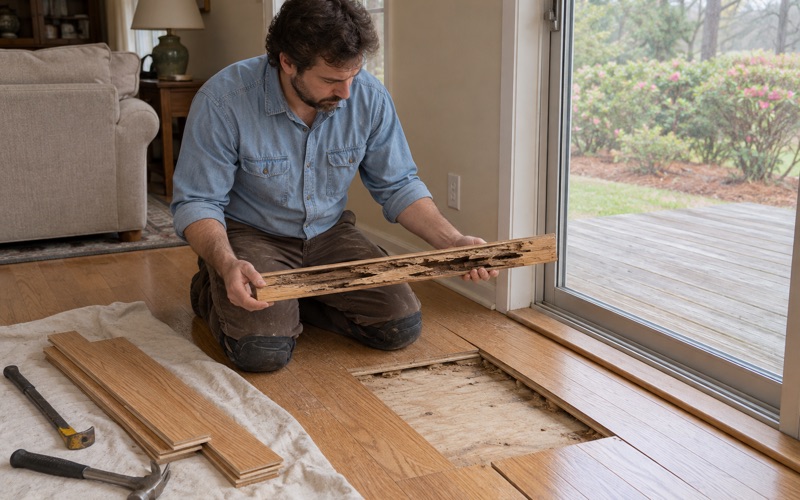
When boards are cracked, stained through or damaged by insects, we cut them out and weave in replacements staggered with the existing joints, rather than laying a patch in a square. Where subterranean termites are the cause, the pest control company treats the house first, and only then do we repair the floor. Filling or covering termite damage just hides the problem.
Matching an old floor is mostly about color and width. We source boards as close as possible in species and dimension, then blend the new wood into the aged color of the room with stain testing on the floor itself. The aim is a repair you stop noticing within a week, not one that still stands out years later.
Next to the Subdivisions Built Since the 1960s
Carpeted Ranches From the Suburban Era
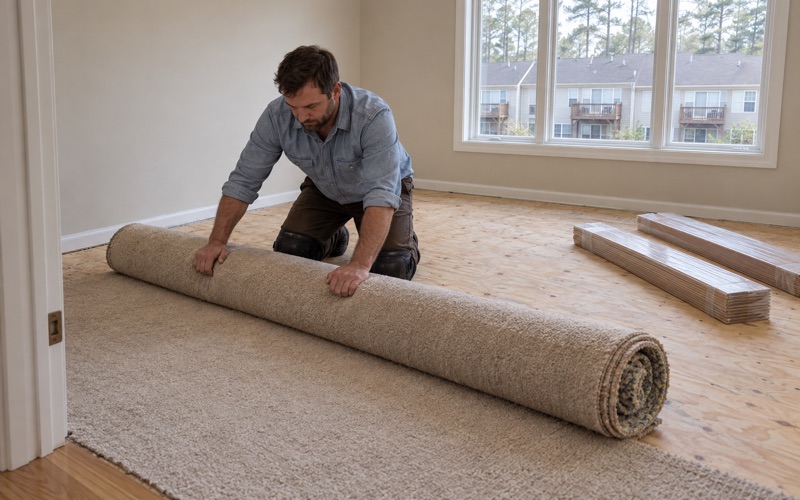
Austell’s 2006 assessment separated its older in-town streets from its Suburban Area Residential, the subdivisions developed since the 1960s. Many ranch houses from those decades had wall-to-wall carpet installed over hardwood, and pulling it up often reveals strip flooring in fair shape. The carpet pad may have stuck in places, and every tack strip leaves a line of nail holes.
We fill those tack strip holes and staple rows during the refinish rather than hiding them under a dark stain. A floor that spent forty years under carpet usually has little traffic wear and plenty of wood left, so it sands well. The result is often the most affordable major improvement an owner in one of these subdivisions can make.
Site-Finished Oak in Newer Homes
The census estimates count 1,057 of the city’s housing units as built between 2000 and 2009, and many of those homes came with site-finished oak in the main rooms. Twenty years on, those floors show traffic lanes, scratches near the kitchen and sun fade by the windows. That is a finish problem, and it rarely calls for tearing the wood out.
We check how much wood sits above the tongue before recommending a full sand. Where the finish is only dulled, a screen and recoat restores sheen for a fraction of the cost. Where the color is dated, such as the orange oak many owners want to leave behind, sanding to bare wood lets us restain the room in a tone chosen from samples.
Reading Cupping Before Anyone Sands
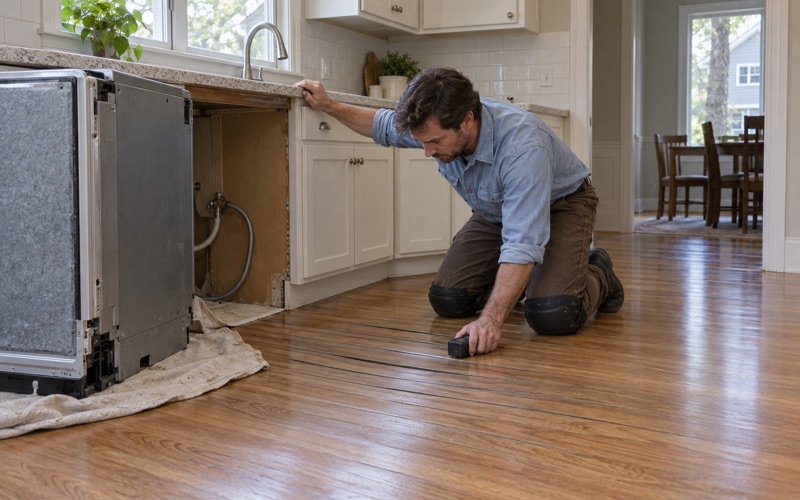
A humid Georgia summer is when many floors start to cup, with board edges rising above their centers. Sanding a cupped floor flat before the moisture source is found only creates crowning later, once the boards dry out. We read the floor with a moisture meter, check under sinks, around the dishwasher and at exterior doors, and look for the cause first.
When water is the problem, from a washer, a supply line or a storm, we trace it, dry the floor with dehumidifiers and measure again before replacing any board. We document the readings room by room so you have a clear record for an insurance adjuster. Only once the wood is stable do we repair, sand and finish, in an older house or a newer one.
- 20+ Years on Wood Floors
- Moisture Readings Before Repairs
- Stain Samples on Your Floor