Smyrna Wood Flooring brings more than 20 years of work to wood flooring in Atlantic Station, and most of what we do here happens many floors above the street. Condominium floors in a high-rise call for a different kind of planning than a house does. Materials, crew and debris all move through shared corridors and elevators, and the building’s own staff are part of the schedule from the first call.
We refinish existing hardwood, repair damaged boards, and install new solid or engineered floors in condominium units. Before we quote, we ask for your association’s written flooring and alteration requirements, because any rule about materials, work hours or approvals lives in your own building’s documents. Our job is to plan around what those documents actually say rather than guess at them.
This page is written for owners who live in their units and want the floor done right the first time. It covers how a building that runs partly like a hotel affects scheduling, why owner-occupants tend to choose floors differently than investors do, and what a sensible upgrade looks like in a unit from the mid-2000s.
Floor Work in a Hotel-Residence Tower on 17th Street
A Condominium Tower With a Hotel on the Property
TWELVE Atlantic Station, at 361 17th Street, is a mixed-use high-rise that its developer, Novare Group, lists at 26 stories and 380 condominium units. The TWELVE Hotels residences page describes the homes there as high-rise condominiums with a boutique hotel on the property. That combination is uncommon, and it shapes floor work more than most owners expect when they first call about a project.
In a standard condominium tower, the management office and the residents are the only people moving through the lobby and elevators. In a hotel-residence building, guests, housekeeping and hotel staff share parts of that same infrastructure. We treat those operations as fixed points in the plan, and our crew works around them rather than asking the building to bend around a delivery or a sanding day.
Where the Neighborhood Came From
Atlantic Station sits on the northwestern edge of Midtown Atlanta, on the former brownfield site of the Atlantic Steel mill, which opened in 1901. The EPA describes a 138-acre site that needed extensive cleanup and remediation before redevelopment, and residents began moving in during October 2003. The neighborhood officially opened in 2005 and was large enough to warrant its own ZIP code, 30363.
The bright yellow 17th Street Bridge, completed in 2004, crosses I-75 and I-85 and ties the development to the rest of Midtown. Atlantic Station has no government of its own, so it falls under the City of Atlanta and Fulton County. For a floor project, though, the authority that matters most day to day is your condominium association and its management office.
What the Proxy Numbers Say About Owners
No Census place exists for Atlantic Station, so we read ZIP code tabulation area 30363 as a labeled proxy, knowing its boundary may not match the neighborhood exactly. In the 2024 five-year American Community Survey, 90.2 percent of owner households in that area live in buildings of fifty or more units. Owning a home here almost always means owning in a large tower.
The same proxy shows 73.2 percent of homes built between 2000 and 2009, and 43.1 percent of owner households moved in during 2020 or later. Put together, many buyers are fairly recent owners in buildings from the mid-2000s, living with floors a developer or a previous owner chose rather than ones they picked for themselves.
Looking for wood-flooring closer to Atlanta? See Wood-Flooring Services in Atlanta.
What Hotel Services Mean for a Floor Project
Concierge Is Part of the Logistics
A listing site for TWELVE describes concierge services for food and laundry, and that front-desk role extends naturally to contractors. In a building like this, we expect to register the crew, share a work window and give the desk a contact for the day. We confirm those steps with management in writing before the first carton or sanding machine arrives.
Concierge staff also field the questions neighbors ask when they hear a sander or notice finish odor in the hall. Giving the desk a clear schedule, the scope of work and an expected finish date means those questions get answered without a knock on your door. Steady communication with the desk keeps a floor project from turning into a building complaint.
Service Elevators and Protected Paths
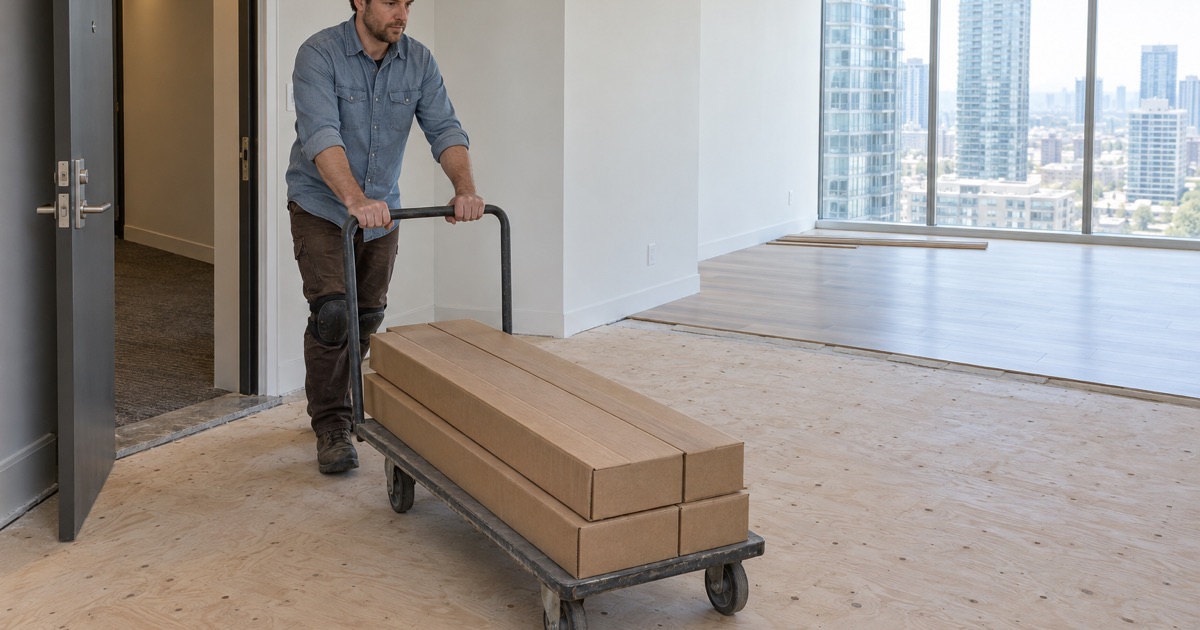
Flooring, sanding equipment and debris should never ride the guest elevators. We plan every delivery around the building’s freight elevator booking, pad the car, and protect the corridor between the elevator and your door. If the building limits bookings to set windows, the whole job gets sequenced around those windows instead of the other way around.
Material quantities matter more in a tower than in a house. A second trip for a few missing cartons can mean another elevator reservation and a lost half day. We measure carefully, bring the full order with an allowance for cuts, and haul our own waste down in the same booked windows so nothing sits in a hallway or loading area overnight.
Quiet Work Next to Hotel Operations
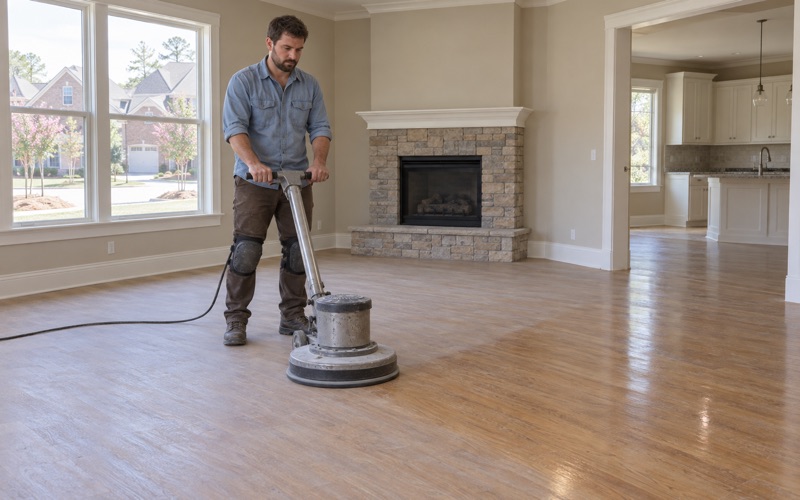
Sanding is loud, and in a building where some neighbors are hotel guests, quiet hours carry more weight. We schedule the loudest work, the drum sander passes and any cutting, into the hours the building allows, and save edging, hand work and finish coats for the quieter parts of the day. Dustless sanding keeps fine dust out of shared corridors.
Finish choice affects neighbors too. Waterborne polyurethane carries far less odor than oil-modified polyurethane and dries faster between coats, which matters when air handling is shared or when the hallway outside your door is a path guests use. We choose finishes that meet the federal VOC limits in 40 CFR 59 Subpart D and explain the tradeoffs before anything is opened.
Owners Who Live in Their Units
Leasing Limits Change the Math
A real-estate listing site reports that TWELVE has association rental restrictions in place, and that owners may have difficulty renting out a unit. We have not read the rule itself, so we do not describe its terms. The practical point is simple: when a unit is hard to lease, the person paying for the floor is usually the person who will walk on it.
That shifts the decision away from the cheapest floor that shows well to a renter and toward the floor you want under your own feet for years. Owner-occupants tend to care about how a floor feels underfoot, how it sounds to the unit below, and how it stands up to pets and daily traffic lanes, not only how it photographs for a listing.
Choosing a Floor You Will Live On
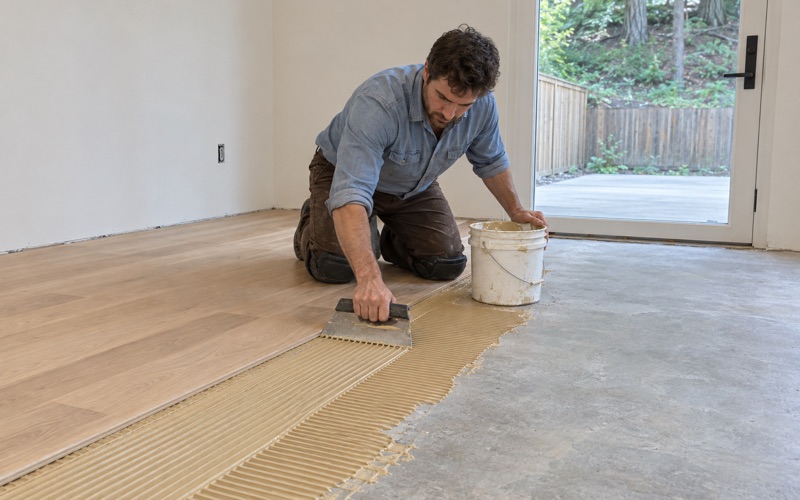
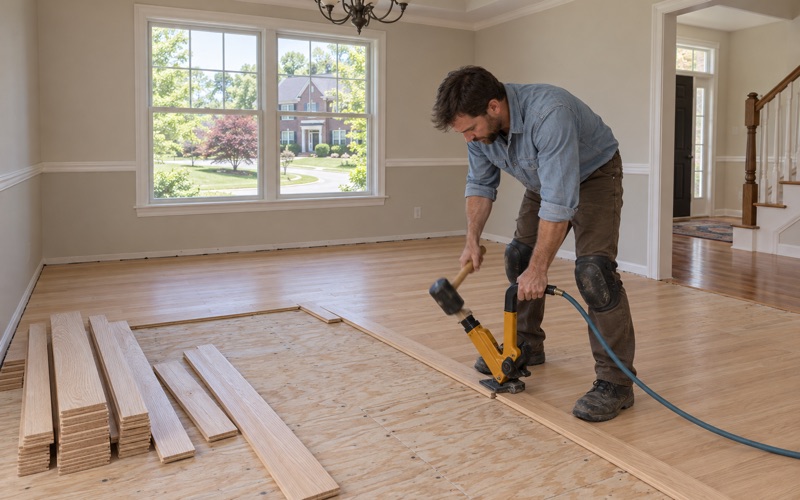
In most high-rise condominiums, new wood goes down as glue-down engineered planks or as a floating floor over acoustic underlayment. The engineered wear layer decides how many times the floor can be sanded later, so we walk through thickness before price. Solid hardwood can work in some assemblies, but only where the building’s documents and the subfloor both allow it.
Species and hardness matter in a unit you occupy. White oak and red oak are the common choices, and Janka hardness gives a rough sense of how each resists dents from dropped pans and dog nails. A hardwax oil repairs easily in spots, while polyurethane holds up longer between recoats. We lay out that tradeoff and let your habits decide it.
Stain and Sheen Decided in Your Own Light
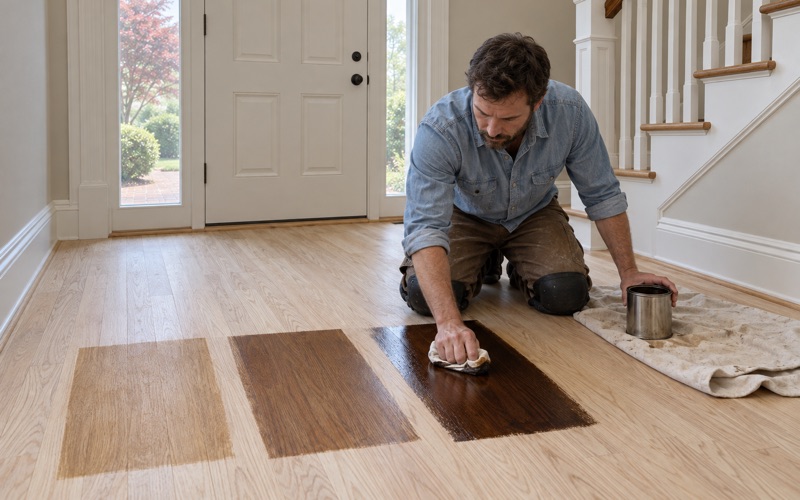
Tower units often have large windows, and daylight at height can shift how a stain reads compared with a showroom board. We lay stain samples on your own floor, in your own light, and leave them long enough for you to see them morning and evening. That step is how owners avoid a color they dislike once the furniture goes back.
Sheen level deserves the same care. A matte or satin finish hides the fine scratches and dust that show on a glossy floor under strong window light, and it tends to read as more current. Sun fade is also a real factor near big windows, so we talk through rugs, shades and finish together rather than treating them as separate decisions.
Upgrading a Unit From the Mid-2000s
Reading the Floor That Is There
Novare Group lists TWELVE’s completion as 2006, while Wikipedia gives December 2005; either way, units there date from the neighborhood’s first wave of building. A listing site notes hardwoods throughout in some units, so the first question in any upgrade is what is actually on the floor now, how it was installed, and what sits beneath it.
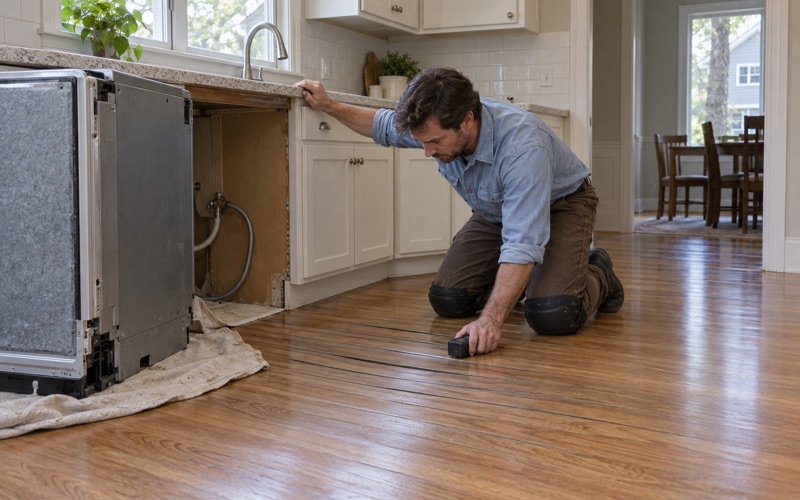
We check whether the existing wood is solid or engineered, glued or floating, and how much wear layer remains. We look for board gapping, hollow spots, water stains near kitchens and baths, and cupping that could point to a leak. A moisture meter reading comes before any recommendation, because sanding over a moisture problem only hides it until it returns.
Refinish, Recoat or Replace
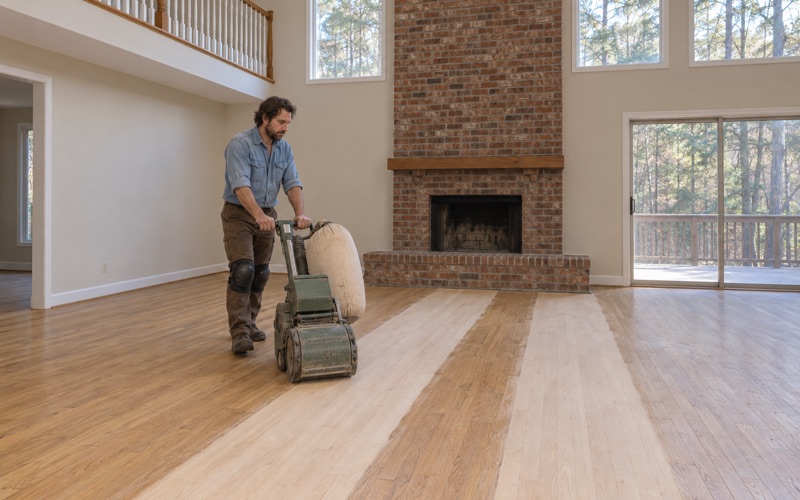
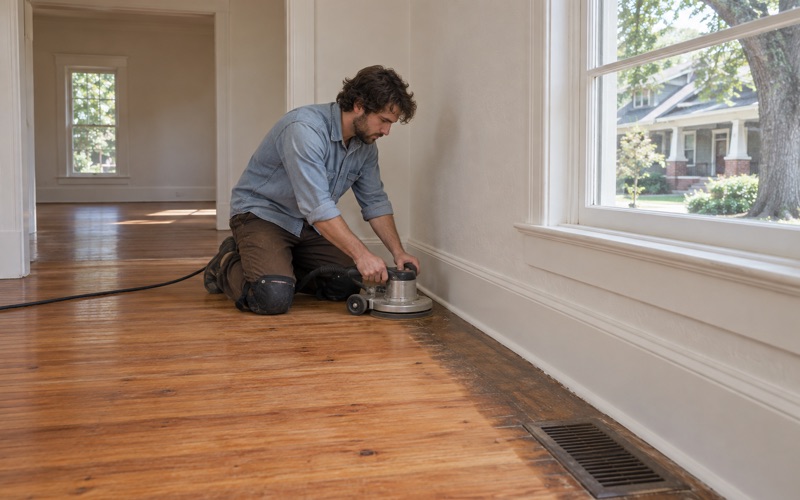
When the wood is sound and the wear sits mostly in the finish, a screen and recoat can refresh the surface in a short visit with less dust and noise. When traffic lanes, pet urine stains or deep scratches have reached the wood itself, a full sanding with a proper grit sequence is the better answer, provided the wear layer can take it.
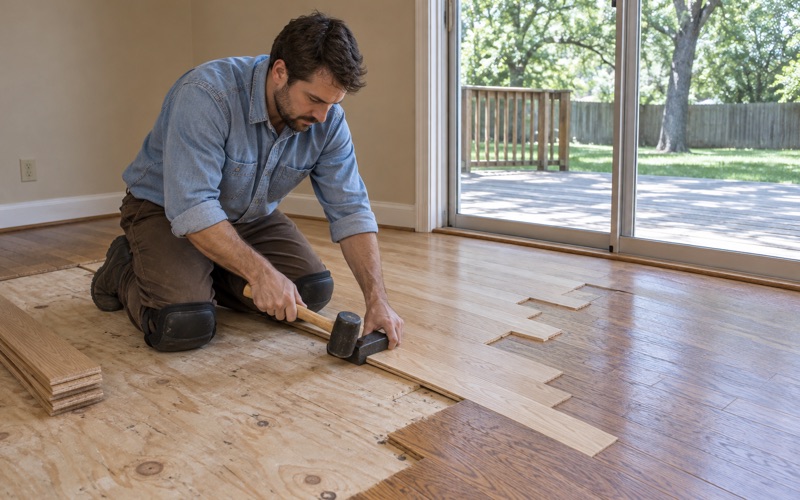
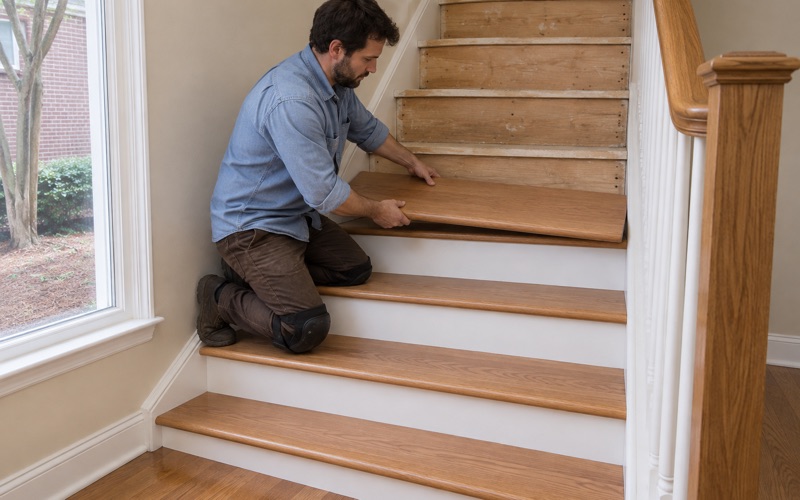
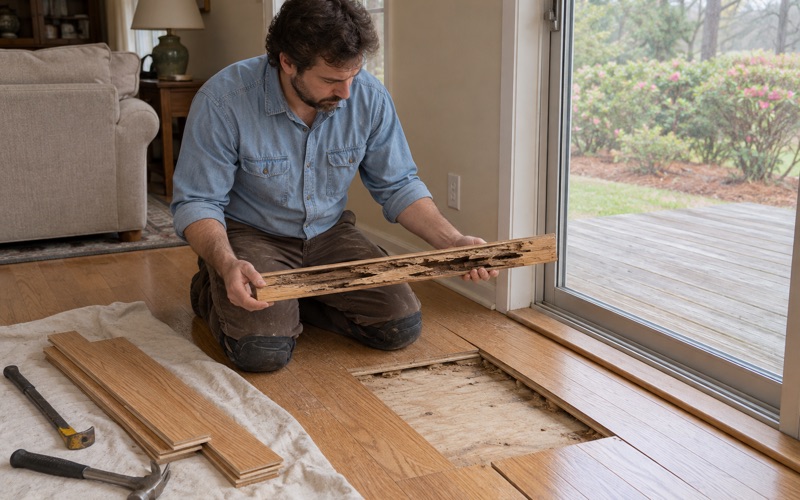
Replacement makes sense when an engineered floor has no sandable layer left, when water damage runs under several rows, or when you simply want a different look. A targeted board replacement can also fix a damaged area in place. We weave new boards into the existing field so the repair disappears, and we price each option separately so the comparison stays honest.
Sequencing the Work So You Can Stay
Because most owners here live in their units, we plan the work room by room when the layout allows it. Sanding and finishing one zone while you use another keeps the unit livable, though curing still means staying off freshly coated areas for a while. We tell you in advance which rooms will be off limits and for how long.
Transitions at the entry, kitchen and bath get attention at the end. Reducers, quarter round and thresholds finish the edges cleanly, and the expansion gap a floating floor needs stays hidden under trim. We leave the corridor, the elevator and the concierge desk exactly as we found them, so the next project in your building is welcome too.
- 20+ Years on Wood Floors
- Moisture Readings Before Repairs
- Stain Samples on Your Floor