Smyrna Wood Flooring has spent more than 20 years on wood-flooring in Atlanta, and a large share of that work is repair rather than a showroom install: the soft spot by a bathroom door, the board that rocks underfoot, the strip of oak that cupped after a leak. We cut out what failed, rebuild what sits beneath it, and finish the result so the patch reads as part of the room.
Owners and landlords usually call us with one specific question. Is this floor sound, or is it something nobody should be walking on? We answer it by opening the floor where needed, measuring moisture, checking the subfloor and fasteners, and giving you a written scope that separates the repair from any cosmetic refinishing you may or may not want.
This page is organized around a yardstick the city itself has put in writing. It explains what that standard covers, how each kind of failure is actually fixed, and where the money for the work tends to come from, including the parts of local repair help that stop short of floors.
What Atlanta’s Housing Code Says About Floors
The Sentence That Sets the Standard
The City of Atlanta’s Housing Code of 1987, Appendix E of the city code, sets minimum standards for dwellings. Its section on structural requirements says floors shall be free of decay, holes, breaks, loose or warped members; reasonably level; safe; and capable of supporting the load which normal use may cause to be placed on them.
That is a short list, and every item on it maps to a repair we do. Decay points to rot and insect damage, while holes and breaks point to board replacement. Loose and warped members point to fastening and moisture. Level, safe and load-bearing point below the finished boards, to the subfloor and the joists carrying it.
Sound Condition and Workmanlike Repair
The same section reaches past the surface. Interior floors, walls and ceilings, along with their structural supports, are to be maintained in sound condition and in workmanlike maintenance and repair. For a wood floor that wording matters, because a board screwed down through its face or a hole covered with scrap plywood may end the complaint without being workmanlike.
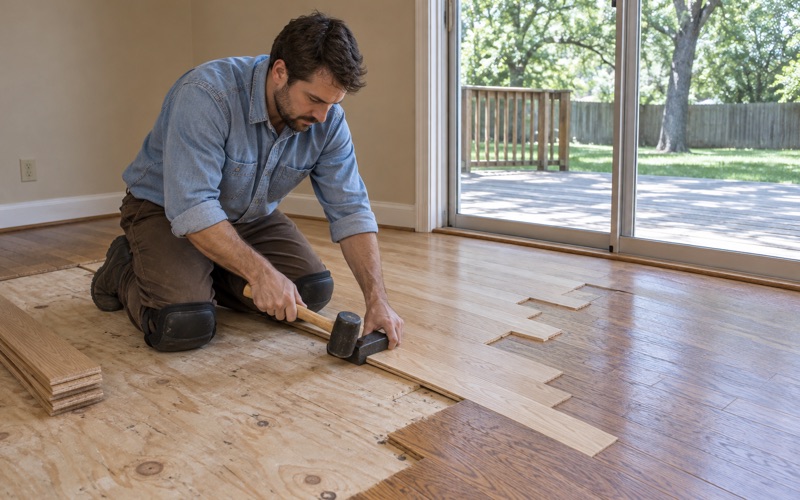
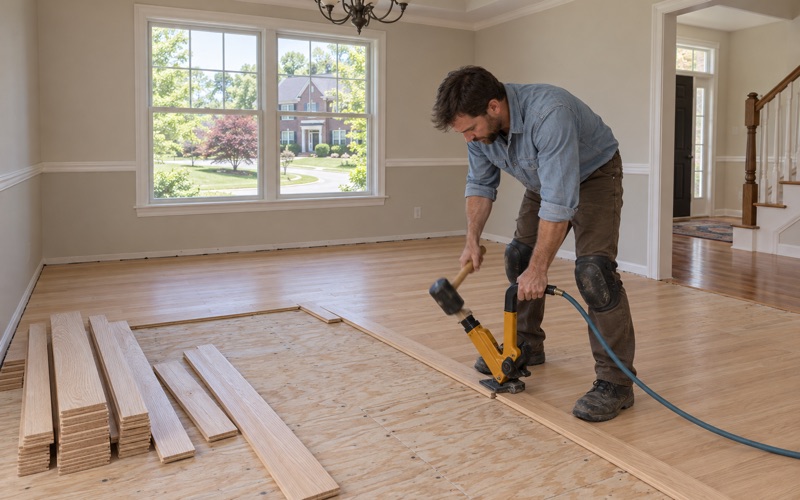
Our approach follows the plain meaning of the phrase. A damaged board comes out and a matching board is woven in with its tongue and groove engaged. Loose boards are refastened with flooring cleats or staples driven at the proper angle, and any face nails are set and filled. The finished repair should look deliberate, not improvised.
What This Page Does Not Tell You
We quote the code because it is the clearest local description of a sound floor, not because we speak for the city. We do not describe how or when Atlanta enforces its Housing Code, which office handles it, or what follows a complaint. Those are questions for the city, and we will not guess at the answers.
What we can do is document the condition of a floor against each item in that sentence, photograph what we find, and repair it to a workmanlike standard. Owners, property managers and tenants all receive the same written description, which tends to settle disagreements about whether a floor is merely worn or genuinely failing.
Looking for wood-flooring closer to Lithia Springs? See Lithia Springs Wood-Flooring.
Decay, Holes, Loose and Warped Boards
Decay and Soft Spots
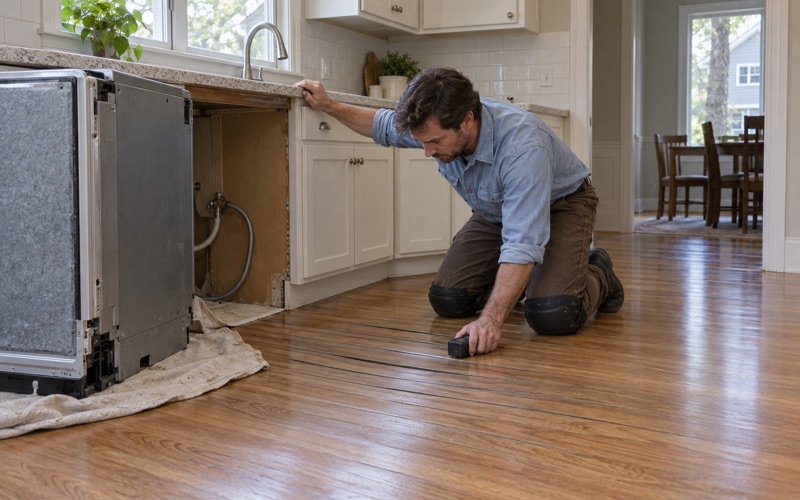
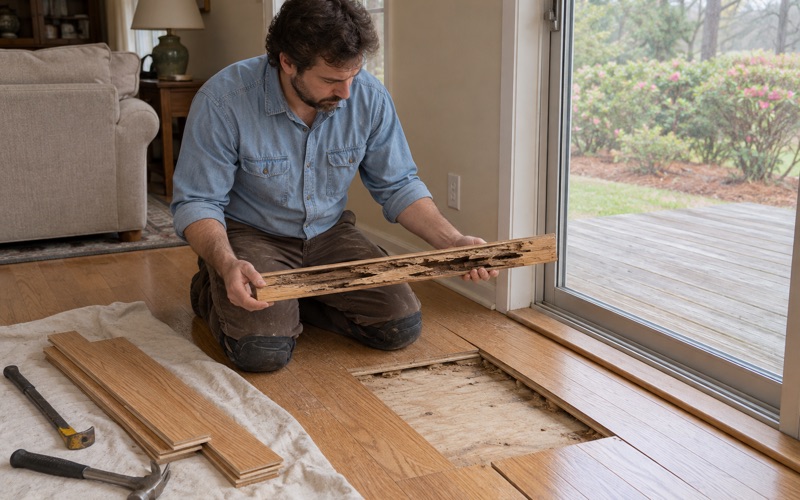
Decay in a wood floor usually starts with water or insects. A slow supply-line leak under a kitchen sink, a toilet seal that has wept for years, or subterranean termites working up from below can all leave boards that feel soft or spongy. A musty smell near the spot is often the first clue, well before the finish shows anything.
We probe the area, take moisture meter readings across the room and pull the first damaged board to see how far the problem runs. Termite damage is cut out and replaced only after your pest control company has treated, never filled or covered. Water damage is traced, dried and measured before new boards go down, and documented room by room when an adjuster is involved.
Holes and Breaks
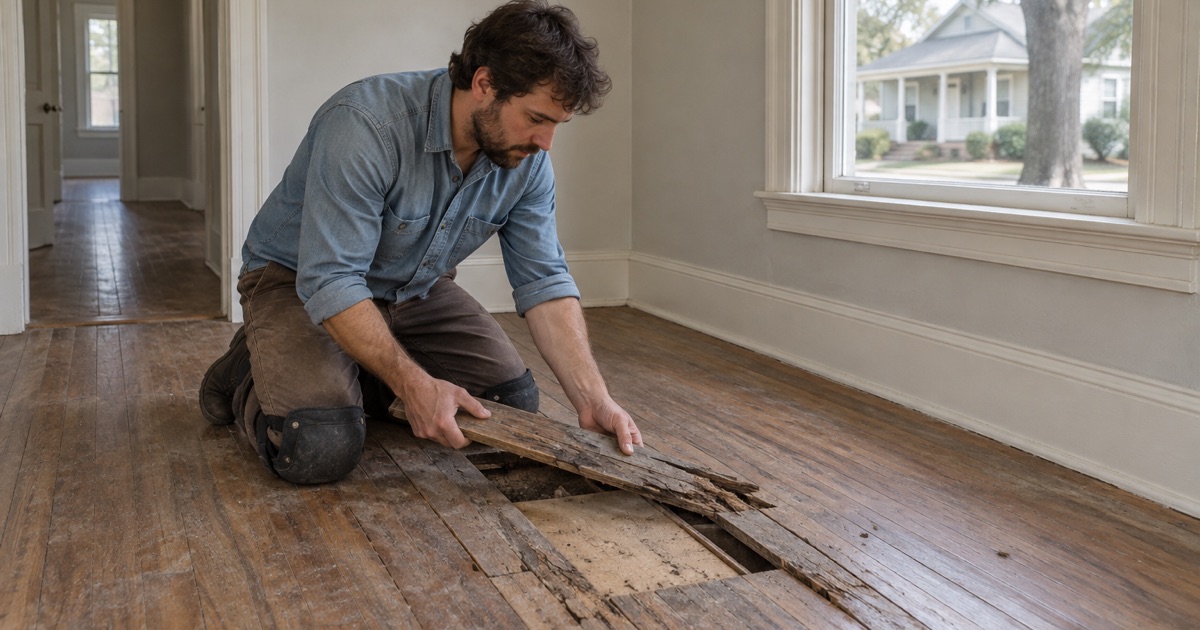
Holes come from everywhere: a floor register that was moved, a pipe that once came up through the room, a dropped cast-iron pan, or a cracked board over a gap in the subfloor. The code names holes and breaks together, and in practice they are fixed the same way, by removing the damaged pieces rather than patching over them.
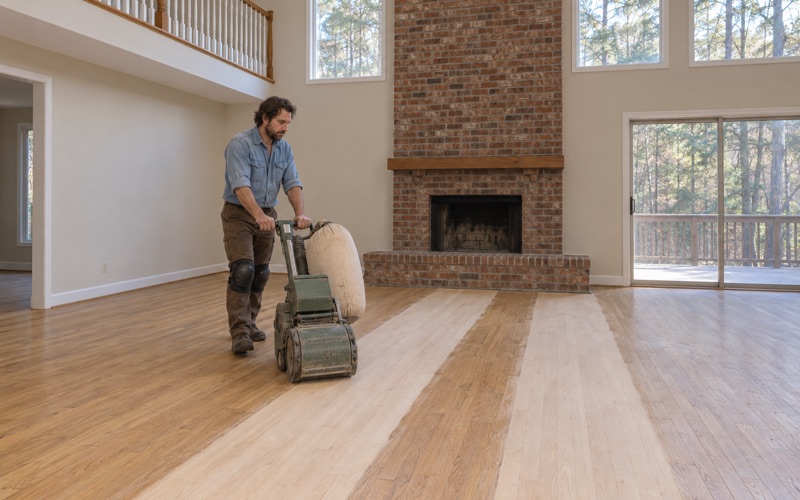
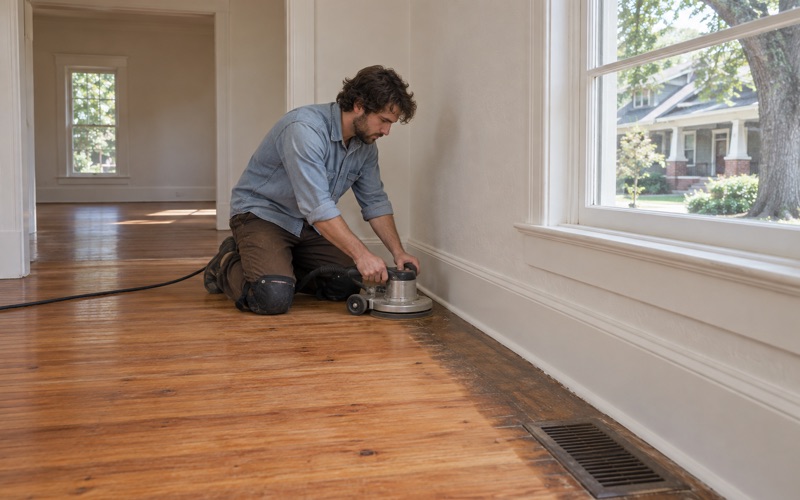
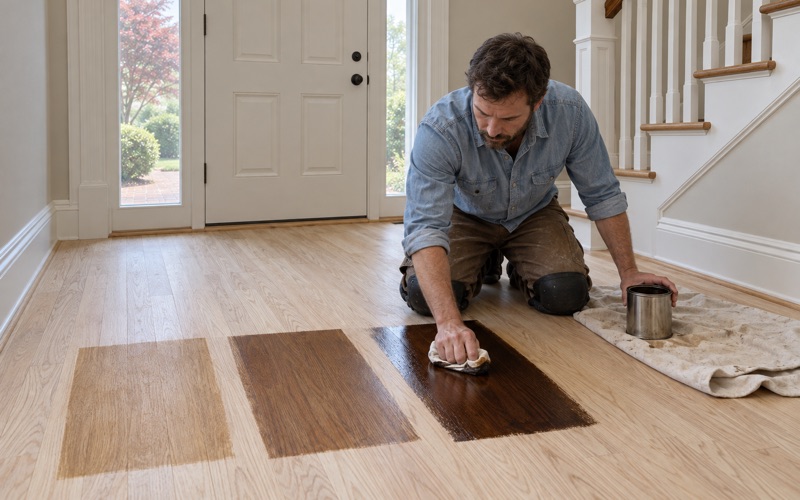
We cut back to sound wood, stagger the new board ends so the repair does not form a visible block, and match species and width. On red oak and white oak strip floors, the patch is sanded along with the surrounding area and stained from samples laid on your own floor, so the new boards take color the way the old ones did.
Loose and Warped Members
Loose boards squeak, rock or lift at the edges, and they are the ones that catch a toe. Warped boards show up as cupping, where the edges stand higher than the center, crowning, where the center rises, or buckling, where boards push up off the subfloor entirely. Each points to a different cause, and moisture sits behind most of them.
In a humid Georgia summer we read cupping with a moisture meter and find the source before anyone sands the crown flat, since sanding a cupped floor that is still wet leaves it crowned once it dries. Loose boards are refastened into the subfloor, and board gapping is judged against the season before anyone fills it.
When a Floor Is No Longer Reasonably Level or Safe
Level, safe and able to carry normal loads are the three parts of the standard that live beneath the finished wood. They rarely show up as a single bad board, so we look at the whole room before we put a number on the work.
Reading an Out-of-Level Floor
The code says reasonably level, not perfectly level, and older homes almost always carry some slope. What we look for is change: a dip that has deepened, a hump over a single joist, or hollow spots that sound different underfoot. A long straightedge and a level show whether the problem sits in the wood flooring, the subfloor or the framing.
When the flooring itself is the cause, it can be relaid over a flattened subfloor. When a joist has sagged or cracked, that framing work comes first, done by the appropriate trade, and we reinstall and refinish the wood floor once the structure beneath it is sound again.
Safe Footing, Stairs Included
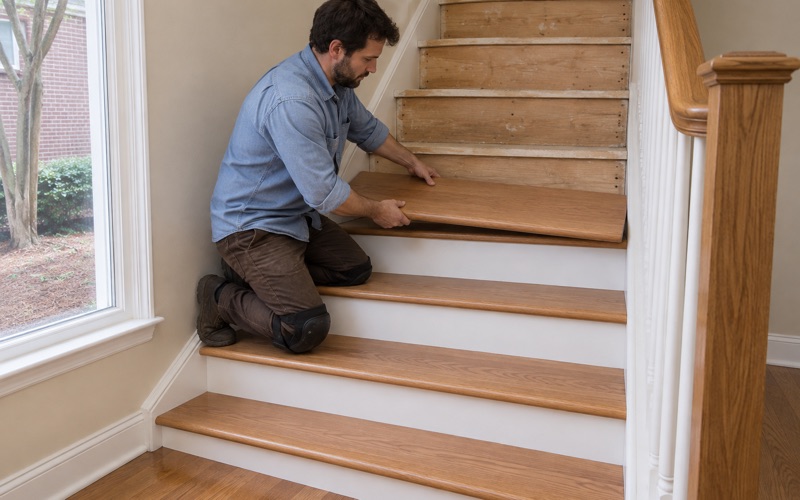
A floor can be level and still unsafe. Splintering along traffic lanes, raised board ends, a loose reducer at a doorway or failing quarter round can all trip someone. Stairs deserve their own attention, because a loose tread or a worn stair nosing is a fall hazard rather than a cosmetic problem.
We quote stairs tread by tread, and we price refinishing and new stair treads as the two separate jobs they are. Loose treads are refastened or replaced, stair risers are checked at the same visit, and splintered areas on the main floor are sanded smooth or replaced before any finish goes down.
Carrying the Load of Normal Use
The last clause asks that a floor support the load normal use places on it. Refrigerators, full bookcases, aquariums and a household’s daily foot traffic all count. A floor that deflects visibly under a loaded shelf, or that has soft spots beside an appliance, is telling you something about the subfloor or joists below.
We open a board or two where we need to, check subfloor thickness and fastening, and look for decay or termite damage in whatever supports the flooring. Our written scope then says plainly whether the fix belongs in the flooring, the subfloor or the framing, so you can hire the right people in the right order.
Repairing Floors in Atlanta Rental Homes
Atlanta is the capital of Georgia and spans Fulton and DeKalb counties, and its housing leans toward renters. The Census Bureau’s 2024 five-year estimates put 53.6 percent of the city’s occupied homes in renter hands, which means a floor repair here is often a conversation between an owner and a tenant.
Working Around Tenants
In an occupied rental, the repair has to fit around someone’s life. We schedule board replacement and refastening in phases where we can, keep dust down with dustless sanding equipment, and choose a waterborne polyurethane when a room must be back in use quickly. Tenants get a clear timeline for each room before we start.
Many renters live in large buildings; the same census tables count 62,746 renter households in buildings of fifty or more units. Work there is planned around freight elevator bookings, quiet hours and any underlayment the building requires, and we confirm those rules with management before a single board is delivered.
Older Homes and Painted Surfaces
About 42.7 percent of Atlanta’s housing units were built before 1980, and craftsman bungalows are common across the city’s low-density neighborhoods. Those floors have often been painted, waxed or hidden under carpet, and some have been sanded so many times that little wood remains above the tongue.
For any home built before 1978, we check the build year and painted surfaces before sanding. Old shellac, paste wax and paint are tested so the new finish bonds, and oak strip found under carpet is sanded with the tack strip holes and staple rows filled. Where too little wood is left to sand again, we tell you so.
What Local Repair Help Leaves Out
Owner-occupants sometimes ask whether local programs will pay for floor work. Invest Atlanta’s Atlanta Heritage program offers up to $30,000 in eligible health and safety repairs as a 0 percent deferred forgivable loan, for owners at or below 60 percent of area median income who have lived in the home at least five years. It is currently closed.
Its published list of eligible repairs names roofs, gutters, minor plumbing and electrical work, water heaters, HVAC and exterior items such as porches, walkways and siding. Flooring is not on that list. Westside Heritage, open in the Westside TAD with up to $60,000, appears on the same page, so we plan floor repairs as privately funded work and price them so you can decide what comes first.
- 20+ Years on Wood Floors
- Moisture Readings Before Repairs
- Stain Samples on Your Floor